Schoolgirls have been left vulnerable without essential hygiene products, while more than R125 million in dedicated funding was returned.
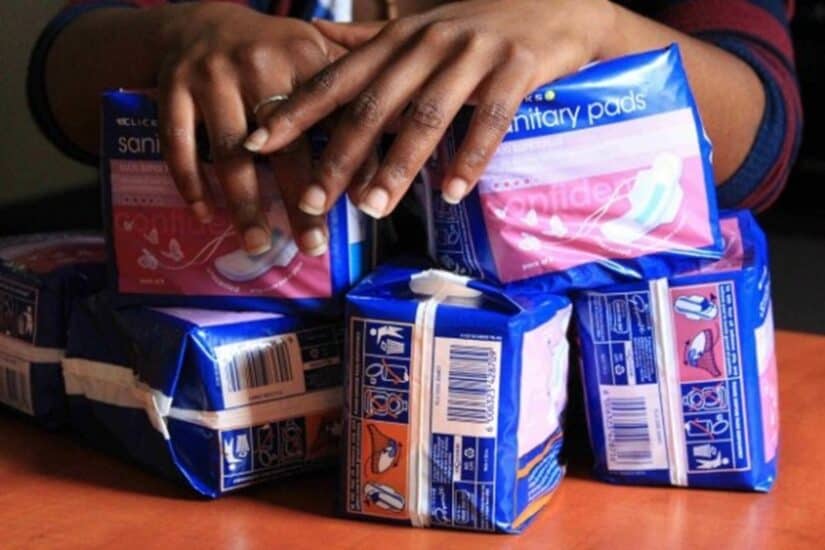
Not much progress has been made with the provision of free sanitary pads to girls and women who cannot afford them, according to parliament. Picture: Masixole Feni


The government has returned R125.7 million meant to provide sanitary products to pupils over the past three years, prompting parliament’s portfolio committee on women, youth and persons with disabilities to demand urgent action.
The explosive revelation came during a parliamentary briefing on Tuesday, where national and provincial departments were questioned about chronic failures plaguing the Sanitary Dignity Programme (SDP).
The Sanitary Dignity Programme has a budget of R268.7 million for the 2026-27 financial year.
Procurement delays and limited capacity led key provinces, including the Eastern Cape, Free State, Northern Cape and North West, to return significant portions of their budgets instead of delivering essential sanitary products to pupils.
‘Unacceptable and unforgivable’
Demanding an immediate halt to administrative failures, committee chairperson Liezl van der Merwe issued a stinging rebuke to officials, saying every rand allocated must translate directly into physical products on school desks.
“Underspending is unacceptable. If funds are not spent, learners do not receive the services to which they are entitled. The programme must enable learners to remain in school, access opportunities and pursue a better future,” she said.
Van der Merwe said the returned money could have provided millions of sanitary packs.
“The time for excuses about failing to deliver and returning funds is over. Returning funds is unacceptable and unforgivable, considering the importance of this programme in the lives of those in need,” she said.
“Many young women rely on it to stay in school and achieve their dreams and goals. Procurement delays, capacity constraints and the inability to spend on this crucial programme must come to an end.”
Despite a R268.7 million budget allocation for the 2026-27 financial year, the committee raised concerns about structural deficiencies affecting distribution.
Sanitary pad price differences and distribution challenges
Procurement practices also came under fire after MPs heard that the reported price of sanitary towel packs ranged from about R5 to R223.
Distribution protocols across regions were equally chaotic.
The Eastern Cape delivered an entire year’s supply of 12 packs to students in a single bulk delivery.
Other provinces attempted quarterly distributions, while one unnamed provincial entity spent the first five months of the financial year on “planning” without delivering a single product.
Mpumalanga faced criticism for arbitrarily excluding Quintile 2 and Quintile 3 schools that were considered eligible, denying support to thousands of students despite national guidelines. Members said some students in the two quintile categories were being excluded without a satisfactory explanation.
MPs argued that the school-quintile system exists to reflect different levels of poverty and need. Excluding Quintile 2 and 3 students, they said, denies support to many young people who still qualify for assistance.
Treasury defends mechanism
Facing intense grilling over monitoring failures, National Treasury defended its oversight mechanism, arguing that the SDP is a shared responsibility in which provincial accounting officers retain ultimate liability for procurement, target setting, and operational execution.
Treasury representatives clarified that unspent operational funds are returned unless implementing departments actively apply for rollovers with concrete proof of committed expenditure.
However, committee members rejected the fractured multi-departmental approach – which currently splits execution across provincial education and social development departments – calling for a complete overhaul of the Sanitary Dignity Framework.
Marking this as their second formal intervention into the crisis, the committee vowed to step up direct site inspections, starting with targeted oversight visits to Limpopo and Mpumalanga to force compliance.