


The IEC received more than 1 700 objections related to the 2026 elections, with only 252 of 433 qualifying applications finalised.
 Elections 2026
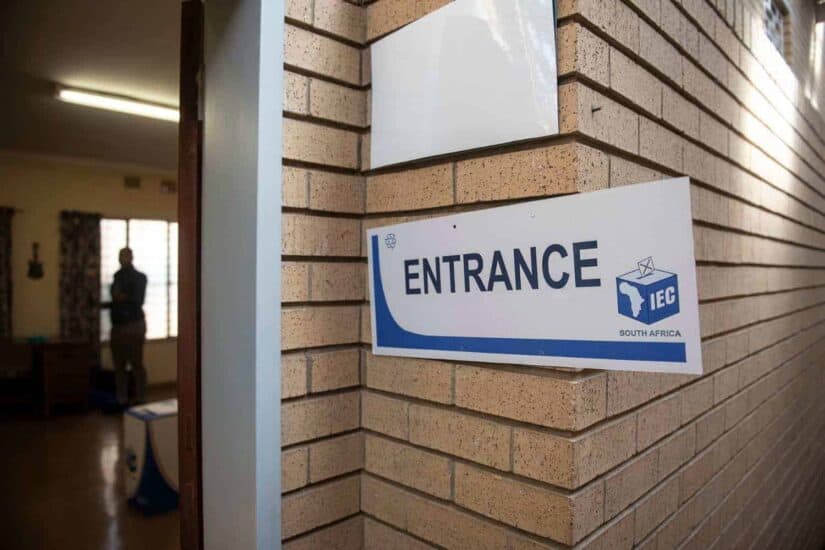
A voting station at the Berario Recreation Centre in Randburg. Picture: Michel Bega / The Citizen


The Electoral Commission of South Africa (IEC) admitted it has been unable to process all objections filed in connection with last week’s 2026 local government elections.
IEC chair Mosotho Moepya confirmed the number of objections and how many had been concluded, while holding an election update briefing on Friday.
The number of objections had doubled from the 2021 local elections, highlighting the highly contested nature of this November’s polls.

Get your results on
our Election Hub
Live results
Objections submitted centred around counting irregularities, alleged mistakes in results capturing, incorrect inclusion of special votes and the alleged high number of spoilt ballots.
“Given the unprecedented number of submissions received and the careful approach the commission has adopted in considering these objections, it has not been possible for the commission to finalise these applications,” said Moepya.
‘Distilled in the lessons for future elections’
The IEC chair stated that 1 708 objections had been received from party officials.
In order for objections to be considered, applicants were required to submit detailed reasons for the objection, the relief sought by the applicant and supporting documentation.
Moepya said 433 applications – up from 218 in 2021 – met the objection requirements laid out in section 65 of the Local Government: Municipal Election Act.
Of these, 252 had been finalised, resulting in three being upheld and 249 being rejected, including 12 applications for recounts.
The remainder would be analysed, and where applicable, used to improve the IEC’s operations.
“Certain submissions did not meet the requirements of section 65; however, the commission, in dealing with these, has nonetheless remained mindful of its obligations to ensure free and fair elections.
“It has also channelled a number of matters for further attention and to form part of the debriefing process so that these issues may be distilled in the lessons for future elections,” Moepya said.
Councils to convene within 14 days of gazetted list
The final step for the IEC is the gazetting of the list of the councillors who had earned ward and proportional representation (PR) seats.
To do so, parties were notified on Monday of instances where a party had more seats than nominees, or where councillors had won more than one seat.
Parties had until Wednesday to clarify their lists.
“This opportunity was for parties to provide the names and details of candidates to make up the shortfall, and was not an opportunity for parties to change their lists or replace candidates,” said Moepya.
Parties and candidates that did not respond risked negating the party member’s efforts.
“A party or independent candidate that fails to indicate which seat he or she chooses; the name of that candidate must be deleted from the ward list.
“Municipal managers are required to convene the first meetings of their respective councils within 14 days after the councillors have been declared elected,” said Moepya.
Female representation and age
The chair added that five by-elections were required, three of them necessary because the councillors had recently died.
In a win for those that say every vote counts, four wards were decided via the drawing of lots – a random draw – after candidates received the exact same number of votes.
On the demographics of councillors, females accounted for 33.6% of councillors – 26.8% being ward councillors, and 39% from the PR ballots.
The EFF had the highest female representation, with 46.2% of seats, while the IFP had the lowest, with only 18%.
The average age of successful councillors was 47, with 34.9% being aged 40 to 49.
Councillors aged between 50 and 59 accounted for 26.2%, those aged between 30 and 39 made up 21% of councillors, while under 30s and over 70s accounted for 3% and 2.1%, respectively.


