In the age of social media, where false narratives can be countered and good news can spread faster, is South Africa's image still intact?
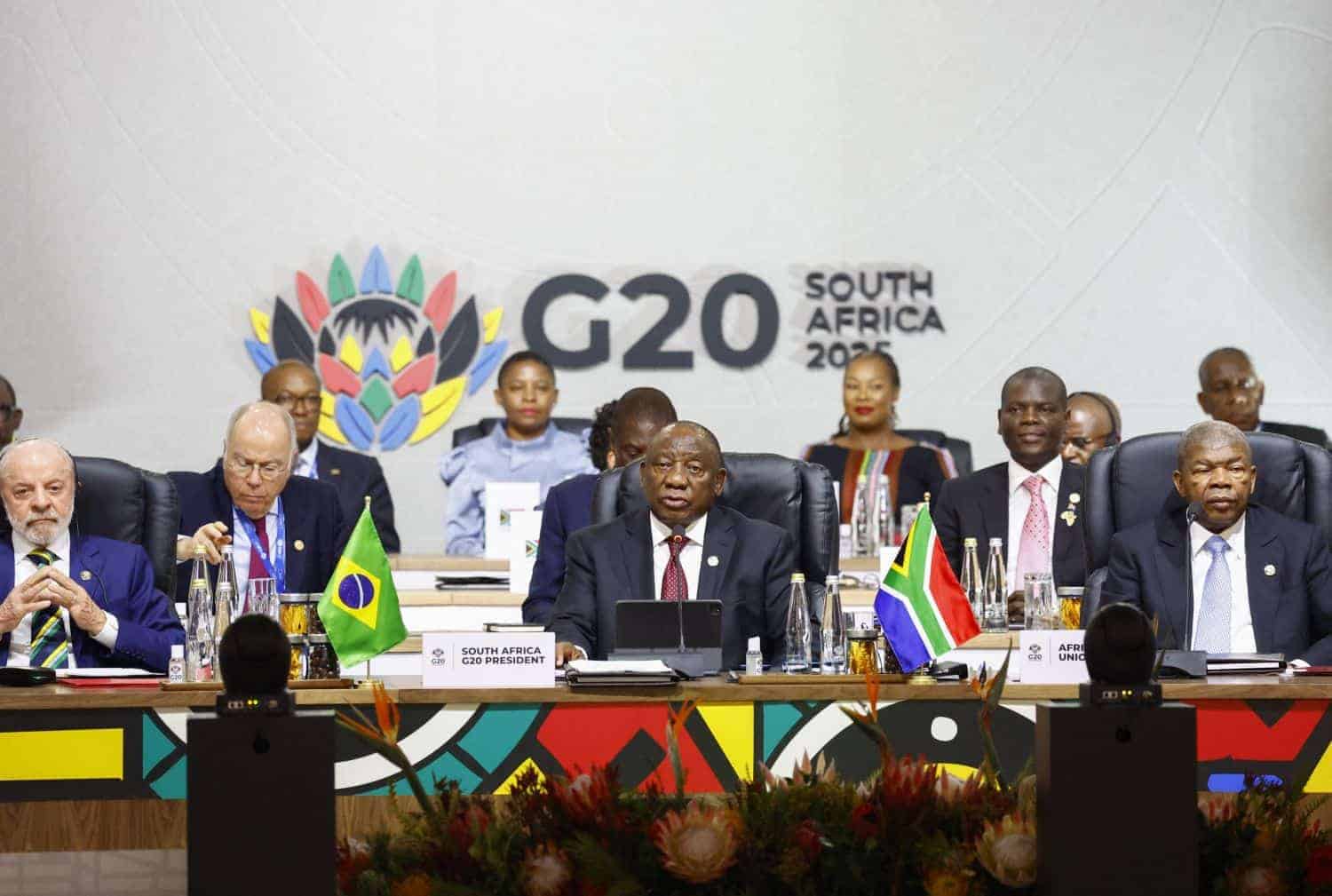
South Africa’s President Cyril Ramaphosa (C) speaks alongside Brazil’s President Luiz Inacio Lula da Silva (L) and Chairperson of the African Union Joao Lourenco (R) during the G20 Leaders’ Summit plenary session at the Nasrec Expo Centre, in Johannesburg on 22 November 2025. Picture: Thomas Mukoya / POOL / AFP


South Africa has never shied away from the global spotlight. From political news and high-profile arrests to sporting triumphs and entertaining dance moves, Mzansi continues to draw the world’s attention. Something, an analyst tells The Citizen, affects our global image.
While some of these moments inspire pride, others spark concern.
Has South Africa’s image on the world stage remained resilient, or has it begun to fracture under the weight of its controversies?
We look back at five moments that made international headlines in 2025.
Donald Trump and white genocide
In what has been described as a “sudden” shift by former president Thabo Mbeki, US President Donald Trump has made it clear South Africa is no longer in his good books.
In February, Trump signed an executive order to cut funding for South Africa. This was amid false claims of white genocide and the signing of the Expropriation Act.
Trump accused South Africa of “doing very bad things” and human rights violations.
In May, President Cyril Ramaphosa embarked on a working visit to the USA from 19 to 22 May 2025.
Ramaphosa met with Trump at the White House to discuss bilateral, regional and global issues of interest.
The meeting did not go particularly well, as Trump ambushed Ramaphosa with “evidence” of white genocide in South Africa.
The meeting made international headlines, as publications fact-checked Trump’s false claims.
The United Nations (UN) says it has found no evidence of Trump’s allegations.
G20 Summit
South Africa successfully hosted the G20 Summit in October. World leaders attended the summit despite the Trump controversies, with the US deciding not to attend.
The G20’s adoption of a leaders’ declaration on the opening day of the summit came as a surprise to many.
ALSO READ: G20 declaration: Have world leaders turned their backs on Trump?
Unfortunately, South Africa will not be participating in any G20 activities in the coming year.
The Presidency said in early December that South Africa would take a “commercial break” for now and wait for the US to hand over the G20 presidency to the United Kingdom in 2027 before resuming G20 activities.
Trump has made it clear South Africa is not welcome.
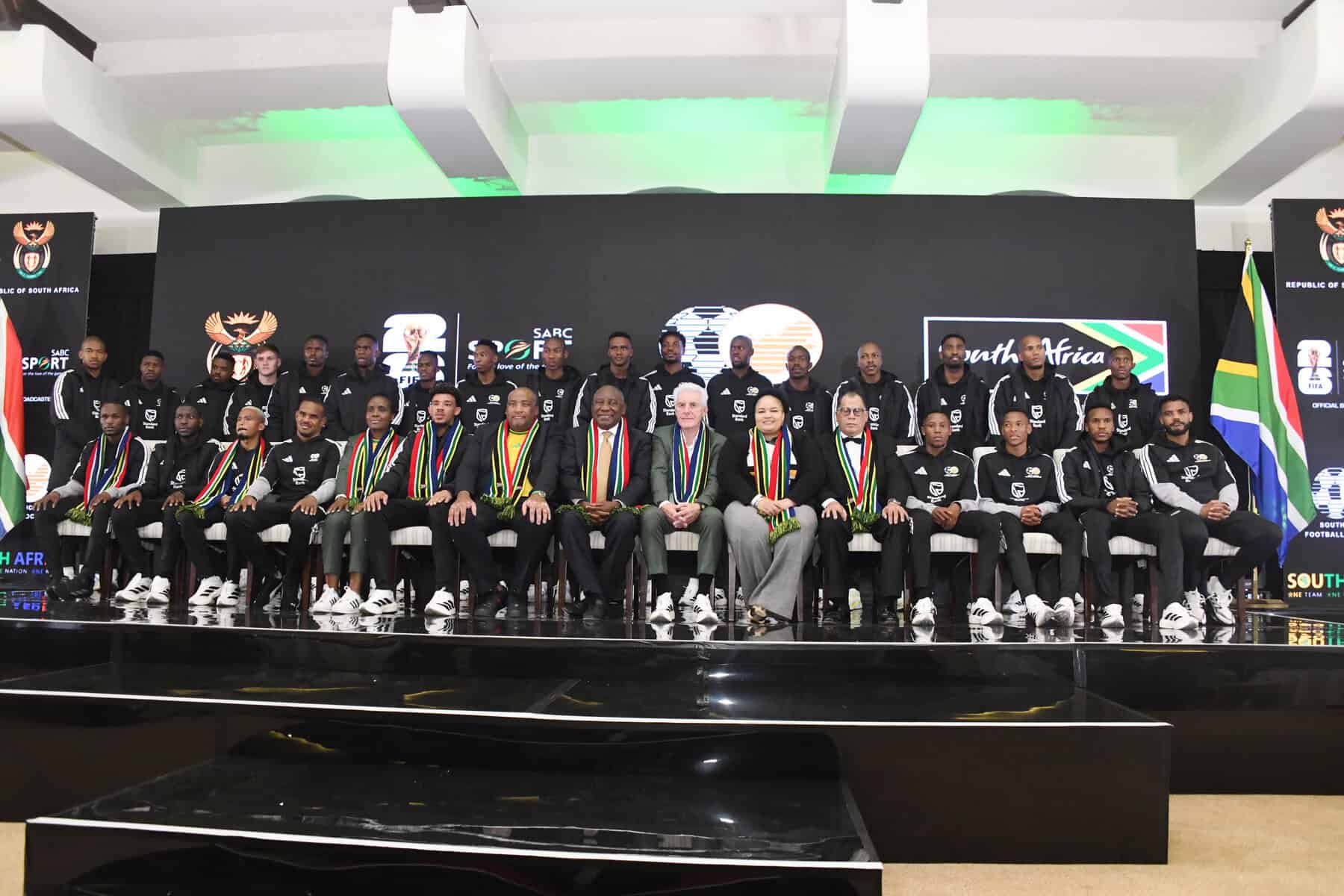
Bafana Bafana
In September, South Africans faced their worst soccer nightmare after the FIFA Disciplinary Committee sanctioned the South African Football Association (SAFA) for having fielded an ineligible player, Teboho Mokoena, in the South Africa v. Lesotho match played on 21 March 2025 in the FIFA World Cup 2026 preliminary competition.
The FIFA Disciplinary Committee declared the match forfeited by Bafana Bafana by a score of 3-0.
ALSO READ: Bafana Bafana reach World Cup wonderland
SAFA was also ordered to pay a fine, while Mokoena received a warning.
Weeks later, Bafana Bafana still topped Group C and qualified for the 2026 Fifa World Cup finals in the USA.
This was Bafana’s first qualifying for a World Cup since 2002.
Palestinian flights
On Thursday, 13 November, 153 Palestinian travellers arrived at OR Tambo International Airport via a Global Airways charter flight originating in Kenya.
“Following their failure to pass the immigration test and given that none of the travellers expressed an intention to apply for asylum, they were initially denied entry,” said the BMA.
ALSO READ: NGOs to provide humanitarian assistance to 130 Palestinians who arrived at OR Tambo
Several NGOs intervened, and some of the Palestinians were admitted.
This was the second flight into the country.
However, the Department of Home Affairs has since withdrawn South Africa’s 90-day visa exemption for Palestinian passport holders.
Greylisting
In October, the Financial Action Task Force (FATF) announced that South Africa had exited the FATF greylist
This followed the conclusion of the FATF Plenary meetings, held on 22-24 October 2025 in Paris, France. South Africa was placed on the FATF greylist in February 2023.
In July 2025, assessors visited South Africa to confirm the sustainability of the reforms they had been informed about.
The country has since been removed from the greylist.
‘We cannot pretend’
Tshepo Matseba, managing director of Reputation 1st Group, says that while South Africa carries several narratives at the same time, as with many other democracies, we cannot pretend that crime, corruption and political instability do not impact how the country is perceived internationally.
“Major incidents of state capture, governance failures and service delivery breakdowns have understandably fuelled concern among investors, rating agencies and foreign media,” Matseba told The Citizen.
However, the global narrative should not be taken as gospel, as it is sometimes a platform for political theatre, he says.
Trump’s white genocide narrative is an example of political theatre.
“No one outside Mr Trump’s inner circle knows exactly why he persists with this narrative, but it is reasonable to suspect that it has more to do with domestic political mobilisation in the US and pressure on South Africa over its genocide case against Israel at the International Court of Justice than with the lived reality of safety and security in our country,” he says.
“South Africa is associated with difficult narratives around crime and corruption, and some of those are grounded in reality. But they are not the full story of who we are. At times, they are exaggerated, taken out of context or deliberately weaponised.
“A responsible global conversation about South Africa must acknowledge our governance failures and the harm they cause, but it must also recognise ongoing reforms, institutional resilience and the fact that we are not a passive subject in someone else’s geopolitical script.”
It’s not all bad
Despite what we may be led to believe, South Africa has its positives beyond the negative headlines.
We are still seen as one of the most diversified and industrialised economies in Africa, and the government has played a role in this through Operation Vulindlela.
There is also progress in improving electricity reliability, with Eskom opening up the grid to independent power producers, he says.
In October, Minister of Electricity and Energy Dr Kgosientsho Ramokgopa says the country will, for the first time in history, generate more electricity from clean energy sources than from fossil fuels.
READ MORE: Ramokgopa details government’s R2.2 trillion investment in move towards green energy
Although they have earned us some backlash from the US, the G20 summit and the ICJ case against Israel have earned us a reputation in global governance, he says.
“South Africa’s G20 Presidency, under the banner of solidarity, equality and sustainability, positions us as a bridge between the Global South and developed economies. We are using that platform to advance Africa’s priorities on debt relief, climate justice, inclusive growth and reform of multilateral financial institutions.
“Our decision to approach the ICJ over the situation in Gaza, regardless of where one stands politically, has reinforced the perception of South Africa as a country that is prepared to test difficult questions through international law, not through silence or violence.
“While crime and corruption undeniably damage our reputation and hurt the confidence of our own citizens, the foundations of South Africa’s Nation Brand remain intact. Our task is to ensure that the story of reform, resilience and opportunity is told with the same volume as the story of crisis.”
‘Reputation is not destiny’
South Africa’s reputation depends on those we have put in power to ensure our country’s progress.
“The groundwork has been laid through Operation Vulindlela, the response to grey listing, our G20 Presidency and our engagement at platforms such as the World Economic Forum, where Team South Africa has consistently positioned the country as open for business and ripe for investment.”
However, if crime and corruption continue to spiral, and Eskom fails to contain load shedding, the negative narrative will harden and drown out our positive messaging.
“International audiences are sophisticated. They listen to what we say at Davos or at the G20, but they also watch what happens in our courts, municipalities and streets,” says the reputation specialist.
“We have the institutional capacity, the human capital and the international goodwill to shift our narrative in a positive direction. Crime and corruption remain serious threats to our brand, and we must treat them as such: not only as moral and legal failures, but as direct risks to investment, tourism, trade and soft power.
“If we can show sustained progress in tackling those issues, while leveraging our diplomatic leadership and reform agenda, South Africa’s global image can and will improve over the next few years. The world is not asking us to be perfect. It is asking us to be credible.”
READ NEXT: South Africa concludes G20 presidency, becomes IBSA chair