Dams are developed to suit the conditions and requirements of various regions.
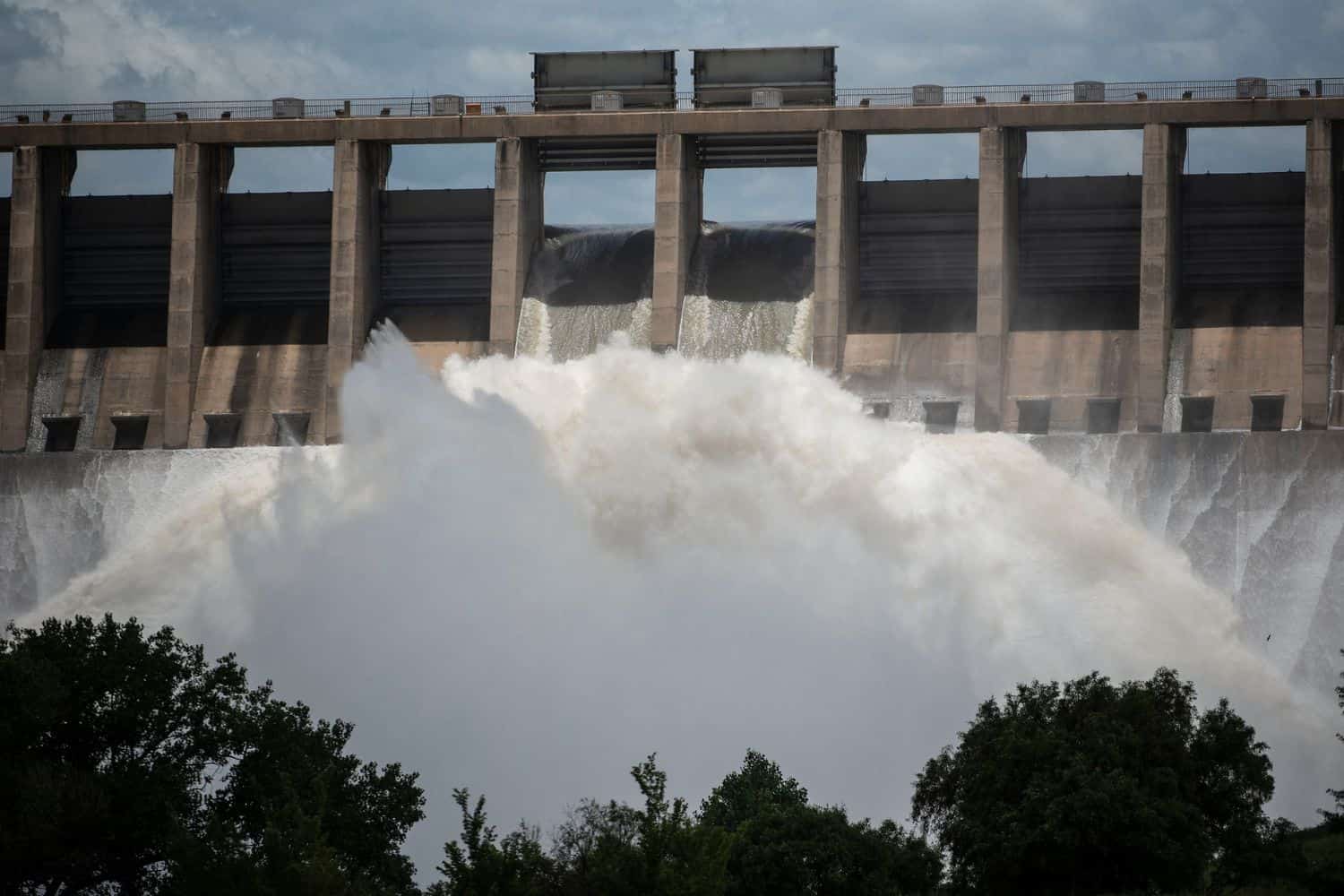
Vaal Dam. Picture: Michel Bega


Multiple provinces in South Africa are reporting dam levels exceeding full capacity amid the country’s summer rainfall season.
According to the Department of Water and Sanitation’s provincial weekly report on dam levels dated 5 January 2026, the national water storage system is experiencing rising dam levels across provinces.
The department has previously stated that it systematically operated and monitored major dams to ensure they performed as intended, including for domestic use, maintenance, agriculture and irrigation.
“Dams are developed to suit the conditions and requirements of various regions. It is thus to be expected that there will be differences in dam capacities.”
Free State dams reach full capacity
Of the 21 monitored dams in the Free State, 10 have reached or exceeded full storage capacity.
The department reported that eight dams recorded levels above 90%, while only two remain below the 60% threshold.
The Vaal River Barrage Dam is the only dam that has recorded a level of 80%, currently standing at 87%.
The province’s total storage capacity stands at 100.5% this week, according to the department’s latest data, maintaining the same level as last week and representing a substantial increase from last year’s 68.6%.
Major storage facilities are performing exceptionally well. The Vaal Dam, with a full storage capacity of 2.5 billion cubic metres, recorded 103.8% capacity this week. This is a slight increase from last week’s 103.6% and a dramatic improvement from last year’s 24.0% recorded around the same period.
ALSO READ: Vaal Dam water levels surge above capacity amid heavy summer rains
The department noted that the Bloemhof Dam, with a capacity of 1.2 billion cubic metres, reached 98.0%.
Meanwhile, the Gariep Dam, the country’s largest dam with a storage capacity of 4.9 billion cubic metres, maintained 97.8% capacity this week. This is a slight decrease from the previous week’s 99.9%, and last year’s 71.2% recorded around the same period.
Sterkfontein Dam, with a full storage capacity of 2.6 billion cubic metres, recorded 100.1% this week, the department confirmed, virtually unchanged from last week’s 100.2% but higher than last year’s 97.8%.
Gauteng dams at optimal levels
All five monitored dams in Gauteng province have exceeded full capacity, with the department reporting a provincial average of 103.1% this week, down from last week’s 103.2% but higher than last year’s 84.7%.
The Bronkhorstspruit Dam recorded 104.3% capacity this week, up from 104.6% last week, according to the department’s data.
Meanwhile, the Rietvlei Dam reached 102.0% capacity, up from last week’s 101.1% and a slight improvement from last year’s 100.0%.
Mpumalanga maintains strong water levels
Of the 22 monitored dams in Mpumalanga province, 18 have reached or exceeded full capacity. Water storage facilities continue to perform well, with the department reporting a provincial average of 100.4% this week, up 0.4 percentage points from last week and significantly above last year’s 82.0%.
The Driekoppies Dam recorded 102.2% this week, up from last week’s 99.0% and above last year’s 78.7%.
The department noted that the Grootdraai Dam reached 101.4% capacity, showing decline from last week’s 102.1% but well above last year’s 95.4%.
Jericho Dam recorded 99.5% capacity this week, down slightly from last week’s 97.3% but significantly higher than last year’s 61.4% recorded in the same period.
KwaZulu-Natal dam levels
Only 11 of KwaZulu-Natal’s 19 monitored water storage facilities have reached full capacity.
The department reported a provincial average of 93.3% this week, up from last week’s 91.3% and higher than last year’s 80.3%.
Pongolapoort Dam, with a full storage capacity of 2.3 billion cubic metres, recorded 88.4% capacity this week, an increase from last week’s 84.0% and above last year’s 74.4%.
Additionally, Woodstock Dam, with a capacity of 355.5 million cubic metres, stood at 94.1% capacity, down from last week’s 95.7%.
Albert Falls Dam recorded 101.6% this week, a slight increase from last week’s 101.9% and substantially above last year’s 78.8%.
ALSO READ: KZN weather damages over 100 houses as soup kitchens set up for affected residents
Western Cape shows mixed results
Of the 44 monitored dams in the Western Cape province, only the Keerom Dam reached full capacity.
The department recorded a provincial average of 61.0% this week, down from 63.4% last week.
The Theewaterskloof Dam, the province’s largest water supply facility, with a full storage capacity of 479.3 million cubic metres, reached 63.4% capacity this week, declining from last week’s 67.1%.
The Berg River Dam, with a capacity of 127.1 million cubic metres, recorded 70.5% capacity this week, down from last week’s 73.0%, according to the department.
The Voëlvlei Dam stood at 77.0% capacity, the department noted, down from last week’s 79.4% and lower last year’s 89.3%.
Eastern Cape dam levels
Of the 44 monitored dams in the Eastern Cape, only 10 have reached or exceeded full capacity. The department reported a provincial average of 75.3% this week, slightly down from last week’s 75.5% and lower than last year’s 81.5%.
Umtata Dam, with an FSC of 244.7 million cubic metres, recorded 99.4% dam levels this week, down from the previous week’s 98.5% and last year’s 101.0% in the same period.
Ncora Dam, with an FSC of 144.9 million cubic metres, recorded a water level of 100.7% this week, down from the previous week’s 102.1% and last year’s 98.4% in the same period.
Darlington Dam, with an FSC of 179.9 million cubic metres, recorded 39.5% this week, the same level as last year in the same period. However, this was an increase from the previous week’s 36.9%.
North West dam levels
Of the 28 monitored dams in the North West province, 20 have reached or exceeded full capacity. Water storage facilities averaged 97.7% capacity this week, up from last week’s 96.6% and well above last year’s 63.5%.
Hartbeespoort Dam, with a full storage capacity of 185.8 million cubic metres, recorded 96.3% capacity, marginally higher than last week’s 96.1%, and well above last year’s 94.6%.
Molatedi Dam, with a full storage capacity of 200.8 million cubic metres, recorded 101.4% capacity, down from last week’s 101.6%, and significantly above last year’s 26.1%.
Roodekopjes Dam with a full storage capacity of 96.4 million cubic metres, recorded 84.0% capacity, higher than last week’s 80.8% and last year’s 75.5%.
Northern Cape dam levels
Of the six monitored dams in the Northern Cape province, three have reached or exceeded 100%.
The department recorded a provincial average of 101.5% this week, the department noted, unchanged from last week but significantly above last year’s 68.9%.
Boegoeberg Dam recorded 133.7% this week, up from the previous week’s 128.4%.
Spitskop Dam maintained 100.9% from last week; however, it was a substantial increase from last year’s 39.7% in the same period.
Vaalharts Weir Dam recorded 84.1% this week, down from the previous week’s 91.1% but up from last year’s 74.9%.
Limpopo dam levels
Of the 29 monitored dams in Limpopo province, 20 have reached full capacity.
The reservoirs achieved an average capacity of 89.7% this week, up from last week’s 89.4% and above last year’s 72.3%.
De Hoop Dam, with a capacity of 348.7 million cubic metres, recorded 101.5% capacity this week, up from last week’s 100.7% and last year’s 100.4%.
The Flag Boshielo Dam, with a capacity of 185.2 million cubic metres, recorded 107.0% capacity this week, up from last week’s 105.5%. Last year, around the same period, the dam stood at 80.6%.
Middel-Letaba Dam with a capacity of 172.0 million cubic metres, recorded 8.4% capacity this week, up from last week’s 8.3%. Last year, around the same time, the dam was at a much lower level, at 1.1%.
READ NEXT: Heavy downpours in 5 provinces and mostly warm weather expected on Friday