
Meyer's comments follow plans by activist Dr Ernst Roets, founder of Lex Libertas, to erect 3 000 white crosses on the National Mall in Washington.
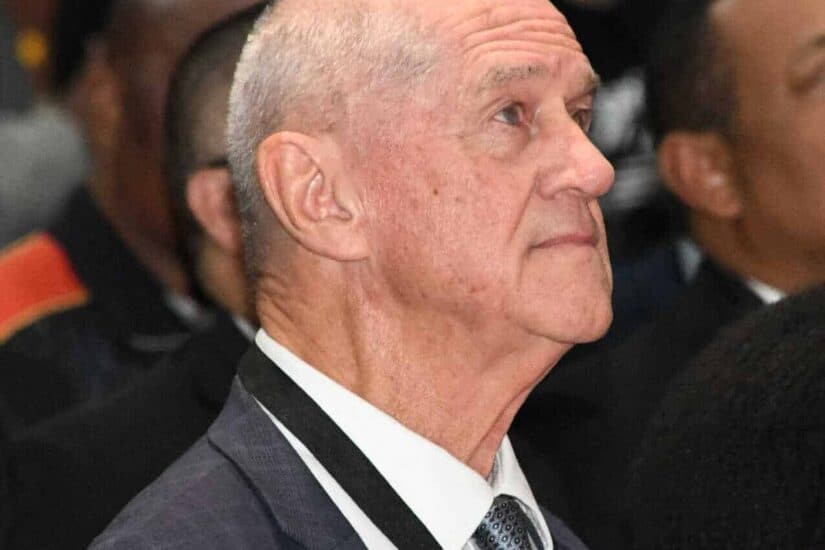
The new South African ambassador to the US, Roelf Meyer. Picture: Gallo Images


South Africa’s ambassador to the United States (US), Roelf Meyer, has rejected claims of “political persecution” against white farmers, warning that such rhetoric risks damaging bilateral relations and misrepresenting the country’s crime crisis.
Meyer’s comments follow activist Dr Ernst Roets, founder of Lex Libertas, who initiated the White Cross Project, which plans to erect 3 000 crosses on the National Mall in Washington, DC, to raise awareness of farm murders in South Africa (SA), sparking controversy and debate over claims of minority victimisation under the ANC government.
Distortion
The display, visible from the US Capitol, forms part of a conference that the organisation will host with American political figures in Washington.
Meyer said the campaign distorts South Africa’s reality.
“With every murder in South Africa, whether it’s farm murders, township murders or gang violence, we must have empathy and sympathy. But to call it political persecution is very dangerous, because first of all, it’s not true, and secondly, there is no proof,” he told eNCA.
Warning
Meyer cautioned that misrepresentationSouth Africa abroad could backfire.
“If their advocacy leads to punitive measures against South Africa, it will affect all, and the blade might just as well return to them.”
He urged Roets to redirect his efforts towards preventing violent crime across all communities, rather than promoting a narrow cause.
Violent crime
The ambassador acknowledged that violent crime remains unacceptably high, but insisted that social cohesion is stronger than portrayed.
“The relationship between black and white in South Africa has probably never been as good as it is now,” he said.
US-SA relations
Meyer also addressed strained US‑SA relations since President Donald Trump’s administration raised “five asks” of South Africa, including concerns over Black Economic Empowerment (BEE).
He said South Africa has responded to most of these, and dialogue is needed to restore trust.
“The normal thing is, if there’s a disagreement, you sit down. But so far it’s difficult to persuade the American authorities to have a dialogue,” Meyer noted.
American companies
Despite tensions, Meyer highlighted that more than 600 American companies operate successfully in South Africa, creating jobs and investment opportunities.
He pledged to continue working to normalise relations and counter false narratives abroad.
White crosses campaign slammed
Meanwhile, Afrikaners for South Africa (Afsa) slammed lobby group Lex Libertas’ planned display of 3 000 white crosses in the US, warning it exploits farm victims’ suffering to push a narrow political agenda, misleads Americans about South Africa, and risks deepening racial divisions.
“We believe the campaign exploits the suffering of farm victims to advance a narrow political agenda, presents Americans with a misleading picture of South Africa and risks deepening racial divisions at home.
“We are Afrikaners. We unequivocally condemn farm killings and all violence against farming communities. Victims deserve justice, survivors need support, and rural safety requires urgent action.
“Our concern is that their suffering is being used to tell a misleading story and advance a private political agenda,” the organisation said.
Visa restrictions
Last week, US Secretary of State Marco Rubio announced new visa restrictions targeting foreign nationals accused of involvement in race‑based discrimination and uncompensated land seizures in South Africa.