Water losses hit 48% and electricity losses 50% as Thaba Chweu fails to fund its budget.

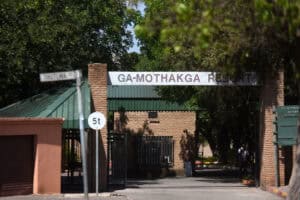
The main road of Graskop. The financial health of the municipality that runs the town has been flagged by the auditor-general. Picture: iStock


Thaba Chweu local municipality’s financial health remains under severe pressure, with the auditor-general (AG) flagging a number of concerns about its ability to meet its obligations.
The municipality took an average of 263 days to pay creditors over the past two years, significantly longer than the less-than-30-day period stipulated by legislation, according to the AG’s latest financial health data.
Thaba Chweu spent R103.75 million more than it generated
The AG also found about 99% of municipal debt was unlikely to be recovered. The municipality spent R103.75 million more than it generated during the financial year, resulting in a deficit.
More than 50% of the following year’s budget had already been spent in previous years, the data showed.
The municipality, which includes Lydenburg, Mashishing, Sabie, Graskop, and Pilgrim’s Rest, also reported significant water and electricity losses.
According to the AG, Thaba Chweu disclosed R59.5 million in water losses in its annual financial statements, equivalent to 48% of all water flowing through municipal pipelines.
It also disclosed R161.9 million in electricity losses, equivalent to 50% of all electricity units distributed by the municipality.
Water losses hit 48% and electricity losses 50%
The total operating budget approved by council was R1 billion, while actual employee costs stood at R280 million, municipal spokesperson Ezrom Sekgobela said.
The municipality spent R272.9 million on employee costs in the previous financial year, including senior managers, while R13 million was spent on councillors’ remuneration, he added.
Sekgobela denied allegations that the municipality was currently overstaffed but said organisational realignment needed to be prioritised to ensure “the municipal structure complied with the prescribed design matrix”.
He acknowledged the municipality experienced cash-flow constraints, particularly in maintaining its Eskom account, which he attributed to excessive electricity distribution losses.
These losses were currently at 52%, compared with a norm of 10%, Sekgobela said.
Owes Eskom R2.2 billion
“In the charges of the Eskom account, R95 million was interest due to the inability to finance the current account. Therefore, except for the Eskom account, the municipality does not have any other outstanding creditors.”
However, its Eskom liability, currently standing at R2.2 billion, made it impossible for the municipality to table a funded budget.
“Given our total projected budget in terms of revenue streams is R1 billion, council has already taken steps to partner with Eskom through the Distribution Agency Agreement.
“It will restructured the debt into non-current liability to allow the municipality to have a funded budget and also freeze the interest charges during the period of partnership.
“That aims to reverse the distribution losses and optimise the electricity trading service,” Sekgobela said.
Operational budget ratio for 2025-26 was 26%
The operational budget ratio for 2025-26 was 26%, while the figure projected for 2026-27, based on approved budget figures, was 29%.
Both figures were within the 25% to 40% norm prescribed under the Municipal Finance Management Act Circular 71 ratio calculations, he said.
Sekgobela was also asked about allegations that a person who collapsed beside a road died because an ambulance was unavailable at the Thaba Chweu Disaster Management Centre.
He referred the matter to the health department, saying the provision of ambulances was that department’s responsibility.
Disaster management was an unfunded mandate for Thaba Chweu municipality and funding concerns had been escalated to the district municipality and National Treasury, Sekgobela said.