Johannesburg has six air quality monitoring stations across the city, as well as two dedicated to hydrogen sulphide levels.
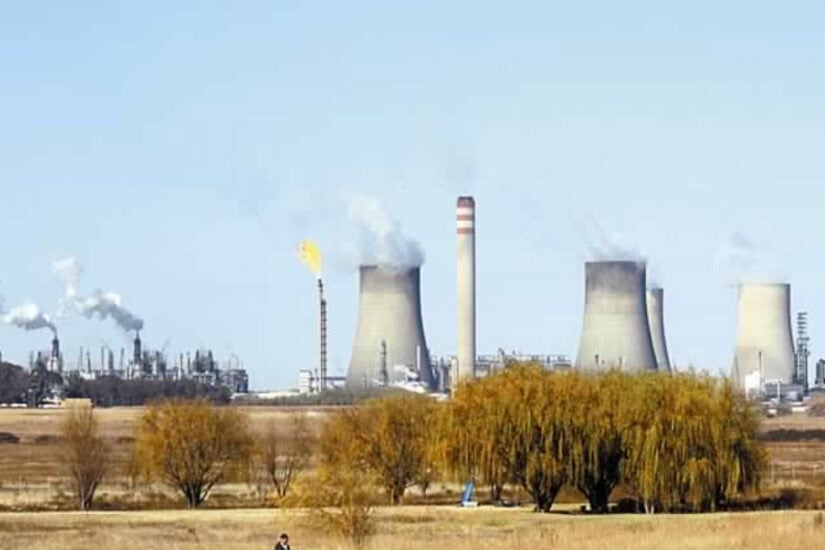
Picture: Ridge Times.


The Johannesburg municipality has yet to confirm the source of the sulphur smell that hung over the city this weekend, but is certain it came from a neighbouring province.
Complaints about the foul smell hanging over areas of Johannesburg were reported late last week, with the city offering its explanation on Monday.
The city stated that the occurrence indicated the long-range movement of air pollutants, most likely from large industrial operations in Mpumalanga.
Possible health complications
The period between January and March has, over the last five years, seen regular incidents of a lingering city-wide smell of rotten eggs, the city explained.
To monitor these occurrences, the municipality has two hydrogen sulphide (H₂S) monitoring stations located in Buccleuch and Alexandra.
Additionally, Johannesburg has six ambient air quality monitoring stations that measure particle matter, sulphur dioxide, nitrogen oxides, and ozone.
However, H₂S is responsible for the rotten-egg smell, and the city advises against prolonged recreation when the smell persists.
“As a precautionary measure, communities are advised to remain indoors during periods of strong sulphur-like odours and to avoid strenuous outdoor activities.
“Vulnerable groups, including the elderly and children, should be closely monitored for symptoms such as eye and throat irritation, headaches, dizziness, and fatigue.
“Prolonged exposure may result in more serious health effects, including respiratory complications and potential neurological impacts,” the city warned.
Sasol ‘well within the limits’
The municipality noted that Johannesburg does not host “major heavy industrial activities” and that listed industrial operations in the city were licenced and monitored.
The environment, infrastructure and services department investigated the recent air pollution and found it was “widespread and not confined to a single location”.
It was concluded that the source was consistent with power generation and petrochemical operations east of Gauteng.
Sasol stated on Friday that nothing unusual had been detected at its Secunda plant.
“Available operational information indicates that all key plant systems have been functioning within normal parameters, and emissions monitoring shows levels well within the limits authorised in our atmospheric emissions licences.
“Recent assessments, including data from Sasol-managed and independent monitoring stations, do not indicate exceedances of applicable ambient air quality standards.
“While Sasol cannot comment on the source of odours reported in Johannesburg, we continue to monitor our operations and the regional ambient network closely,” Sasol confirmed.
Air quality standards questioned
Environmentalists took exception to Sasol’s “misleading” adherence to air quality standards that they state are far too lax.
“The fact that Sasol may be operating within the confines of its air emission licence does not mean that its emissions are at acceptable levels. Sasol is the biggest private emitter of toxic air pollutants in Africa,” Robyn Hugo, Climate Change Engagement Director at Just Share told The Citizen.
Centre for Research on Energy and Clean Air Co-founder Lauri Myllyvirta added that Sasol’s statement that the Secunda plant was operating as expected was in line with previously measured levels of air pollutants.
“[We] ran an hour-to-hour air pollution dispersion model that predicted the arrival of an air mass from Secunda to Jozi precisely at the time that people were reporting the odour,” he told The Citizen.
“Besides being toxic in itself, H₂S contributes to the formation of PM2.5 in the atmosphere, and that pollutant is the largest environmental health threat in South Africa and the world,” Myllyvirta concluded.
NOW READ: What the Johannesburg municipality needs to get right in 2026