

How to: treat a bluebottle sting
Learn more about these mysterious ocean dwellers and what to do when stung by one.
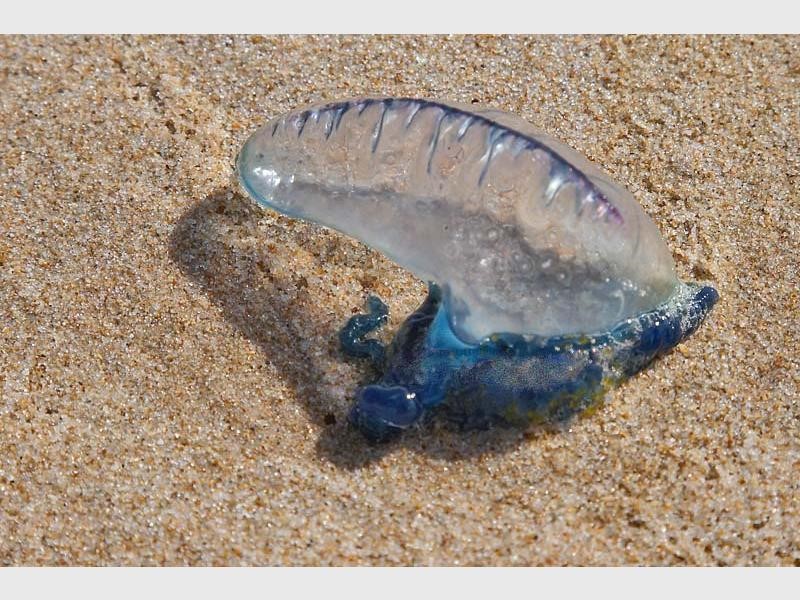
Bluebottles can be a real pain to visitors to the sea.
The bubble-looking animals wash up on beaches and at some point, everyone has experienced the fiery sting, but few know what fascinating creatures they really are.
Bluebottles are not ambidextrous, this means that some are left-handed and others are right-handed.
These creatures are drifting along on the wind, but their direction is not determined by wind alone.
A left-sided bluebottle drifts rightward from the direction the wind blows and a right-sided one drifts leftward.
This explains the even distribution of these animals throughout the oceans.
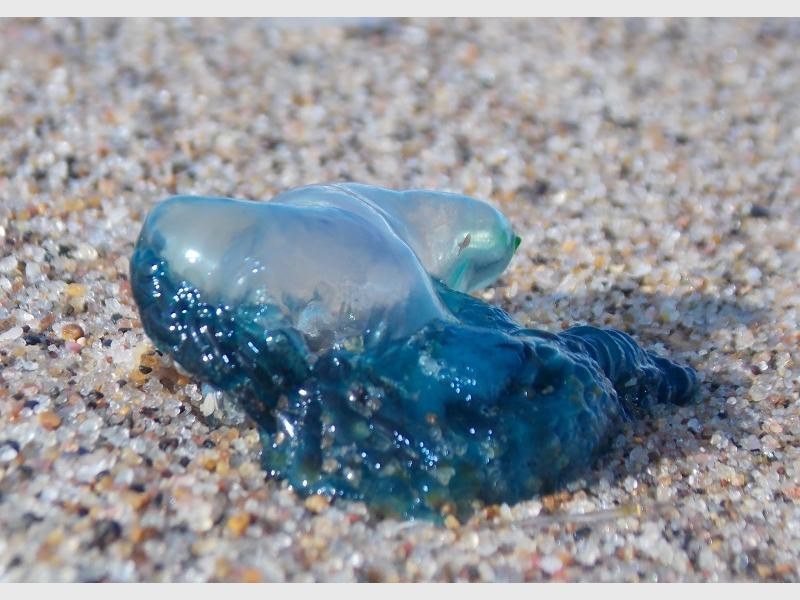
“Blue bottles do not seek out humans as prey but if we happen to be in the water at the same time as them and we come into contact with one of their tentacles, it will trigger a reflex release of nematocysts (stinging cells),” explains marine biologist, Ann Kunz, of the South African Association for Marine Biological Research.
If a bluebottle feels threatened, it is able to deflate its ‘bubble’ and go into a submarine mode for a while.
Their sting is different to that of a jellyfish, so while a jelly’s sting can be treated with vinegar, this is not ideal for a bluebottle’s and it can actually cause more discomfort.
What to do when stung by a blue bottle
When suffering from the whip-like sting, try these remedies:
- Carefully remove all tentacles with the tips of your fingers as only a harmless prickling can be felt. As itchy as it may be, do not scratch the area or rub sea sand on it.
- Rinse the remaining tentacles off with seawater, as freshwater could irritate the affected area.
- Place the stung area in hot water, as hot as can be tolerated. If the area is unrelieved by the heat or if hot water is not available, apply cold packs or wrapped ice.
- The most soothing remedy occurs right in the dunes, from a fleshy succulent with pink flowers: Carpobrotus edulis. Once breaking open the leaves, apply the aloe-like gel to the stung area but be careful not to rub the affected area. One will experience almost immediate relief.
- If the symptoms persist or for stings that cover a particularly large area or across the throat and face, seek medical assistance.

Stay in the loop with The North Coast Courier on Facebook, X, Instagram & YouTube for the latest news.
Mobile users can join our WhatsApp Broadcast Service here, or if you’re on desktop, scan the QR code below.