

Cancer fighting foods and what you need to know
The North Coast Courier spoke with qualified dietitian Kerryn Wuth of Nutrition Innovated in Salt Rock on why it is important to watch what you put into your body while undergoing treatment.

Cancer treatments are well-known to have a devastating impact on the human body, not forgetting the impact of the disease itself.
A disease in which abnormal cells divide uncontrollably and destroy body tissue, cancer has claimed the lives of over 6 million people globally this year alone.
In South Africa, 2020 saw 56 802 cancer deaths, with 108 168 new cases of the disease reported as indicated by the International Agency for Research on Cancer.
Breast, prostate, cervix uteri, lung and colorectal cancer were the most common types of cancer observed.
With this in mind, The North Coast Courier spoke with qualified dietitian Kerryn Wuth of Nutrition Innovated in Salt Rock on why it is important to watch what you put into your body while undergoing treatment.
“Food intake during treatment is important to maintain your nutritional status and strength. A person should consider the nutritional value of their food intake as a way to improve their resilience to lifestyle choices and as a way to activate protective pathways on a cellular level,” she said.
With a bachelor of science degree in dietetics, a postgraduate dietetics diploma and a diploma in sports nutrition, Wuth has worked with a number of people battling cancer.
“Understanding how and what to eat is important to consider. What I find is that it is something which helps people to feel like they are gaining a bit of control over their disease.”
While there may be no ‘magical foods’ to cure or prevent cancer, nutritional health plays an important big role.
“You need to be able to eat enough to improve your weight, muscle mass and nutritional biomarkers. Very often leading up to diagnosis a person has already suffered loss of appetite and weight loss. Aiming to improve these will increase their strength for starting treatment. Once a person is on treatment the side effects can be harsh and very often impact on a person’s eating habits and therefore their strength.”
Wuth warned that people should avoid applying labels to their way of eating and not believe everything they read online.
However, there are a few things to think about if you have been diagnosed with cancer.
Wuth suggests:
– Base your meals on plants – fill up on these and include vegetables, wholegrains, legumes and fruits.
– Adopt less invasive cooking methods. If you cannot eat raw, steam or grill, and avoid cooking in or heating fats.
– Do not eat processed, refined or convenience foods. The food you eat should be in its natural state.
– Avoid saturated fats, and eat lean. Opt for plant-based fats.
– Become aware of farming practices and what chemicals might be on, or in, the food you eat.
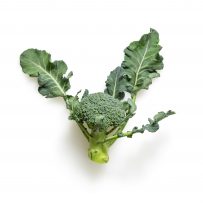
Asked what the strongest ‘cancer-fighting foods’ could be, Wuth said: “If you are going to place my head on a block, I am going to have to say broccoli sprouts. Any vegetable which falls in the cruciferous vegetable family can have huge benefits to improving our detoxification pathways and help us cope with the load that our lifestyle presents.”
People should also rethink pre-made salads and the likes which are often perceived to be healthy.
Pre-made salads often contain extras which may not be healthy.
“Remember that the further away a food is from its original state the lower the nutritional value. One must try to maximize the nutritional value of their diet as must as possible.”
The more processed the food, the higher the content of chemical additives like colorants, preservatives and flavorants.
“Additives contribute toward a person’s lifestyle load – the larger the load, the higher the risk,” she said.
While prevention may be better than cure, Wuth noted that simply following a healthy diet alone will not prevent cancer.
“Ultimately, it is a person’s overall lifestyle choices across the board that determines their risk for diseases like cancer,” she said, concluding that eating healthy does however still play a role in determining our body’s ability to protect itself.
For breaking news follow The North Coast Courier on Facebook, Twitter, Instagram and YouTube.

Stay in the loop with The North Coast Courier on Facebook, X, Instagram & YouTube for the latest news.
Mobile users can join our WhatsApp Broadcast Service here, or if you’re on desktop, scan the QR code below.