

Step lightly among the North Coast snakes
One is bound to spot one while on holiday in our subtropical environment, so it is a good time to become knowledgeable about the different species with this guide put together with the help of Ndlondlo Reptile Park's Neville Wolmarans.
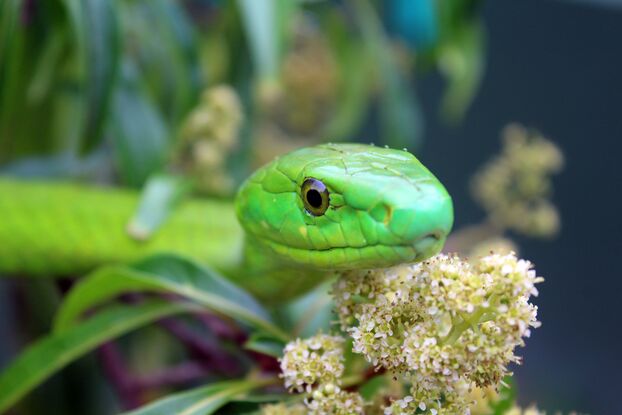
The hot summer weather on the North Coast means snakes go walkabout… or rather “slitherabout”.
Variegated bush snake
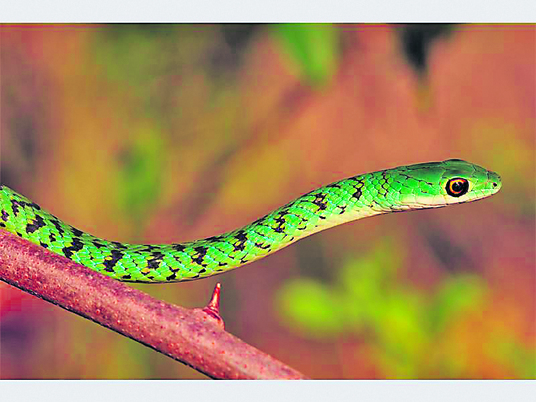
One of the most common snakes in the area, the spotted bush snake (also known as the variegated bush snake) is non-venomous and easily identified by the distinctive black spots on its green skin.
They love eating frogs and lizards, and are most commonly found in overgrown gardens, well-lit yards, fish ponds and other water features. According to Wolmarans, adults are generally small, slender snakes with long, thin tails. At maximum length they could reach 1.1 metres.
Eastern Natal green snake
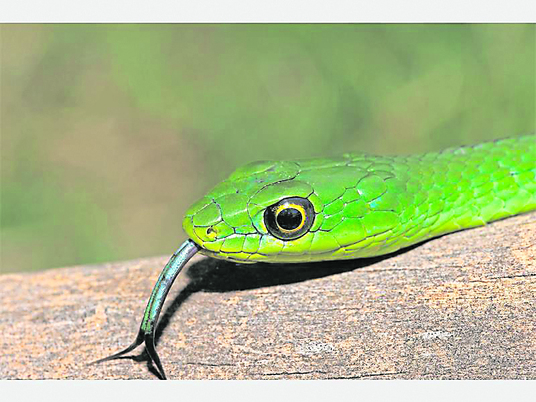
Don’t mistake the Eastern Natal green snake with the bush snake or green mamba. Perfectly harmless, frogs and lizards are the preferred snack for this snake which is actually a subspecies of the variegated bush snake.
Herald snake
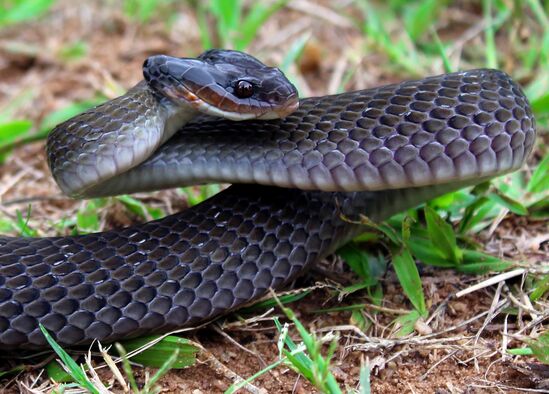
Mostly active during nighttime, the herald feeds exclusively on amphibians and are widespread from the Cape to central Africa.
While it cannot kill a person, its does pack a mildly venomous punch which causes a terrible headache in people. The very common slitherer can be found near water features, ponds, overgrown gardens and even at your pets’ water bowls. These snakes rarely grow to a size more than 700mm.
Brown water snake
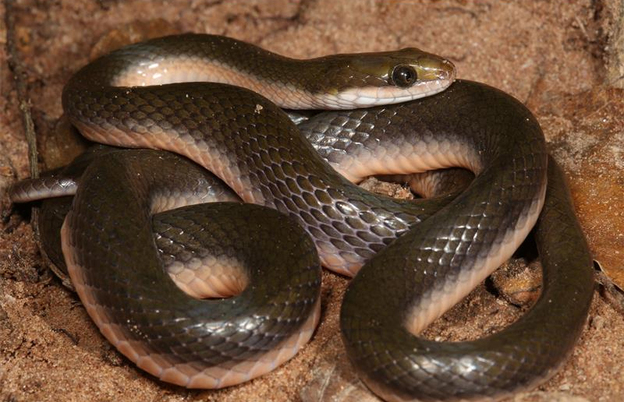
Also non-venomous, the brown water snake is commonly found after rainfall and near water features, fish ponds and bird and mice nests.
While they feed on almost everything from fish, tadpoles, frogs to small mice and nestling birds, this snake is often mistaken to be dangerous, which is not the case.
Expect this species to reach lengths between 200-735mm, though your chances of spotting one are not great because they are mainly nocturnal.
Natal black snake
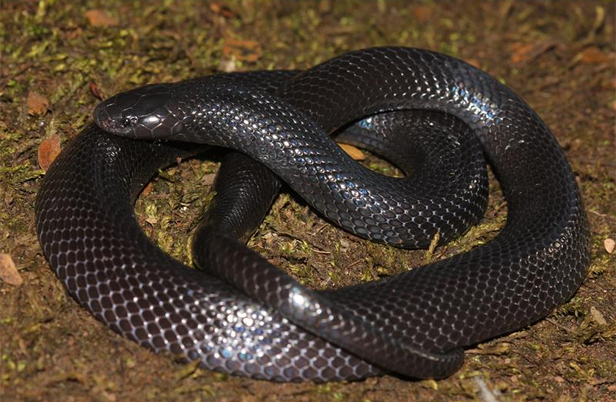
With a preference for a terrestrial, largely subterranean living arrangement, the Natal black snake also enjoys eating just about anything from frogs, lizards, other snakes, small mice and nestling birds.
In some cases, it will even eat prey which had already started to decompose. They range from Eastern Cape to Northern Zululand.
Opinions on the snake’s venom vary greatly, and while it is believed to be mildly venomous, bites from this snake are incredibly rare.
They can grow as long as 1.2 metres, being black completely above and below.
Night adder
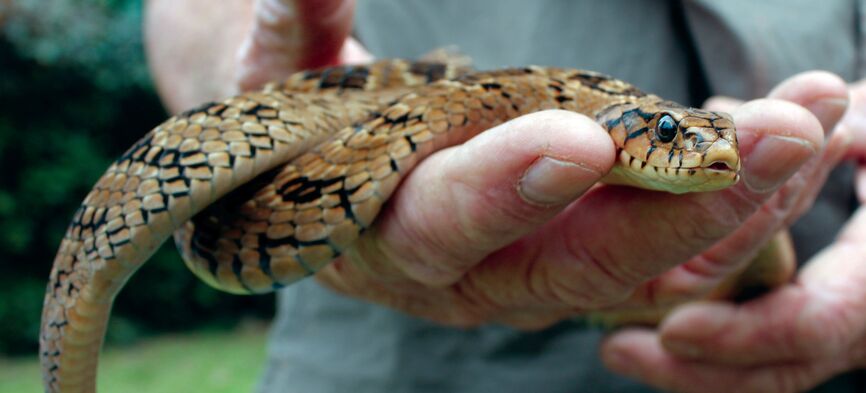
Active during the day (yes, you read that right) and quite aggressive when provoked, the night adder’s poison is non-lethal, but definitely a bite you’d prefer to avoid owing to the possible loss of a digit or two.
One can find these snakes mostly after rainfall and they feast exclusively on amphibians.
Expect to find it in well-lit gardens, water features and fish ponds.
Their size ranges between 130-600mm, appearing brownish with darker brown diamond shapes down the back and a dark ‘V’ on the neck and head.
Mozambique spitting cobra
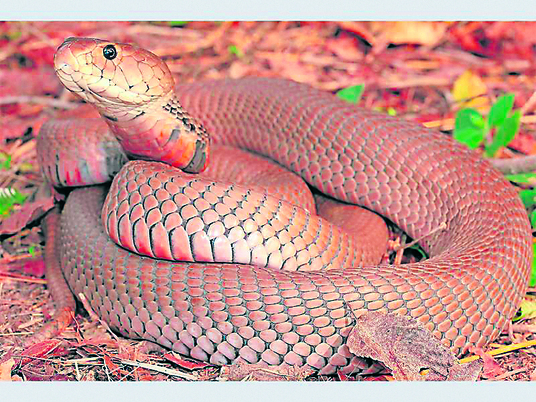
On the move during the day or night, the Mozambique spitting cobra has a potent cytotoxic venom which destroys cells. Bites are required to be treated with antivenom, often also requiring corrective surgery.
They are common on the North Coast and love well-lit gardens, water features and clutter. They feast on amphibians, reptiles, rodents, bats, birds and their eggs, and can range in size from 230mm to 1.4 metres.
They can be identified by reddish brown, or grey to charcoal features on top of its body, while below they are orange with one or more dark bands and random speckling in the throat region.
Green mamba
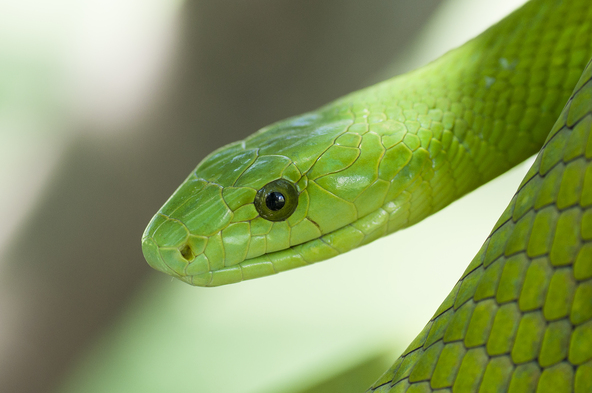
Beware of the green mamba, which, while exceptionally beautiful, is all the more deadly.
With a potent neurotoxic venom, the green mamba’s habitat includes coastal dune forests. It is quite common around Westbrook, Zimbali, Seaward and adjoining southern fringes of Ballito.
However, it is largely absent from central Ballito, Chaka’s Rock and most of Salt Rock, only again appearing at Sheffield, and from there through from Tinley Manor to Tugela Mouth.
The snake can grow to a length of 2.5 metres and they enjoy feasting on birds, bats and rodents.
Black mamba
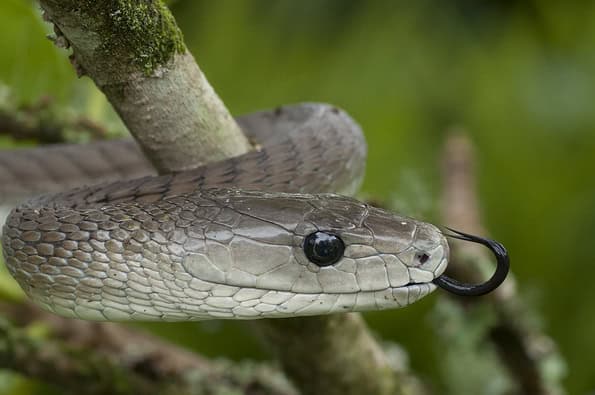
Bites from a black mamba may be rare, but if you are bitten you better get your hands on the antivenom quite fast.
With its potent neurotoxic venom, the black mamba can be found from the west of the N2 freeway, commonly around Verulam, Tongaat, Shakaskraal through to Stanger and all inter-linking settlements.
They are attracted to overgrown gardens, bird baths, bird feeders, cat and dog food bowls and clutter. They enjoy eating birds, bats and rats, and can grow to a length of 4 metres.
Vine snake
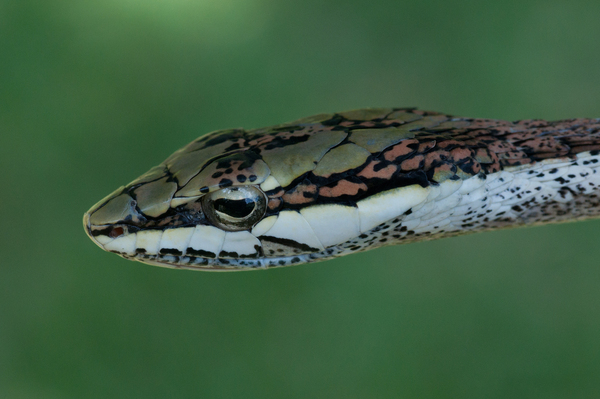
There is no antivenom for a bite from a vine snake, and while bites are exceptionally rare, death is almost certain.
With a highly venomous and potent hemotoxin, this snake is found from the Cape to central Africa, most commonly on the North Coast to the east of the N2 freeway. They feed on amphibians, lizards, other snakes, and even birds, bats and small rats.
The average length of a vine snake ranges from 550-950mm. While they are daytime snakes, they have learned to hunt around security lights at night.
Boomslang
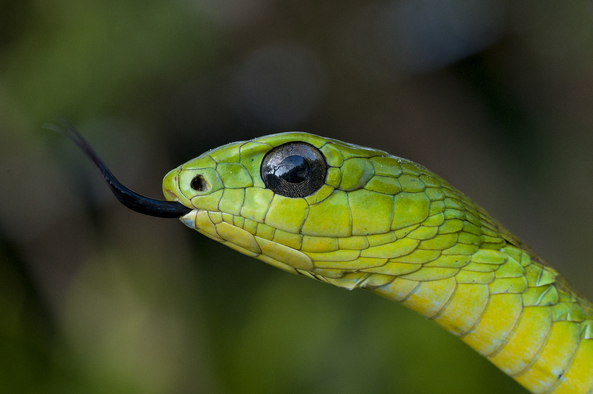
Another daytime snake to be cautious of is the boomslang, which can grow to a length of 2 metres.
From amphibians to lizards, birds and more, this snake eats about anything and packs a highly venomous hemotoxic bite. Bites are however rare, but require a monovalent antivenom for treatment.
They are very common and attracted to overgrown gardens, bird feeders, bird baths, hedges and creeper covered fences.
If you are ever in need of snake removal, call Ndlondlo Reptile Park at 082 561 4969.
Entry is R80 for adults and R50 for children (age 4 to 16) and pensioners.
You can also visit the park daily from 9am-3pm, at Sugar Rush Park.
Follow The North Coast Courier on Facebook, Twitter, Instagram & YouTube for breaking news
Telegram Broadcast Service: https://t.me/joinchat/yJULuN8NaCs5OGM0
WhatsApp Broadcast Service: Add The Courier to WhatsApp at 082 792 9405 and WhatsApp your name and surname to be added.

Stay in the loop with The North Coast Courier on Facebook, X, Instagram & YouTube for the latest news.
Mobile users can join our WhatsApp Broadcast Service here, or if you’re on desktop, scan the QR code below.