

Dune: An imperfect first film, with the potential for a great series
Dune is far from a perfect film, but the scale of Villeneuve's vision is worth watching, on the biggest screen you can find.
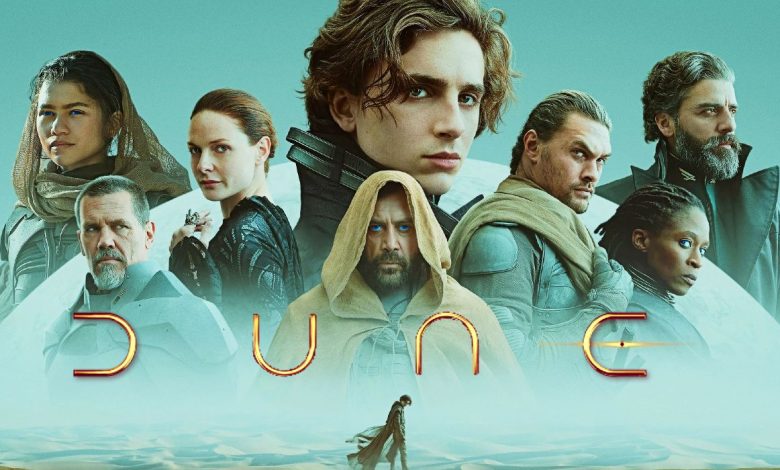
Though somewhat sullied by its forced reliance on exposition, Dune rewards viewers with excellent visuals in a grand story told across the universe.
2021’s Dune is the latest film adaptation of Frank Herbert’s sprawling Dune Saga, which has been notoriously difficult to translate onto the silver screen.
Dune director and co-writer, Denis Villeneuve, is in the midst of a near-unrivalled purple patch however, so who better to try the source material than film’s current critically and commercially successful darling?
Villeneuve is no stranger to grand visions of cinema which tell a personal story, like in 2016’s excellent Arrival.
He is singularly adept at weaving an engaging narrative undercurrent through a visual masterpiece.
Dune is unfortunately forced by the breadth of material to forgo perfectly balanced story in favour of the necessary exposition.
Still it finds a way to be thoroughly engaging.
Spoiler alert
Before you read any further, spoiler alert for some of the main plot points just ahead.
Dune opens on its central protagonists, House Atreides, one of the noble houses who form part of ‘The Empire’, a sort of futuristic universal government.
House Atreides, ruled by a strong but reasonable Duke Leto (Oscar Isaac), control their home planet of Caladan in the far future (year 10 191).
They are offered a gift from The Empire, control of the desert planet Arrakis, which is home to ‘spice’, a multi-use element that is the key to interstellar travel.
The problem is, Arrakis is the most inhospitable planet in the universe, home to giant sandworms and the mysterious and dangerous Fremen, the planet’s original inhabitants.
Nevertheless, House Atreides took Caladan with “water and land power” and they are bound to take “desert power” in stride.
Ironically, mid-speech on “power” Isaac was cut off when loadshedding began. Generators had the movie back on within a few minutes.
Their planetary colonialism is unsurprisingly not heralded by the Fremen nor ultimately The Empire who plan to attack the planet, killing off the powerful Atreides lineage.
Perhaps there is a saviour who has visions of the future and can potentially bridge the interplanetary divide?
Of course there is, and it’s film’s current ‘it-guy’ Timothee Chalamet, playing the heir to the Atreides throne, Paul.
Chalamet, with his impossibly angular features and 21st century hipster-poster-boy marketability mostly delivers in the role.
He is suitably conflicted by his visions, dominated mostly by come-hither glances from a criminally underused Zendaya who will presumably have more screen time in the next film.
Chalamet does look completely out of depth in fight scenes, but these are sparing – Paul is certainly one who will rule by brainpower rather than manpower.
Ultimately, a climactic battle occurs at the behest of Stellan Skarsgard, channeling his best Brando-in-Apocalypse-Now impression as the central villain.
Paul is able to escape to join the Fremen, setting the scene for Dune 2 which has recently been greenlit.
Dune is far from a perfect film, but the scale of Villeneuve’s vision is worth watching, on the biggest screen you can find.
In a post-Avengers world, it is refreshing to see a potential sci-fi film series with a purpose that extends beyond the bottom line and merchandising – well, mostly.
Do not expect an individual masterpiece and be grateful that the second film is being made, because there is surely bound to be something special coming up next.
PG-13, some disturbing imagery and sequences of strong violence.
4/5.
For breaking news follow The North Coast Courier on Facebook, Twitter, Instagram and YouTube.

Stay in the loop with The North Coast Courier on Facebook, X, Instagram & YouTube for the latest news.
Mobile users can join our WhatsApp Broadcast Service here, or if you’re on desktop, scan the QR code below.