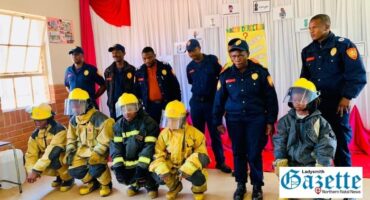
Uthukela District Municipality embarked on winter season disaster awareness roadshows that took place from June 23 to 29 across all five local municipalities to educate the community about issues related to disaster, fire, veldt fires and other disaster scenarios, which are prone to occur at this time of the season.
The purpose of these community disaster awareness campaigns was to promote a culture of risk avoidance behaviour among communities through integral education and public awareness and also to increase the community knowledge on multi- hazards and safety practises.
Winter is associated with veldt fires in farms, strong winds and high temperatures. All these conditions can cause complex occurrences. During this cold season, communities will have to use any form of heat to warm their homes including ‘izimbawula’, which is dangerous. Most of the rural communities are still living in traditional thatched houses, which are vulnerable to fires.
Therefore communities need to be reminded of precautionary measures to be applied when using such lethal equipment and also to be encouraged to burn fire breaks around their homes. During winter many families are left homeless when their roofs and vulnerable structures are blown away by strong winds, including public infrastructures. Veldt and farm fires are calls for concerns during the winter season and the majority of these fires are caused by human negligence.
Therefore it is of utmost importance that community disaster awareness campaigns incorporate public health issues.
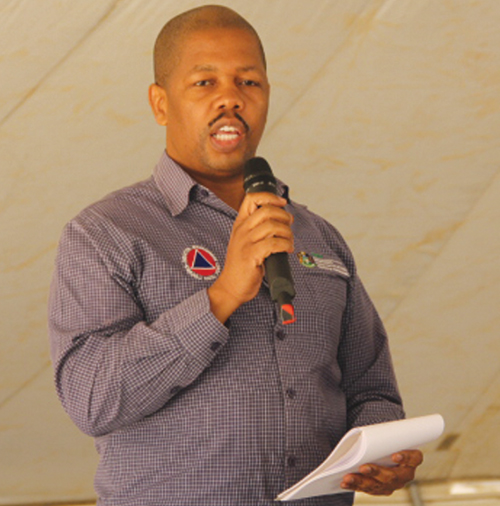
“‘Increasing public awareness about hazards is a vital element in any comprehensive strategy for disaster risk reduction,” said Nqobizizwe Mabaso from Uthukela District Disaster Management Centre (DDMC). The DDMC has a responsibility to promote public awareness of hazards and risks on a continuous basis in order to create a culture of prevention. There needs to be great degree of public participation and popular understanding.
“Public awareness and creation of widespread understanding about disaster reduction are crucial elements in disaster risk management strategies. However, in order to sustain public awareness, other sectors of society must be involved in dissemination the information,” Mr Mabaso concluded.
Vital tips were also shared with the community, which include the following:
• After each incident, neighbours must visit each other to check if there were any damages.
• Report any damages to appropriate structures e.g. ward councillors or call the emergency centre (036 352 6464/4444).
• Activate primary responders within the ward (volunteers).
• Assist affected people and conduct an assessment of damages.
• Compile a comprehensive report and submit to the authorities.