
Is Newcastle shedding a little load?
The municipality aims to become an economically stable city in the near future. Should the energy crisis persist as predicted, Newcastle residents are likely to experience the following:
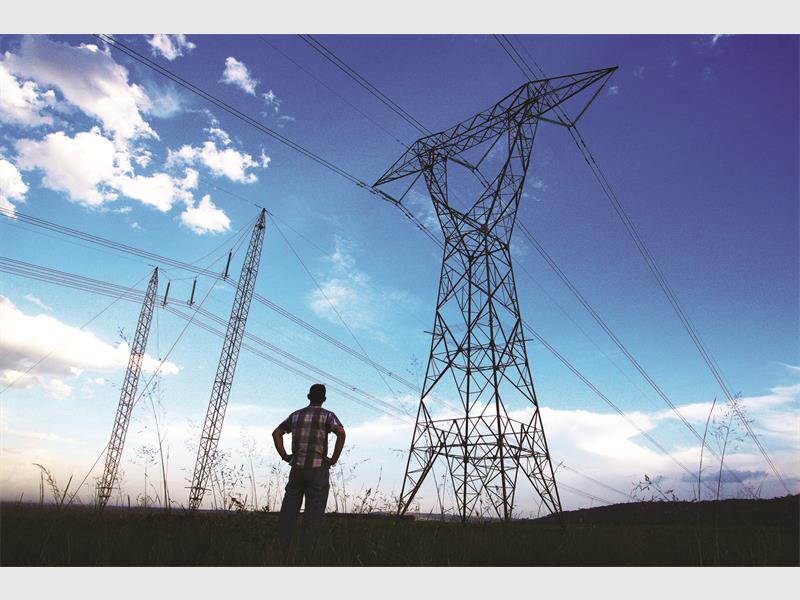
South Africa has taken the plunge into darkness; a fate Newcastillians have not yet been forced to fathom.
Newcastle Municipality’s task team was recently invited to represent the town at Local Government Week.
Acting Municipal Manager, Bhekani Mswane and Strategic Executive Director for the Electrical Department, Lindile Zincume, conducted a presentation alongside Mayor, Afzul Rehman.
The aim of the presentation was to highlight the municipality’s innovative approach to dealing with the darker days.
Why doesn’t Newcastle experience load shedding?
The task team revealed the town’s electricity supply is managed under separate licenses.
“The Newcastle Local Municipality licence covers 18 000 households, which include the Central Business District, industrial area and suburbs, while [the] Eskom licence covers approximately 65 000 households, which include Madadeni, oSizweni and Blaauwbosch,” read a statement issued on its website.
The team further revealed there were no cutback agreements between Eskom and Newcastle’s industrial consumers. The municipality partnered with its industrial clients in order to shed loads; the result of which will not negatively impact production.
“One of the challenges is [that the] multi-shedding stage changes in a day,” continued the statement, “Shedding only what is required within a stage is a challenge as the load consumed is not always average load for the area.”
Among others, the municipality has put into effect geyser ripple control in order to curb consumption.
In addition, Karbochem has agreed to shed up to six Mega-volt Amperes (MVA) during times of increased pressure.
“In an emergency, this client is able to switch off one of two furnaces to give a load of approximately 30 MVA.”
Co-generation plants like South African Calcium Carbide and the IPSA plant are also able to reduce consumption, without significantly influencing the production process.
During peak times, it often becomes necessary to shed from other high consumption sources, like streetlights.
Furthermore, Newcastle has a fully operational Supervisory Control and Data Acquisition system in place. However, the system will only be used as a last resort in event of a crisis.
Powertech IST upgraded the system during the 2014/2015 period, where hand-operated breakers were replaced with automatic breakers to enable remote control.
What is on the cards for Newcastle?
The municipality aims to become an economically stable city in the near future.
Should the energy crisis persist as predicted, Newcastle residents are likely to experience the following:
– Voltage reduction; a facility is in place and can achieve saving of four MVA.
– Industrial customers will be mandated to make use of smart meters.
– Potential load limiting.
– Smart meter programmes.
“The municipality will continue to work hand in hand with Eskom in the implementation of load shedding and continue to think of innovative ways of integrating the shedding system, while upholding the needs of Newcastle residents and businesses,” concluded the statement.
While the country’s energy supply remains under threat, the community is grateful Newcastle Municipality was able to shed a little load in order to avoid total blackout.