How to hand wash dishes using less water
Despite what the "studies" say, you don’t need a lot of water to hand wash the dishes.

1. Scrape plates with a spatula before food has a chance to dry
A spatula is one of your best frugal friends in the kitchen. Scrape out the last of the jam from the jar, the last of the mashed potato from the pot, the last little bit of pancake batter

2. Pre-rinse dishes in a couple of centimetres of water
Dishes need clean water to get cleaned properly, so it’s a good idea to pre-rinse dishes first.
Save water by putting some hot water in the sink, just a few centimetres, and give the dishes a rinse in the sink of water, no running tap, maybe with a quick swirl of a dish brush, to scrub off any remaining food.
This water may get mucky by the end of the rinse, but as this in only the pre-rinse stage, that’s ok.

3. Pre-soak cookware for stubborn stains
While this isn’t strictly about saving water, it does save labour: cooked on food is a pain to wash off.
Make it easy by sprinkling the bottom of your baking pan or fry pan with a little washing soda (same as is in the homemade laundry soap) and pour a little hot water over – just enough to cover the bottom. Leave to soak overnight.
4. Don’t fill the sink to wash the dishes
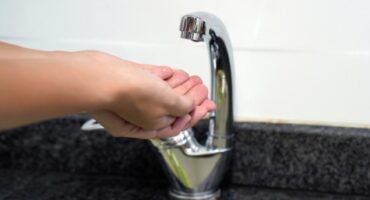
All you need to start washing the dishes is a couple of centimetres of hot water in the bottom of the sink and a few suds. The hotter the water the better.

5. Rinse with hot water into the same sink
Rinse the soap suds off with hot water, directly into the sink.
That way, by the time you get to the pots and larger items, you will have half a sink of water instead of a few centimetres, plenty of water for the larger items.
Information from Frugal and Thriving