The slithering are about again
(Rian Viljoen is a certified venomous snake handler, and is available to remove problematic reptiles, do shows/functions, and is always available to talk reptiles. Contact Rian on 083 306 3787)
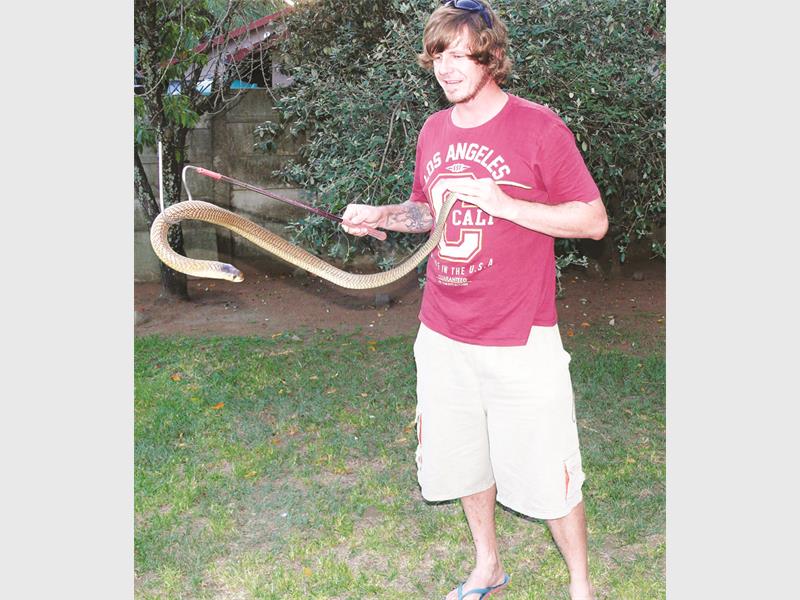
Rian Viljoen writes:
(Rian Viljoen is a certified venomous snake handler, and is available to remove problematic reptiles, do shows/functions, and is always available to talk reptiles. Contact Rian on 083 306 3787)
THE weather is warming up, the evenings are not so cold, and that means one thing… Spring is returning to South Africa, and along with that, all the reptiles are starting to become active again. Once the first rains arrive, everything will be in full swing, and nature will be doing it’s thing.
Reptiles, as discussed in previous articles, are ectotherms (or more commonly, and mistakenly, called “cold-blooded”). Their blood is not actually cold, but they cannot produce their own body heat, and require an external heat source in order to maintain optimum body temperatures to digest food, hunt for prey, find new hiding places, and for mating.
Rodents and amphibians are already starting to move around, and the call of the toads (yes, there is a difference between toads and frogs) is often heard in the early evening around town now, with the frog choruses beginning in the wetlands surrounding town. This means one thing… The snakes are coming. If the prey is out and about, you can bet the predators will also be out.
No muthi’s nor any concoctions will stop a snake from coming into your yard if it so chooses, but you can minimize the chances that they would want to be there. Remove all rubbish from around the house, keep ponds and water bodies clear of frogs and toads, and keep building material off the ground. By removing hiding places, and sources for their prey to breed and live, snakes will have very little reason to be around your house.
For those of you that would like these natural pest controllers around, compost heaps, old wood piles and sheet metal piles are favorite places for them to hide, as well as things like stacked bricks. Do not use pesticides or insecticides, as these can and will poison their prey, and in turn poison them.
Just remember, out of the over 160 species of snakes that we have in the country alone, less than 10 of them are deadly, and even fewer than that occur in the Vryheid region. Our dangerous reptiles are the Rinkhals, Puff Adder, Boomslang, Mfezi (Mozambique Spitting Cobra), and in some outlying areas of AbaQulusi, you might be fortunate enough to see the majestic Snouted Cobra, which is uncommon in the area, but has been recorded. The less dangerous, but still nasty characters, such as the Night Adder, and the Stiletto snake (a harmless looking species that packs an extremely painful, necrotic bite) are also quite common in and around town, and although not considered deadly, their bites are not to be taken lightly.
If you have a snake on your property, and you would like it removed, always remember to keep a constant eye on it from a safe distance of at least 4m, and call for help from a competent snake remover, without losing sight of the snake. Killing the snake should always be a last option, and even then, more people are bitten while trying to kill a snake, than having it properly and safely removed.
For the hikers: Watch where you put your feet and hands this spring, and if you come across a snake in the wild, leave it be, and watch the majestic predator do its thing from a safe distance.
If you have any interesting stories please send them to : estella@caxton.co.za or Contact us on: 034 981 3930.
Also Find us on :Facebook, Twitter, and on WhatsApp 060 986 0731.