Fall in love with nature, use your waste plastic to make a difference
Vryheiders now have the opportunity to donate waste plastic to build homes for bees, bats and owls.
“NATURE never did betray the heart that loved her,” said romantic poet, William Wordsworth.
This February, fall in love with nature and you will see beauty everywhere.
Vryheiders now have the opportunity to donate waste plastic to build homes for bees, bats and owls.
ALSO READ: 13 environmental changes we can celebrate on Earth Day
AND: Environmental Affairs tackles toxic dumpsite, MM does nothing
Wildlife photographer, Chantelle Melzer, and matron of Louis Harms Hostel, Sylvia Paul, have banded together to assist the Owl Rescue Centre, and environmental conservation agency, collect as much waste plastic as possible.
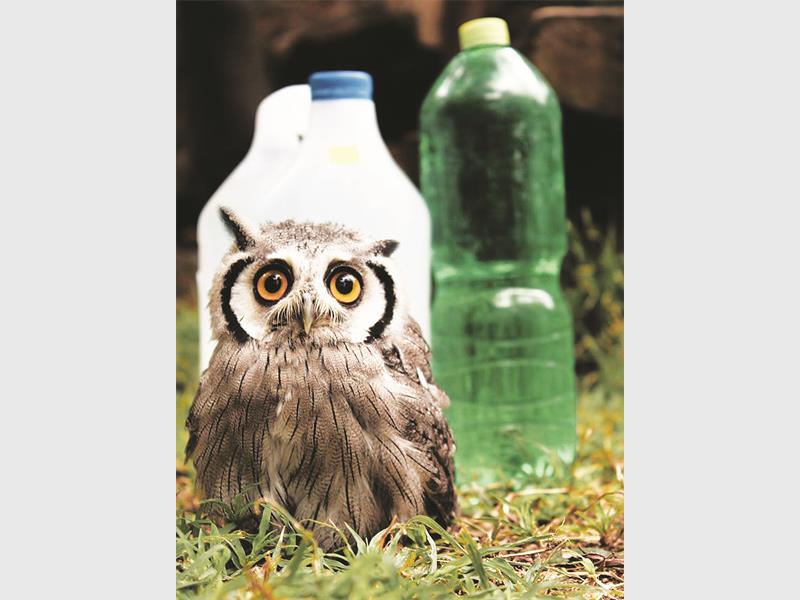
Founding member of the Owl Rescue Centre, Brendan Murray, explained that the houses they built for owls, bats and bees played a dual role in conservation.
Not only did they encourage farmers and home owners to introduce owls, bats and bees into their environment, but the funds raised from the sale of the houses are used to run the Owl Rehabilitation Centre, which provides care and medical treatment for owls rescued throughout Southern Africa.
“We used to make the houses out of recycled wood, but it is becoming increasingly difficult to obtain the wood, so we have started using plastic moulds. Plastic lasts forever. 70% of plastic ends up polluting the ocean. We have found a way, not only to recycle that plastic, thereby protecting the environment, but to use the plastic for a project that supports nature conservation by providing homes for bees, bats and owls,” said Mr Murray.
According to Mr Murray, a single owl house requires about 600 plastic bottles to be melted down and moulded into the correct shape. The Owl Rescue Centre hopes to collect 600 tons of plastic this year, which it will use to make 3 000 owl houses, and 10 000 bee hives.

“We already have requests for the owl and bat houses and the bee hives to be installed at residences, farms and mines,” continued Mr Murray. “Owls, bats and bees have an important role to play. If bees die, we die. We can only survive about six months without bees. In a lot of countries, bees are disappearing as a result of the use of pesticides and fungicides. Everybody should be asking themselves what they can do to make a difference.”
In Vryheid, Sylvia is using Louis Harms Hostel at 136 Mark Street, as a collection point for the plastic waste.
“We have only just started collecting plastic for the Owl Rescue Centre and we have already received three black bags full. I would like to plead to the people of Vryheid to bring as many plastic containers as they can. We ask only that they rinse it out first. This is a great initiative that will help keep our community clean at the same time,” said Sylvia.
Chantelle, who uses her passion for photography to raise awareness for wildlife conservation has been promoting the initiative using social media.
“Farmers laying out poison has had such a negative effect environmentally on birds of prey. I started looking at options to try and get farmers to have an owl pair, as they feed on a number of mice and can be a very successful means of pest control. That is how I started following the Owl Rescue page on Facebook,” said Chantelle. “Vryheid has always had a problem with waste and their project gives people a solution on how to manage the waste in a way that they are also doing something positive for the environment.”
She concluded, “Realise that everything you do has an effect. Be conscious of what you are doing and how it affects others. Make small changes that will have a positive effect on the environment.”