Solving SA’s crime problem – equipping ordinary citizens with tactical defence strategies
If there is anything to be done, we need to realise 'if it is to be it's up to me', up to every one of us as citizens, and it’s about sharpening up our personal security and making sure we have adequately analysed our properties’ security weaknesses and fixed them.”
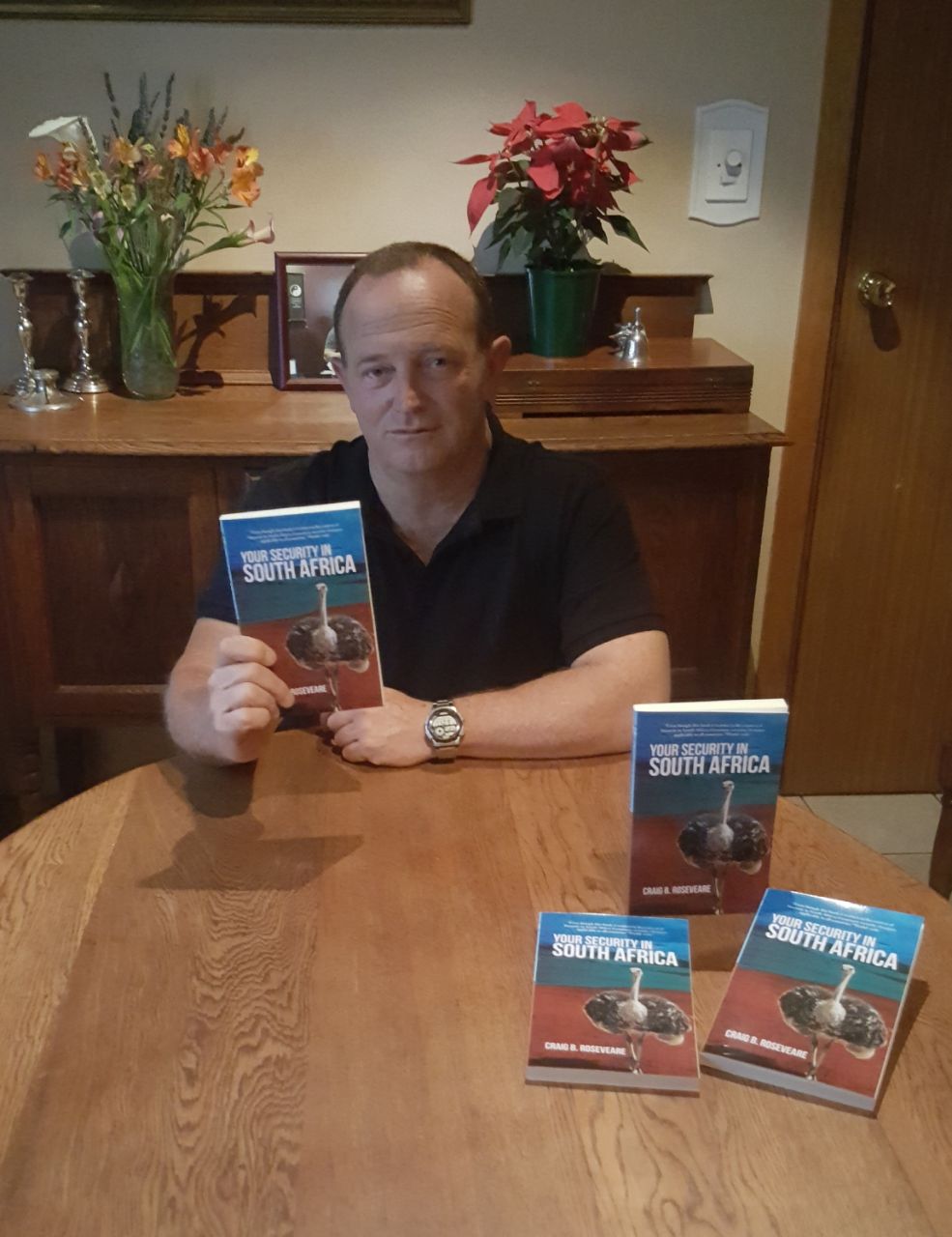
A former KwaZulu-Natal riot squad policeman has called on SA citizens to “do something” to fight crime in a new book that stands out as a manual of defence and hope in the fight against crime, offering in-depth, tactical strategies to equip you to sharpen your personal security plan to outwit the criminal mind.
Author, KwaZulu-Natal forestry manager, Craig Roseveare, who lives in the heart of farmlands in Ixopo was prompted to write his book after a farm attack on a friend who lives 20 minutes away, far from access to ambulance and hospital services. He realised how a book of this nature could literally save a life, that it’s vital citizens know how to keep criminals out and how to negotiate if they do manage to breach a home’s security barriers. His friend was ambushed when he arrived home from a school run, the perpetrators were already inside his house and opened fire on him the minute he stepped out of his vehicle.
His friend was shot at six times with a .38 revolver, five shots missed, but the last struck him in the jaw. He still bravely arrested one of the suspects, tied him up and waited for the police to arrive at the scene. He survived. But not everyone does.
“South Africans are letting themselves down because the big point everyone keeps making is that “iets moet gedoen word” (something must be done) about the murders and farm attacks. But what is really going to be done? When? And by who?”
“The prolific farm attacks and murders around the province, in Bulwer, Underberg and the rest of the KZN interior and the country are what prompted me to consider writing a book after I realised that just giving people advice here and there wasn’t enough to make a real difference to help people to protect themselves adequately,” he said.
“But the attack on my friend was the catalyst that finally got me sitting in front of my trusty computer, writing up all the knowledge I had learned during my time as a policeman and of course there was a lot of research that went into it too,” Roseveare said.
Roseveare served as a policeman in the South African Police Force Riot Unit 8 Reaction unit in Pietermaritzburg in the early 1990’s, when violent crime, mostly politically motivated, threatened to rip the province apart.
But Roseveare believes that most of the crime plaguing ordinary citizens, including farmers today, is fuelled by gangs with purely criminal intent and in many cases perpetrators are also high on drugs, dangerously desensitising them.
“South Africans are letting themselves down because the big point everyone keeps making is that “iets moet gedoen word” (something must be done) about the murders and farm attacks. But what is really going to be done? When? And by who?”
If there is anything to be done, we need to realise ‘if it is to be it’s up to me’, up to every one of us as citizens, and it’s about sharpening up our personal security and making sure we have adequately analysed our properties’ security weaknesses and fixed them.”
“We are all mindful of the realities of security threats, and that we could be next. Unfortunately, a lot of us bury our heads in the sand, hoping it will never happen to us. This is where we let ourselves down, and by not being aware, focused and prepared we create the opportunity for the criminal to identify with our weaknesses and target these, which often results in horrific outcomes,” Roseveare said.
“We have to change our mindsets, and become unbeatable against the criminal element. The only way to achieve this is to implement preventative measures and maintain the required level of preparedness.”
Roseveare does not mean to be alarmist in drawing from violent real life crime cases in the book to highlight what victims did wrong or right in the moment but he hopes we can all learn.
“A little paranoia leads to a longer life. Firstly, its crucial that people know how to prevent themselves from becoming victims of crime. Chance favours the prepared,” Roseveare said.
“I believe that if the advice in my book is followed that it can reduce the chances of this by about 80%. Secondly, people need to know how to negotiate with criminals if they do find themselves in a house robbery or hijacking situation. There is always a gang leader who is most aggressive but victims can learn how to assess the emotional dynamics of the gang to reach their conscience,” he said.
“We have to change our mindsets, and become unbeatable against the criminal element. The only way to achieve this is to implement preventative measures and maintain the required level of preparedness.”
“I live by the philosophy that it is better to be judged by a jury of 12 than to be carried by a group of six (undertakers). It is too often that people have hesitated during a self defence situation and they are now dead,” Roseveare said.
Craig Roseveare can be contacted on
on 082 870 8391 or via email at croseveare69@gmail.com