Abusers ride high on cough medication addiction
An investigation conducted by the Newcastle Advertiser revealed quantities of empty cough syrup bottles in specific areas in town where the abuse was revealed.
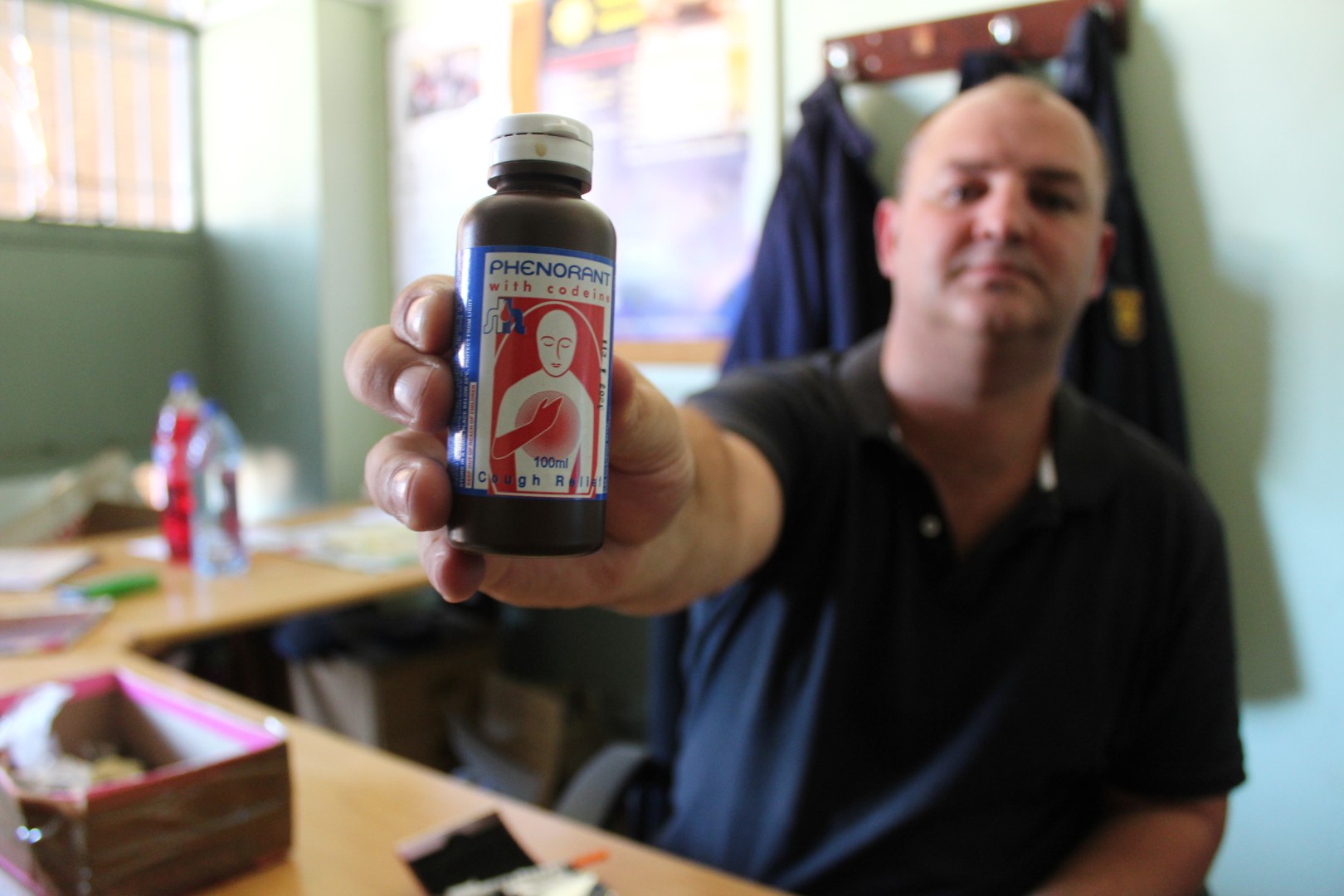
What lengths will substance abusers go for their next fix?
The latest trend, predominantly among school children, is the abuse of a concoction of codeine-based cough syrup mixed with cool drink, to create a potent intoxicant.
ALSO READ: Teens seek cough syrup high
An investigation conducted by the Newcastle Advertiser revealed quantities of empty cough syrup bottles in specific areas in town where the abuse was revealed.
Constable Janus du Plessis of the SAPS Crime Prevention (Drug) Unit confirmed the substance abuse by the school children was commonplace.
“Places such as the public parks, namely in Hospital Street, and open veld areas near high schools and sports grounds, are where most of the empty bottles were spotted,” confirms du Plessis.
He further explains that not just one type of cough syrup is used but any product which contains codeine and/or paracetamol.
“The abusers mix the cough syrup with strong flavours of cool drink to mask the smell.”
Pharmaceutical dispensers have been placed under the spotlight to deduce if their sales of this kind of cough medicine have increased.
Journalists visited various pharmacies in town under the pretense of purchasing the syrup. While some businesses refuted the claims and refused to sell the addictive substances over the counter, one pharmacy said a bottle of codeine-based cough syrup cost around R17 and could be bought over the counter, but with a prescription.
Du Plessis went on to say that pharmacies are not the only distributors of the substances however and revealed the unit is investigating spaza shops, which reportedly purchase cough syrup in bulk and re-sell them to the substance abusers.
What is stated in the Medicines and Related Substances Act?
The Medicines and Related Substances Act 101 of 1965, Section 22 (A) states:
Any Schedule 2, 3, 4, 5, 6 substance shall not be sold by any person other than a pharmacist, pharmacist intern or a pharmacist assistant acting under the supervision of a pharmacist, who may sell only Schedule 2 substances without a prescription.
Under the act, any person who is convicted of an offence shall be liable to a fine, or to imprisonment for a period not exceeding 10 years.
Social worker at the South African National Council on Alcoholism (SANCA) Newcastle, Lillian Gajoo says awareness programmes and community outreach projects are conducted by the organisation to educate learners at schools of the detrimental effects of medication abuse.
ALSO READ: The dark side of medication
“Parents and teachers also need to be aware of the behaviour of children and look out for signs of abuse. The substance can also be detected in a urine test.”
SANCA provides the following warning signs of when children are abusing cough syrup:
Dependent on the amount that is consumed, these are the signs one should look out for: droopy eyes, an increase or decrease in appetite, difficulty paying attention and/or comprehending a concept, and an inability to hold a conversation.
“Intoxicants like this are so dangerous; they pose as a gateway to stronger drugs,” concludes Gajoo.
Contact us
WhatsApp: 082 874 5550
Email: Reveshni Douglas (Editor) at reveshni@caxton.co.za
Make sure you follow us for regular updates: