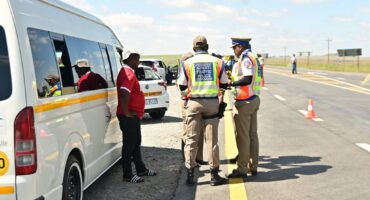
Informal traders are back to trade
By last Thursday, AbaQulusi Local Municipality had issued 24 permits and was expecting to issue even more.
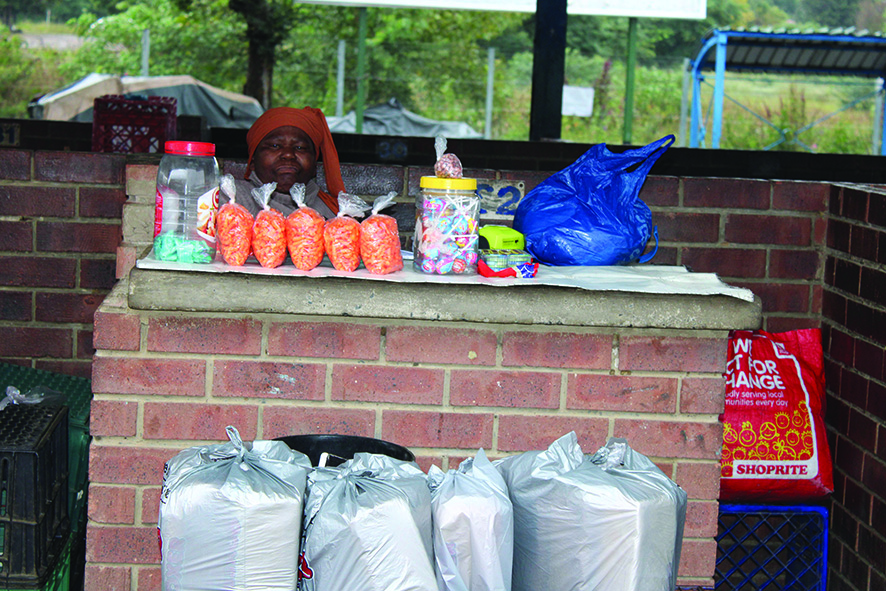
Lolo Madonsela
Informal traders and spaza shop owners are breathing a sigh of relief during the lockdown period, as they can continue to make a living.
Last week Tuesday, Minister of Small Business Development, Khumbudzo Ntshavheni issued the Directions for Small, Micro and Medium Sized Enterprises (SMMEs), which includes grocery stores, corner shops, spaza shops and fruit and vegetable stores.
Regulations have been published in terms of Section 27 (2) of the Disaster Management Act (No. 57 of 2002).
This move has been welcomed by informal traders, who felt the lockdown to stem the tide of Covid-19 was going to leave them with no food on the table.
An elderly informal trader at Vryheid Plaza, Mama Anna Nyathikazi said, “We are very happy they have given us an opportunity to continue with our business.
Closing down was affecting us negatively. Since we are now permitted to trade, we are very grateful.
This is our livelihood; this is how we support our families and we have taken our children through school with the money we are making from selling here. Even though it is quiet than usual, at least we still making little money rather than making no money at all.”
By last Thursday, AbaQulusi Local Municipality had issued 24 permits and was expecting to issue even more.
These permits are being restricted only to traders who had previous permits, and the municipality stated no new permits were being issued.
Also read: Domoina Lane: Angry traders say they are losing customers
“We are issuing permits to informal traders every day during working hours, at the municipal offices on Mason Street. We started issuing [on] April 10 and the permits are only for food traders, not any other. Traders need to hold previous permits, in order to be issued with temporary permit for the lockdown,” said Stephan Langman from Development Planning and Technical Services at AbaQulusi Municipality.
According to the recently gazetted Directions, SMMEs are required to adhere to the following:
1. They must hold permits issued by their respective local municipality, allowing them to trade in line with the provisions of the Business Act 71 of 1991 as amended.
2. No person may stay overnight in a grocery store, as this in contravention of the Food Safety and Health Standards.
3. Only the sale of foodstuffs and basic necessities is permitted; grocery stores must not sell products or goods prohibited by the lockdown regulations.
4. Grocery stores must uphold health and hygiene requirements by: maintaining a social distance among customers and between the trader and customer, of at least one metre; disinfecting and sanitising trading spaces in line with the directions issued by the Department of Health.
Spaza shop owners and informal food traders currently trading without permits, may apply for temporary permits and in case of non South African citizens, the business owner (a) must have been lawfully residing in the republic and must hold a valid passport with a visa issued by the Department of Home Affairs, in terms of Section10 of the Immigration Act 13 of 2002, authorising him or her to operate a business; (b) must alternatively hold an Asylum Seekers’ Permit issued in term of Section 22 of the Refugees Act 130 of 1998, which allows him or her to work.
Permission to operate will be linked to the period covered by the Asylum Seekers’ Permit.

Make sure you follow us on our social media platforms for regular updates