
Education: A new revolution
"...We have worked hard to build an integrated ICT package that will enable us to continuously modernise methods of teaching and learning,"said MEC of Education, Kwazi Mshengu.
Lolo Madonsela
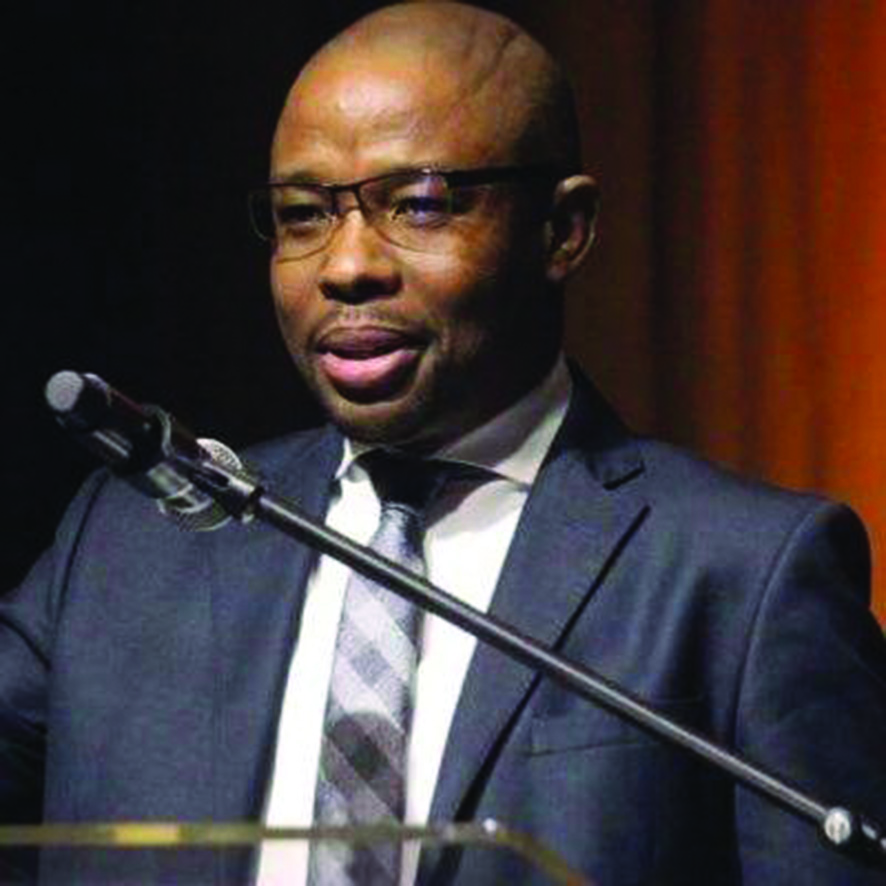
The MEC for Education in KZN, Kwazi Mshengu, has announced the department’s plans to advance towards the Fourth Industrial Revolution (4IR) in the sector.
“With the world changing very fast in the field of Information Communication & Technology (ICT) and the Fourth Industrial Revolution taking centre stage, we have seen the importance of also catching up with the speed at which the advancements in these two areas are moving. It is for this reason that we are serious about making strong investments in technology and Internet connectivity to lay a solid foundation for a future that is underpinned by innovation and is digitally inclusive. We have worked hard to build an integrated ICT package that will enable us to continuously modernise methods of teaching and learning,” said Mshengu while delivering his 2020/21 Budget Speech last week.
Mshengu said that in the 2019/20 financial year, the department set aside R49.8 million to roll out an e-Learning Solution to 100 schools; 50 will be piloted in the uThukela District and the other 50 in the Umzinyathi District.
“This e-Learning Solution will provide a full ICT package which will see each school receive 40 devices to host educational and digital content, 40 computer monitors, a projector, a projector screen and other accessories. There will also be a thorough training of teachers in this regard,” he said.
Also read: Mud and water are making education a bridge too far
Mshengu mentioned that with the easing of the lockdown, the department should be able to unveil the loaded digital content which will be in line with CAPS and can also be translated into isiZulu for better understanding.
“During this financial year, we are going to have a three-week workshop under the banner of ‘Coding like a Girl’. In this ‘Coding like a Girl’ concept, which is as a result of our partnership with Vodacom, we are going to put together, under one roof, 900 girl learners from disadvantaged communities. These girls are going to be taught thoroughly in the subject of Coding. This is one indicator that when we talk about the introduction of Coding and Robotics, we are not punching above our weight, but we have a programme and plans of having these critical subjects rolled out. By the time these girl learners come out of the ‘Coding like a Girl’ programme, they will be equipped with skills to start their own websites from scratch and each girl will come out of the programme with her own website established by her through the knowledge acquired in the programme,” said Mshengu.
Together with Vodacom, Mshengu said that the department will embark on the e-school supplementary online platform that will provide educational material from Grade R to Grade 12.
“This is an e-Learning resource which will include sim-cards with curriculum content that will be given to learners without data and content costs. This is going to assist learners in mastering the curriculum, thereby enhancing outcomes. It is also going to motivate learners not to shy away from technology and to also embrace the Fourth Industrial Revolution,” he added.
Mshengu further stated that there was a shortage of skills in gateway subjects such as Mathematics and Physical Science, and that the introduction of technical subjects like Technical Mathematics and Technical Science was another contributing factor.
“We have carefully resorted to employing the services of qualified foreign nationals on contracts pending the graduation of South Africans, who then take up those positions annually. The department will, in due course, be joined by four Cuban Mathematics experts who will be utilised mainly for up-skilling our own teachers in Mathematics and Science. We hope this will speed up the process of having our own teachers who are fully qualified and capable to teach these subjects,” Mshengu said.
The allocated budget for the department in the 2020/21 financial year is R57,246,803:
· Administration – R1 951 813 000
· Public Ordinary School Education – R48 345 958 000
· Independent School Subsidies – R91 411 000 000
· Early Childhood Development – R1 443 566 000
· Infrastructure Development – R2 377 679 000
· Examination and Education Related Services – R1 645 589 000

Make sure you follow us on our social media platforms for regular updates