
A Quiet corner of care and memory
Concerns have been raised over the years about the maintenance of municipal graveyards in Potchefstroom.
Recent discussion in the Potchefstroom Herald about the condition of the town’s cemetery has sparked many important conversations. It offers an opportunity, not for comparison, but for sharing a few simple reflections on how sacred spaces can be cared for with dignity and respect.
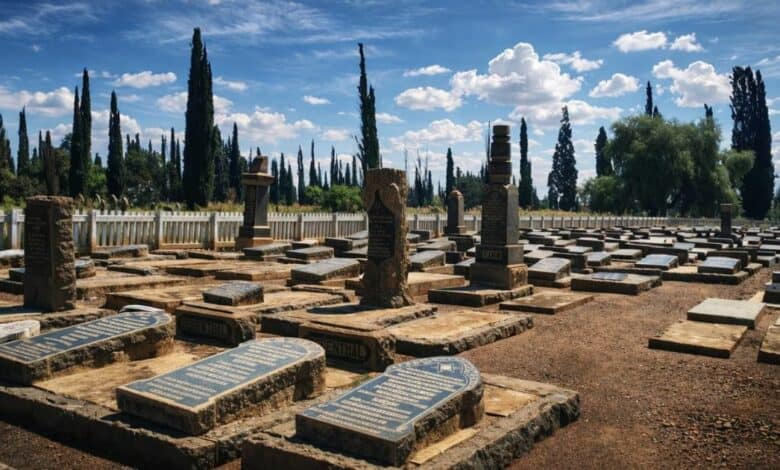
Although concerns have been raised over the years about the maintenance of municipal graveyards in Potchefstroom, the Jewish section of the cemetery, located within the broader Potchefstroom graveyard, has for many years been maintained privately. This has been done quietly and consistently, guided by tradition and a sense of responsibility rather than recognition.
In the Jewish section, ongoing care centres on regular upkeep, basic maintenance, and periodic monitoring. These are not grand interventions, but rather small, consistent actions that help preserve a space intended for remembrance and reflection. Within Jewish tradition, caring for graves is regarded as a final act of respect for those who have passed, and this principle guides how the area is maintained.
The Jewish cemetery in Potchefstroom dates back to the early Jewish presence in the town, when Jewish families settled in the region during the late 19th and early 20th centuries. Like many smaller South African Jewish communities, Potchefstroom’s Jewish population has diminished over time as families moved to larger cities or abroad. Despite these changes, the cemetery remains an important historical and spiritual landmark, preserving the memory of a once-thriving community.
Over the years, some practical decisions were taken with protection in mind. Upright headstones, for example, were carefully laid flat on the graves to reduce the risk of them being damaged or knocked over. While the cemetery has experienced challenges in the past, including repeated vandalism to the small Beit Tahara building, these preventative measures have helped safeguard the graves themselves.
Visitors unfamiliar with Jewish customs may notice that flowers are rarely left on Jewish graves. Instead, small stones are often placed on the headstone or grave. This tradition carries deep symbolic meaning. Unlike flowers, which fade and wither, stones represent permanence and continuity.
Placing a stone is a quiet way of showing that someone has visited, remembered, and honoured the person resting there. It reflects the Jewish belief that remembrance lies not in decoration, but in enduring memory and presence.
The Jewish cemetery also holds meaning far beyond the town’s boundaries. From time to time, visitors travelling through South Africa reach out in the hope of visiting the graves of relatives buried here. For many, these visits are deeply personal moments. Quiet pauses to reconnect with family histories and places once called home.
Today, only a small number of Jewish families remain in Potchefstroom, reflecting broader patterns of migration over many decades. As Professor Roland Goldberg, one of the remaining Jewish residents of Potchefstroom, reflects.
“Communities change, and people move on, but the places that hold our memories remain. Even when churches, synagogues and communal spaces take on new purposes, their stories continue to live in the people who remember them.”
He adds that maintaining the cemetery is less about visibility and more about continuity. “A Respectful way of ensuring that those who came before us are never forgotten.”
He continues to say cemeteries, regardless of faith or tradition, are shared spaces of memory.
“They deserve care not because of how they look, but because of what they represent: love, loss, history, and continuity. By tending to them with consistency and respect, communities honour not only those who came before, but also one another.”