Dagga legalisation could lead to long-term abuse
The use of marijuana (dagga or cannabis) for prescribed medication will potentially be legalised in South Africa this month (February) and would make the country the first in African to downgrade Cannabis from a Schedule 7 banned substance to a Schedule 6 prescription drug. Dr Shaquir Salduker, board member of the Psychiatry Management Group (PsychMG) …
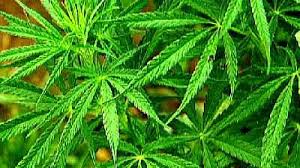
The use of marijuana (dagga or cannabis) for prescribed medication will potentially be legalised in South Africa this month (February) and would make the country the first in African to downgrade Cannabis from a Schedule 7 banned substance to a Schedule 6 prescription drug.
Dr Shaquir Salduker, board member of the Psychiatry Management Group (PsychMG) says he believes the proposed legislation requires review and thorough research, which to date has not been done. He says easing the laws to allow medical research and discovery is a good idea, but releasing it for general consumption opens the door to possible abuse.
A report released in 2013 by the South African Community Epidemiology Network on Drug use (SACENDU) suggest that 1 in 10 in SA has an addiction problem with cannabis and alcohol being the most commonly abused drugs.
“Although there are some studies indicating that cannabis is as effective as existing painkillers and does have some effect on nausea, appetite stimulation, anxiety and seizures, there is to date no landmark studies into its role in pain management that would make it a revolutionary agent in pain control.
“The legislation change should be scientific not socially driven. We simply don’t have enough research to understand the complexity of the substance to say it’s safe to use in the long term. The government’s proposal should focus on legalisation for purposes of research and for ease of access in the appropriate patient groups for example palliative care, pain control, and cancer patients. . The trends in the countries that have legalised has led to much fraudulent prescriptions and ultimately becomes an epidemic of abuse, especially amongst those younger than 18.”
He points out that there are potentially many benefits that will arise from cannabis research but there has got to be a clear message put out that it’s not the same as the substance that is being smoked, eaten, vaporized and brewed in teas.
“The danger is that if its being used medicinally we have no idea of what dose is being administered and what the potential side effects are such as changes in blood pressure, pulse rate, paranoia, extreme anxiety and panic attacks, to name but a few. There seems to be a belief that if the oil is used, it’s medicinal as compared to smoking the weed. We also don’t know much about its interactions with chronic medications. So until it hasn’t been properly researched, subtypes isolated and cleaned-up and safety assured, it cannot be handed out willy-nilly and promoted as a “naturalistic or homeopathic” treatment.”
In a 2008 study 87% of patients suffering from psychosis had taken cannabis prior to being diagnosed indicating that the age of onset of psychosis is earlier with cannabis users.
Plenty of research has gone into trying to understand the effects of cannabis especially in the young brain, and a lot of it from KwaZulu-Natal (S. Paruk et al) which shows quite convincingly that the use of cannabis in the young (14 onwards) person has a seriously damaging effect on the development of that brain.
Dr Salduker says that excessive use of cannabis has dire consequences not only in terms of developing Schizophrenia like illnesses which may require life-long treatment of the disorder but also can lead to the deterioration of existing mental disorders.
“Cannabis can exacerbate relapses in Bipolar disorder and it can cause chronic amotivational syndrome in long term users. It impairs cognition and leads to subtle but significant impairment in academic functioning and judgment.
“Research has shown use amongst young teens (those younger than 18) impacts higher brain function called cognition, which is essentially learning, memory, concentration and intellectual development as well as motivation. These are the very faculties that are most in need in that age group. I fear that if the misperception gets entrenched, we are going to have possibly and entire generation of “brain damaged” adults before the penny drops. The effect does not appear to be as harmful when first used in the fully developed brain in adults.”
He says that as we pass from the age of information into the age of wisdom, our greatest challenge will probably be to filter out the barrage of opinions masquerading as science that penetrates our most intimate spaces.
“Stories of patients who opt to stop traditional cancer treatments and use cannabis oil and attain miracle cures appeal to the desperate and helpless. However there is no accountability when it fails. There is no backup system, no science and no recourse. If we were talking about investing and losing money as the currency of this transaction, then that would be ok. But we are talking about life and health and quality of life.
“As a pain practitioner working in a pain clinic I have seen many anecdotal cases where cannabis has been more effective than traditional agents. It has helped many cancer patients with pain relief, mood elevation, nausea and appetite. But these are cases where they have gone through the process of trying the traditional approaches, which still work very well in many patients. There are also many cases where the cannabis oil has not helped at all and in some cases made the patients more unwell. So it’s not a panacea drug. It does not cure everything that it’s claimed to cure.”
Dr Salduker says cannabis is a common form of self medication, like alcohol and codeine and due to its temporary effect on anxiety and sense of mood elevation, it can become quite dependence forming in patients suffering from mental illnesses.
“There’s a lot more that goes into substance abuse than just the chemical in question such as social norms and behavior patterns. The historical pattern has been that youngsters start with alcohol and then cannabis and as time goes on they lose the meaning of “banned substance” or “illegal” and start to see all drugs as “having some good” leading them to harder and life destructive drugs.”