
Home Affairs willing to listen and find solutions
Senior staff members of Home Affairs in North West met with disgruntled clients at the Potchefstroom office on Friday, 19 November, after serious allegations against the local personnel.
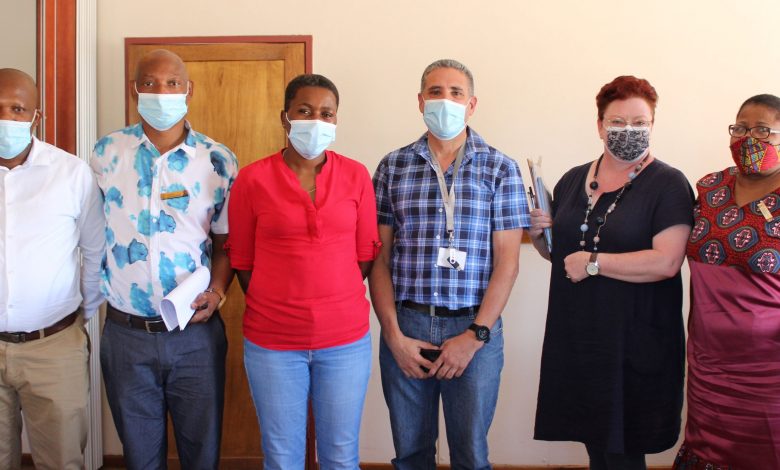
Senior staff members of Home Affairs in North West met with disgruntled clients at the Potchefstroom office on Friday, 19 November, after serious allegations against the local personnel.
It all started on social media when the public vented their anger against the alleged rudeness of the personnel and inhumane conditions at the office. The community personally contacted Adélle Jerling, a community representative who founded and was previously involved at an organisation (JB Marks Consumers and Ratepayers Association) that aspires to find solutions for service delivery problems.
To address the issues, Jerling contacted Ellen Dontso, the acting director of Home Affairs in the Kenneth Kaunda District. Dontso arranged a meeting with the complainants on her behalf. The Herald and senior staff members from Home Affairs were also present – Kagisho Kebotlhale (North West coordinator), Ramotshabi Mathe (manager of Potchefstroom Home Affairs) and Stephen Tiley (director of Finance and Support in the North West).
Jerling summarised all the complaints, which boiled down to gross neglect of the Batho Pele (people first) principles the government so passionately encourages within the public sector.
A major frustration was that the public can’t reach Home Affairs telephonically since the telephone is hardly ever answered. Mr Mathe, the manager of Potchefstroom office, said there was nothing wrong with the telephone line. However, the staff member who is appointed to man the telephone now assists at the front desk since there is a severe staff shortage.
In an office that needs 32 personnel to function smoothly, the personnel are now under severe pressure with only 19 appointed staff members. According to Dontso and Tiley, the future doesn’t look promising, since they have received orders from higher authorities not to fill the vacant posts.
At the meeting, the staff was also accused of rude behaviour, discussing the public aloud with their colleagues, thinking they (the public) cannot understand Setswana. The rudeness even stretched further when one of the complainants, Francis Kleynhans, told the panel how she was called into one of the offices one day. “One of the officials shouted and cursed at me, stopping me from standing in line on behalf of someone else. I was very upset and told him it was not against the law and that he could not ban me from the premises. He told me he could do whatever he wants because he was untouchable,” Kleynhans told everyone.
The inhumane conditions of people queueing in the scorching heat for nearly eight hours were also put on the table. The area outside the building is paved with no trees or shade in sight. There are no chairs for the elderly. When a man with cancer asked for a chair, one of the personnel demanded evidence that he was sick.
Discouraged clients also addressed the panel about the inability of Home Affairs to solve problems with their passport-, birth certificate- and ID card applications.
Beverly Bopape told the panel she had applied for an unabridged birth certificate in January 2016. “I was very surprised to find that my son’s surname and identity number on the certificate were wrong,” she says. When she went to the office, the personnel accused her of registering the boy twice and demanded that she pay a fee to get it changed. She refused.
“I never registered my boy twice. Why do the birth certificates I had printed in 2004 and later in 2007 have the correct surname and ID number?” In December 2016, Bopape helped her son apply for a passport. When it arrived, it had the correct ID and surname. However, her nightmare started all over again when her son applied for his ID card in March this year. When the card arrived, it had the correct ID number, but the wrong surname. “I was dumb- founded,” says Bopape in disbelief.
Another upset customer, Rudie Schnetler had trouble applying for a passport. He stood in the queue at Home Affairs for exactly seven hours and 45 minutes before being helped, only to hear that there was a problem with renewing his passport; he had not collected his old passport from the Durban office. Schnetler then presented his old passport as proof that he had, indeed, fetched it. According to the official, there was a block on the system that needed to be cleared from the Durban office. For two months, Schnetler had been waiting but never received feedback from the Potchefstroom office. “It is very frustrating to deal with problems at offices where nobody picks up a telephone,” says Schnetler. He tried to contact officials at the Durban and Potchefstroom offices without success.
More people listed their complaints at the meeting. The process ended on a very positive note when Dontso promised to speak to the personnel and address the unfriendly, rude behaviour. Kagisho Kebotlhale and Ramotshabi Mathe also started working on Schnetler’s and Bopape’s dilemmas, which are in the process of being sorted out.
Dontso also confirmed that Home Affairs had made an overall decision that people may not stand in line on behalf of anyone else to make money since various problems had arisen at other branches.
Stephen Tiley agreed that the personnel should park their cars elsewhere, so the undercover parking could be used to provide shade for the public who need to wait in line for hours. By Tuesday (23 November), chairs had been packed under the canopies and people were, at least, sitting and waiting in the shade.