
Department re-engineers extension service to advance agricultural productivity
The North-West Department of Agriculture and Rural Development (NWDARD) has intensified efforts to transform agricultural extension to advance production in the province.
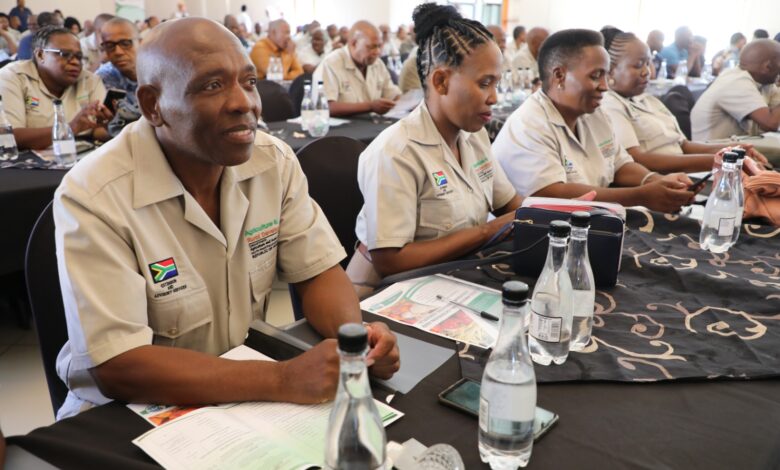
The North-West Department of Agriculture and Rural Development (NWDARD) has intensified efforts to transform agricultural extension to advance production in the province.
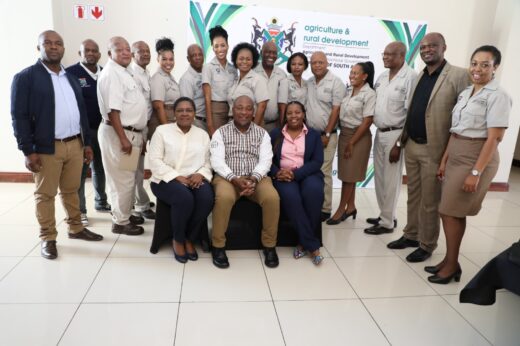
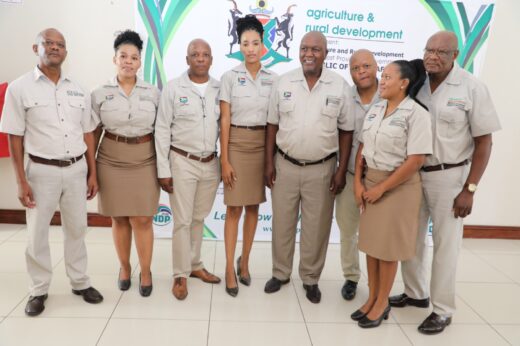
The Department hosted a 3-day Extension and Advisory services Lekgotla from 01-03 March 2023 at Woodlands Country Lodge near Parys.
Key to the discussions of Lekgotla were issues around reviewing the implementation model of extension services in order to enhance its impact. Amongst those who attended provincial Extension Practitioners, Extension Managers, Departmental Senior Management, Academia and Agricultural-related stakeholders.
Beneficiaries of government interventions invariably identified extension and advisory services as a challenge and a contributory factor towards the minimal impact of government agricultural programmes.
It is on this basis that the Department has undertaken the process of identifying how extension services can be more effective and efficient in that the Provincial Extension and Advisory services Lekgotla was necessary to develop better strategies in order to respond to farmers’ needs.
Emphasizing on the purpose of Lekgotla, the Head of Department Mr Thupi Mokhatla said it was important to host a conversation that will yield a turn-around in agricultural extension in the province. “We need to look closer in our efforts and steer them towards better co-ordination of actions regarding Extension Policy implementation, as well as other policy documents,” Mr Mokhatla said.
He further said the first step was to identify the challenges impacting on Extension services and to provide possible solutions. HoD indicated that the NWDARD was to also align Extension service to the provincial refocusing strategy and the National Agro-processing Master Plan (AAMP).
In setting the tone for Lekgotla, MEC Desbo Mohono called for Extension and Advisory Services officials to be revolutionaries with responsibilities to the people. She said it was necessary for them to look into their contribution.
“Do you see your role as central to the development of your people; the alleviation of their poverty day to day life and the assurance of sustainable food security?” She asked as she reiterated on the need to keep strengthening the sector towards desired professional standards; to build an attractive image for the sector; to compare notes and reflect on how far they have come and to learn and grow our skills and knowledge base.
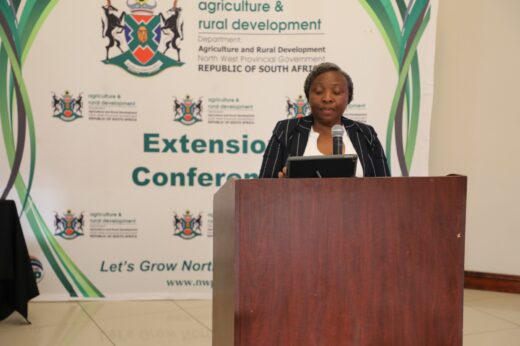
She conceded that the sector is not without its challenges and opportunities which range from technology, financial and other material support, geographic spread, turnaround times and others. She concluded by emphasizing the officers find space to be closer to beneficiaries of government services. “A revolutionary must be able to move freely amongst his people and be one with them as fish is with water,” she said.

NEW APPROACHES, METHODS AND PRINCIPLES CRITICAL TOWARDS DELIVERING AN EFFECTIVE EXTENSION SERVICE
An Agricultural Science qualification often seems to be an absolute key toward work as an agricultural extension officer. In practice it has been evident that over and above a qualification, many extension officers need skills as well as new innovative ways to perform their duties.
Professor Simon Letsoalo of the North-West University has asserted that new approaches, methods and principles are key to the work of an extension and advisory services official. He was reflecting on the Academic Perspective on Extension Practitioner Training, a presentation he delivered during the Provincial Extension and Advisory Services Lekgotla hosted by the North West Department of Agriculture and Rural Development from 01-03 March 2023.
Professor Letsoalo reiterated that because of the dynamics of the agricultural sector and the various levels of farming community it was imperative that the Extension practitioners have “a bag” of necessary skills in order to effectively render services.
Extension comes in many sizes and shapes. There are many approaches and it is important that the extension officers apply approaches to the relevant commodity. The general extension approach is commonly used by may not be relevant to many other farmers as it is an approach that assumes that technology and knowledge that are appropriate for local people exist but are not being used by them. The approach is usually fairly centralized and government-controlled.
Success is measured in the adoption rate of recommendations and increases in national production. Other approaches look into commodity specialization and are relevant for increased production.
Although the expectation in many cases is about infrastructure support, Professor Letsoalo indicated the North-West University is prepared to work with the North West Department of Agriculture and Rural Development to have a curriculum that will carry skills and knowledge and allow participants to demonstrate and practice the acquired skills.
On the other hand, Extension methods comprise the communication techniques that can be adopted by the practitioner and the farmer. This would basically facilitate farmers’ decisions whether or not and how to adapt to certain suggested ways of farming. When equipped with agricultural methods, Professor Letsoalo indicated that it gets easy for an extension officer to pull an appropriate technique for each and every farmer.
Amongst the key principles is that extension should assist people to make their own decisions amongst various alternatives put before them. Professor Letsoalo indicated that practitioners should be able to let go of farmers. “You cannot be advising one farmer for over 10 years.
There should be a time when you let go of farmers. The intention is to help farmers to improve their productivity of their agriculture and to develop their abilities to direct their own future development,” he said.
He added that it was also critical to look into methods, approaches and principles that are aligned to the changing environment.
The North West provincial Extension and Advisory Services Lekgotla was aimed at identifying how extension services can be more effective and efficient. The contribution of academics was identified as imperative towards extension re-engineering efforts.
PRECISION AGRICULTURE – NOW FOR A BETTER FARMING TOOL
The NWDARD further plans to host An Extension and Advisory services Symposium which will involve farmers and extensions services officers together and getting views towards agricultural production. For now the Department will draw an action plan which will assist to address issues raised during Lekgotla and advance new approaches towards seamless extension service.
The North-West Provincial Extension and Advisory Services Lekgotla has acknowledged that precision agriculture is a better tool for extension officers in line with the new technological advancement experienced to date. As part of the Lekgotla hosted by the North-West Department of Agriculture and Rural Development from 01-03 March 2023, an array of stakeholders participated in an effort to bring about a collaborative effort towards transformation of the extension service which is meant to ultimately impact on the agricultural production and economic contribution thereof.
As part of their contribution towards the Lekgotla, the Council for Scientific and Industrial Research (CSIR) has introduced precision agriculture as a better tool for farming. The system, which is digital by nature, allows extension officers to rely on data collection methods to address farmers needs. Dr Sabelo Madonsela of CSIR said the system will allow extension officers to do more with less. The fact that the system would be accessed remotely means the tool is much relevant to the emerging farmers.
In essence, precision agriculture is the application of data information to optimize complex farming systems. Dr Madonsela said the focus with it is on access to data and the application of it in smart ways.” The process involves smart farming operations to obtain real time data about availability of resources, soil conditions, climate/weather, condition of the crop, markets etc and smart systems to respond to threat,” he further clarified.
He said with efforts to transform extension service it was important for the department to look into the tool that was going to assist to observe, measure and respond to field variables in crop growth parameters to optimize return on inputs while preserving resources.
Dr Madonsela indicated that the system will incorporate inputs of what extension practitioners want to also see in it.
GOVERNMENT, MINING AND HOSPITALITY INDUSTRIES PLEDGE TO WORK WITH FARMERS TO BREAK BARRIERS OF ACCESS TO MARKETS
It is time to break all barriers preventing smallholder farmers from accessing the market so they can sell their products and create more jobs for our people. This was a consensus at the Provincial Agricultural Market Access Summit organized by the North West Department of Agriculture and Rural Development in partnership with the Sun City resort that was held in Rustenburg from 26-28 February 2023.
Themed “Linking North West Smallholder Farmers to Market”, the summit’s objectives were amongst others to provide a platform at which stakeholders can discuss and exchange ideas on how to access and supply markets such as the hospitality and the mining industry and to provide an opportunity for all role players in the sector to interact for better understanding of market requirements.
The summit assembled key stakeholders such as farmers, organized agricultural formations, mining companies and representatives from the hospitality industry to have a conversation on issues and challenges facing farmers with regard to access to market.
One of the farmers, Mpho Bogatsu who is a beekeeper in Ditsobotla, said she welcomes the initiative by the Department for organizing the summit. She however, like many other farmers, said one of the challenges they have is access to the market. “We really need access to these markets. We are able to produce but we need these markets to open up and buy our products,” Bogatsu said.
Her fellow farmer, Lesego Moeng from Moruleng Village near Rustenburg shared Bogatsu’s sentiments. “As long as they can avail information and what is needed for one to supply them we can supply. With that information, I believe that we can do better,” Moeng said.
Delegates at the summit received presentations on various topics such as requirements for sustainable agro-processing business, agricultural market access for smallholder farmers and market opportunities for smallholder farmers.
Commenting on the three day summit Julius Ramotse from Sun City said the resort greatly appreciates for being part of the summit where potential markets, government and farmers came together to confirm the critical role agriculture is playing in the economy of the province.
“The Provincial Department of Agriculture and Rural Development’s significant role as liaison and facilitator between agriculture and markets is confirmed again at this summit and is very encouraging. We as the Sun City resort are open for engagements with our local producers and we are looking forward to working with them in future,” Ramotse concluded.
THE SUMMIT RESOLVED ON THE FOLLOWING:
- The Department of Agriculture and Rural Development to lead the establishment of the provincial committee which will be composed of the mining industry, hospitality industry, organised farmers and farmer unions. The committee will be established before the end of March 2023. The committee will amongst others pursue markets to buy from local producers and revive agricultural marketing boards.
- The committee will ensure development of the Terms of Reference [TORs] for Provincial Agricultural Marketing Structure will be developed.
- The committee will consolidate all the recommendations and action plans from the commissions into a programme of action [POA].
- The Sun City Resort will lead the first phase of visitations of farms in the Bojanala by the hospitality industries and the mining industries.
- The Department will roll out the Agricultural Market Access Programme across all four districts of the province.
When speaking on the last day of the summit, MEC Desbo Mohono said she was happy that the Department managed to bring together smallholder farmers and industry-related experts as well as potential markets together under one roof for the transference of knowledge and networking.
She said what is needed now is action. “Our farmer’s want action not just black and white documents that are just going to be filed. Economic growth and emancipation in the North West province will increase and open new markets for products of our farmers which are the back-bone to this important transition,” Mohono emphasized.
Mohono also encouraged farmers to seize opportunities availed during the three day gathering. Participants also learned more about how to access funding to expand their crafts. This Department is intending to take this initiative to districts where farmers will again be afforded the opportunity to engage with the potential markets.
SUMMIT YIELDS EXPECTED RESULTS
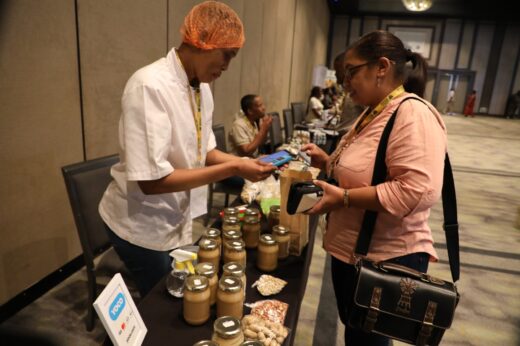
The recent Provincial Agricultural Market Access Summit that took place at Sun City Resort and organized by the Department for farmers, yielded the much-expected results with farmers expressing gratitude and enthusiasm to collaborate in order to meet the demand of specified products as well as market standards to have their produce at the Resort menu for the thousands of guests it hosts yearly.
Farmers and the department seized the networking opportunity to establish a relationship with mining houses and Sun City and that has seen two farmers who exhibited their products at the summit getting access to supply the Resort’s restaurants with their products which meet the markets standards and requirements.
Presenting at the inauguration of the three-day gathering on the Agricultural Market Access for Smallholder Farmers, Mr Stern Manthata from the National Department of Agriculture, Land Reform and Rural Development emphasized on the importance of having off-take agreements with the identified market. “Often times, farmers find themselves with produce that gets spoiled because they do not have a market to supply to, leaving them with a loss. The only way to make sure all they produce is sold is by securing a market by having a binding agreement that once harvesting takes place the commodities should be delivered to the client whilst it is still in the expected condition thus ensuring that industry standards and quality are met,” emphasized Mr Manthata.
Linking farmers to the market by affording them the opportunity to present their product capacity through commissions was an effort appreciated by stakeholders.
The commission on red meat expressed the need to have quality control beginning from the farm throughout the value-chain right up to delivery to the end user, whilst the commission on grain processing accentuated how they will collaborate with each other to supply clients with their grain of choice.
Grain producer, Seitshiro Mozzart Marumoloe of Boripane Enterprises who hails from Springbokpan in the Ngaka Modiri Molema District spoke on organizing themselves as a cooperative and investing in reaching out to the market to be able to supply. “We have quantified what is necessarily needed out of our concept to be able to supply what is needed out of this particular market. The simplest and best way to be able to afford a large market is to collaborate to be able to reach out to this opportunity which is the market as farmers. We are investing in the process by working as a team by bringing resources together to plant, harvest, process, store and transport what is needed out of our concept” said the young farmer.
MARKET ACCESS SUMMIT INSTILLS HOPE FOR MANY SMALLHOLDER FARMERS
The agricultural markets are characterized by dominance of larger commercial producers, whilst the smallholder producers are grappling with significant barriers to entry into the market sphere.
Smallholder producers face challenges of compliance to quality standards, poor access to markets, technologies and skills which results in failure to beneficiate. But many young farmers who were part of the recent three day summit say the gathering was a great platform for them not only to network but to learn as well.
One of them is Timothy Mogale from Goedgevonden near Ventersdorp town. Timothy is a beekeeper. He is operating his beekeeping business Moatane Atang from his family house in Goedgevonden.
He sells his honey to fellow villagers. He is one of the producers who is eager to penetrate the market to sell his products. He praised the Department for organising such an informative summit. “The summit was very interesting,’ Mogale said
The other young farmer who was part of the same summit organized by the Department of Agriculture and Rural Development with support of Sun City Resort is Tshepo Moitlobo. She is a young female farmer from Rietvlei near Rustenburg.
She commended both the Department and the Sun City Resort for organizing and hosting a summit of this extent for them as smallholder farmers where they were able to engage with potential markets.
Moitlobo is in poultry and also plants vegetables such as tomato and chilies. She also processes these vegetables to produce chili sauce and tomato jam.
She also farms with goats and cattle.
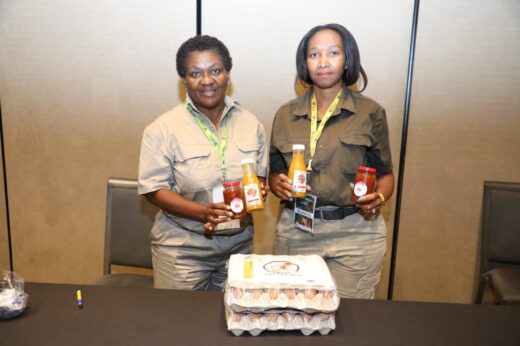
With regards to markets, Moitlobo had this to say, “It is not always easy for us as smallholder farmers to sell our products but I am hopeful that after this summit things will change for the better,” said Moitlobo.
She sells her products to community members and to local vendors in her village. She also has a small market for goats in the neighboring province of Gauteng.
“The summit was very informative and of immense value to us as farmers from across the province. The emphasis was on access to the markets and the need for us as farmers to work together. There is so much that one has learned from this convention,” Moitlobo highlighted.
She went further and said the knowledge and the interactions she has had with her fellow farmers will go a long way in helping her personally as a young farmer in taking the next step in her farming journey,” Moitlobo said.
For other young and upcoming farmers, Tshepo Moitlobo said they should not be discouraged by anything. “Farming is not an easy space but with determination, anyone can make it,” She emphasised.
Maitlobo has received extension and advisory services from the Department and she is more determined and positive that the resolutions taken at this summit will be implemented to help them as farmers.