Community takes a stand against violence targeting women
Children and residents of Toekomsrus take a stand on GBV while a new national First Responder Programme equips communities to act fast and aim to save lives.
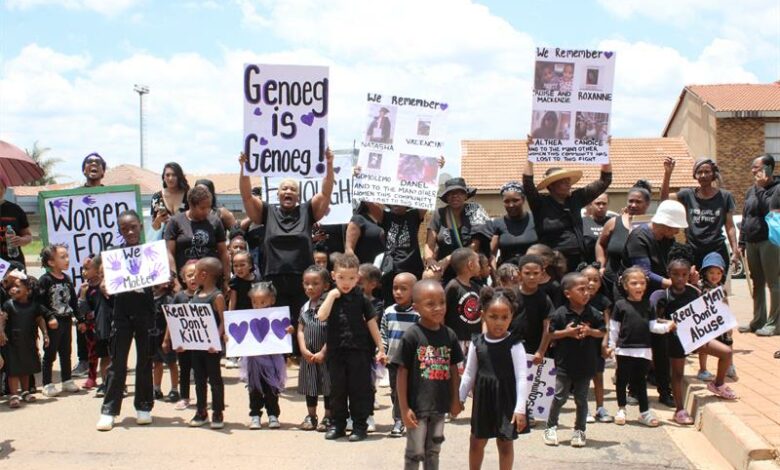
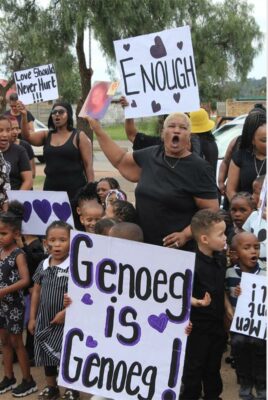
Dicki Doy Crèche participated in the national G20 Women’s Shutdown to show solidarity with victims of gender-based violence (GBV).
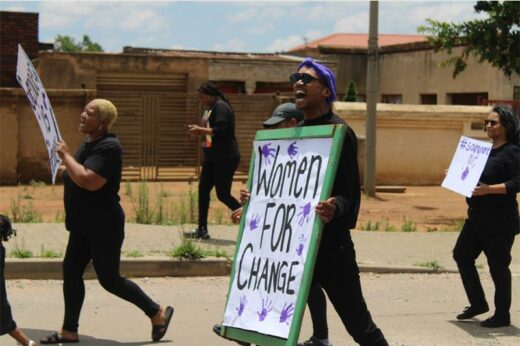
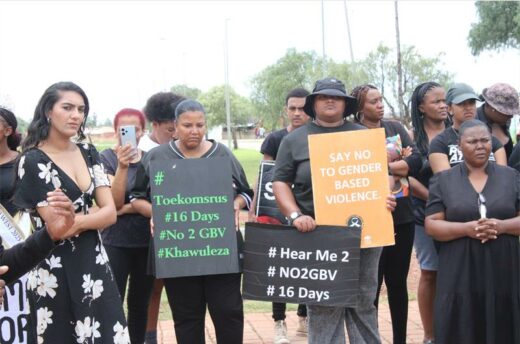
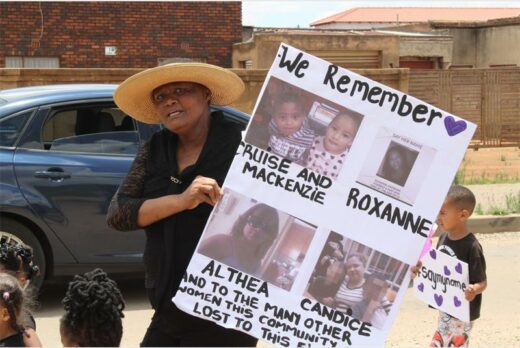
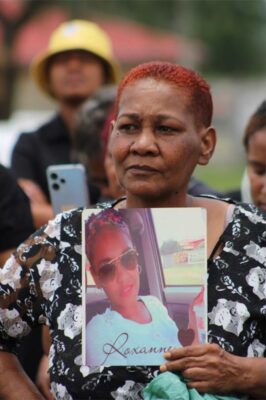
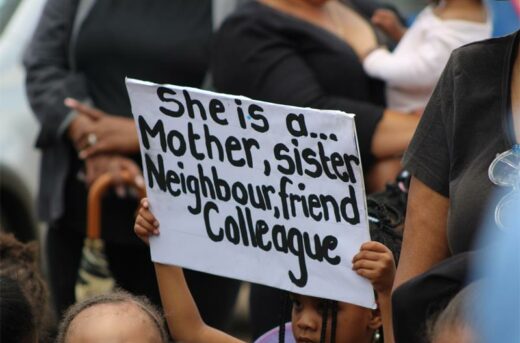
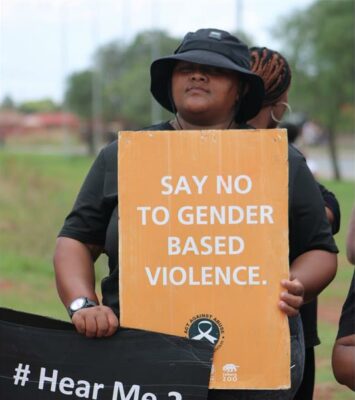
On November 21, staff members and learners walked the streets of Toekomsrus carrying posters advocating against GBV. This marked an important milestone for the community, as many young women have lost their lives due to widespread gangsterism.
According to teacher Andrew Mokua, the teachers decided to host the protest and include the children because, in many GBV cases, they are the most affected.
“The children were our biggest inspiration for having this march,” Mokua said.
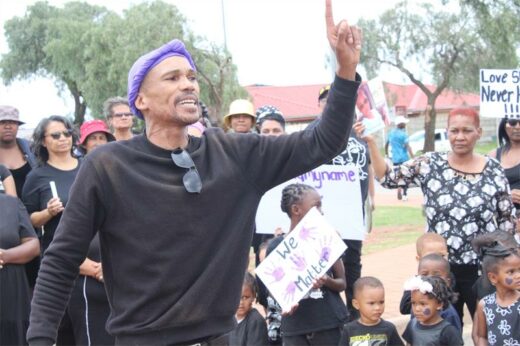
During the protest, participants sought to uplift victims and give hope to families affected by GBV. Mokua expressed the hope that the protest grows into a broader movement to prevent violence and protect victims and their families.
“We really hope this peaceful protest grows in such a way that it ultimately helps stop violence. At the end of the day, this protest was held to prevent and protect the victims and families,” he said.
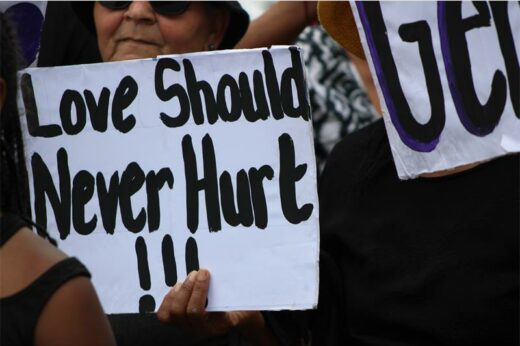
Heartbreaking testimony shared during the march
During the march, one participant shared the tragic story of her daughter, who was stabbed by her ex-partner while returning home from work. The 22-year-old passed away a few days later. She left behind a three-year-old child, now being cared for solely by her grandmother.
Although the perpetrator was initially sentenced to 14 years in prison, he was released after five years following a request for leniency. The mother continues to care for her grandchild and shared her testimony to raise awareness about the impact of GBV.
Other community members also spoke out, highlighting the devastating consequences of GBV on families and communities.
Shocking GBV statistics in South Africa
According to the South African Government News Agency, a new National GBV Prevalence Study, conducted by the Human Sciences Research Council, revealed alarming figures:
• 7.3 million women aged 18 and older have experienced physical violence in their lifetime
• Around 2.15 million women have faced sexual violence
• Combined, about 7.85 million women have experienced either physical or sexual violence
Lifetime violence was highest among black African women and those cohabiting but not married. Women aged 35 to 49 reported higher rates than older women.
• Regarding recent experiences, by November 2024, 1.54 million women reported physical and/ or sexual violence in the past 12 months
• Among ever-partnered women (a woman who has ever been in an intimate relationship with a partner, meaning the statistics for violence are based on this denominator, not the entire female population), 3.22 million reported physical intimate partner violence (IPV)
• 2.5 million men admitted to perpetrating physical IPV, with the highest rates among cohabiting men aged 25 to 49
Government calls on public to report GBV
Meanwhile, the Gauteng Provincial Legislature’s Portfolio Committee on Community Safety urged communities to report GBV during the 16 Days of Activism for No Violence Against Women and Children, observed from November 25 to December 10.
Thebe Khumalo, spokesperson for Committee chairperson Bandile Masuku, reaffirmed the Committee’s commitment to ending GBVF and welcomed the government’s decision to classify it as a national disaster, elevating the issue to the highest level of priority.
Khumalo emphasised that government efforts alone are insufficient and called on citizens, civil society, and community structures to work together on prevention programmes that:
• Challenge harmful societal norms
• Strengthen early intervention and community support
• Reduce incidents of violence before they occur
Khumalo also highlighted the danger of firearms in GBV incidents and continues to advocate for a Gun-Free Gauteng, including stricter gun-control measures and stronger enforcement of firearm regulations.
He added that the committee further urged the public to use the 16 Days of Activism to play an active role in breaking the cycle of violence and creating a Gauteng where women and children are safe and protected.
GBVF declared a national disaster
The Intergovernmental Committee on Disaster Management (ICDM) is urging all South Africans to take action against GBVF through awareness campaigns and education.
Following the president’s declaration of GBVF as a national disaster on November 21, Minister of Co-operative Governance and Traditional Affairs Velenkosini Hlabisa, chair of the ICDM, convened a special meeting to discuss coordinated interventions.
The disaster classification under the Disaster Management Act marks a turning point, signalling that incremental measures are no longer enough. It calls for bold, coordinated efforts from government, civil society, traditional leaders and communities to protect vulnerable groups and tackle the root causes of GBVF.
The ICDM stressed that the government alone cannot solve the crisis. Collective action, especially in identified hotspots and unreported cases, is essential. The committee also highlighted the need to fully implement the National Strategic Plan on GBVF and related policies to deter perpetrators and ensure accountability.
“We are all affected and impacted. It is in our hands to put a stop to GBVF,” Hlabisa said.
Special Investigating Unit launches GBVF first responder programme
At the GBVF National Dialogue Session, Adv Andy Mothibi, head of the Special Investigating Unit (SIU), described GBVF as a national moral emergency.
“GBVF is not only a crime; it is a betrayal of the promise of our democracy. Every person deserves to live free from fear and with dignity,” Mothibi said.
The SIU has launched the GBVF First Responder Programme through its Anti-Corruption and Cyber Academy, training a new generation of responders to act swiftly, compassionately, and ethically within the first 24 hours of a crisis.
“When a survivor calls for help, when a child trembles, when silence hangs heavy, South Africa must be ready to respond with competence, compassion, and care,” Mothibi added.
The SIU encourages the public to report GBV incidents via:
• Police: 10111
• GBV Command Centre: 0800 428 428
• SMS line: 31531
• Or at the nearest police station