You could be helping your child get ‘high’ without knowing it
When purchasing simple household items like whipped cream, window cleaner, air freshener or bath salts, the thought probably never comes to mind that you might be supplying your child with drugs.
POLOKWANE – When purchasing simple household items like whipped cream, window cleaner, air freshener or bath salts, the thought probably never comes to mind that you might be supplying your child with drugs.
But according to Sonette Segers, a social worker from Sanca in the city, recent studies revealed that inhaling these products is a cheap way for teenagers to get “high”.
This matter was already raised by Angela Salter from Sanca during a community meeting in Westenburg recently.
However, all communities are affected by this problem, and it is not exclusive to only one community, Segers added.
She said in some cases these products are used in combination with over-the-counter medication.
There are more than 1 400 household products in different forms that can be inhaled to get “high”.
Some of the ways that these products are inhaled include:
• Sniffing directly from the container, can or bottle.
• Heating the solvent and then inhaling the vapour.
• Putting the solvent into a bag and holding the opening of the bag over the mouth and breathing it in.
• Huffing (putting the inhalant on a cloth and placing it over the mouth).
• Inhaling from balloons filled with nitrous oxide.
Segers said it might start out as a simple game where one child dared the other child, but it can very easily end up in a daily need for a quick fix that lasts just a few minutes. She added that in most cases, this behaviour went unnoticed as children did this with friends away from home or when they stayed at home alone.
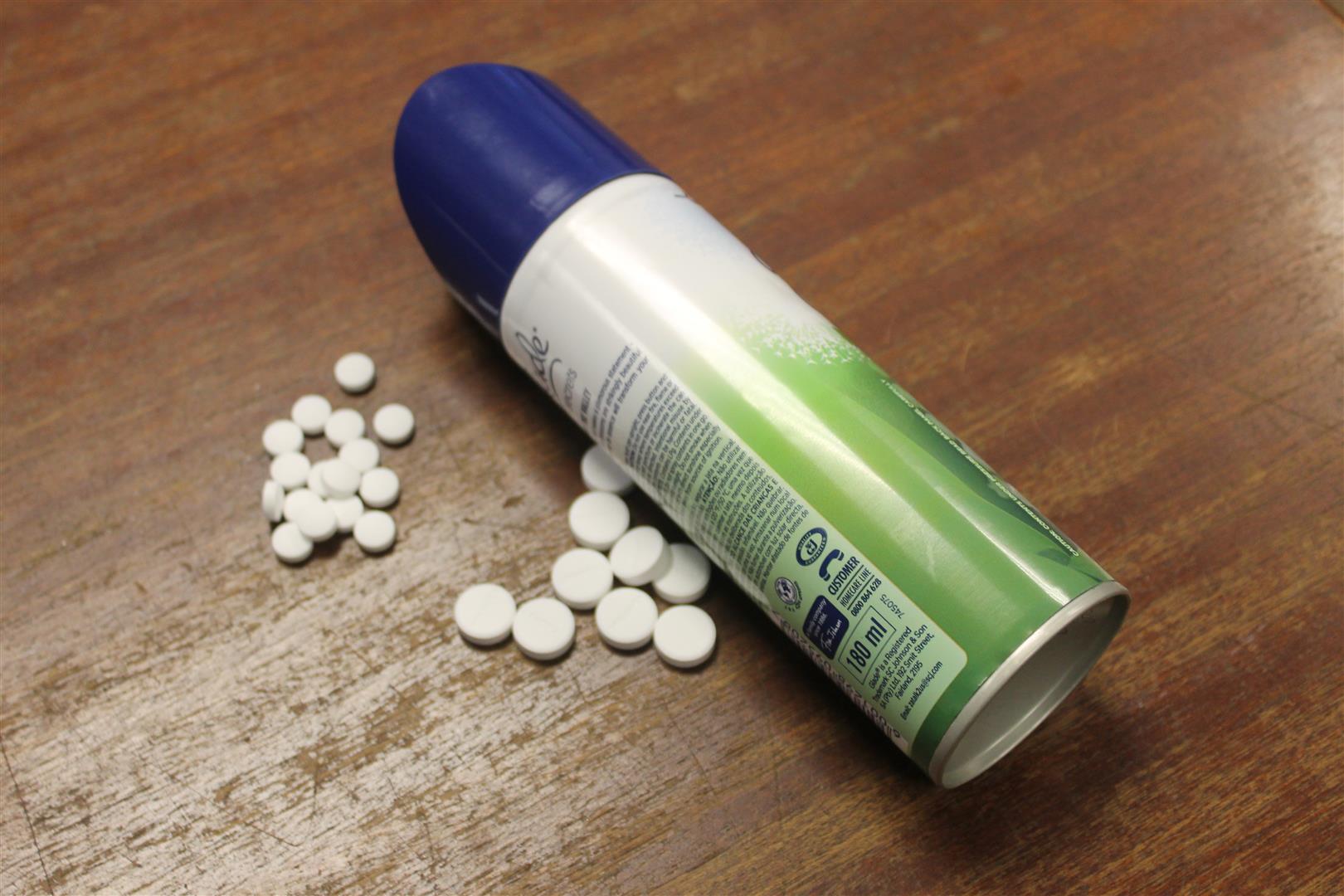
One parent of a 15-year-old girl told Review of their daughter’s two-year battle against huffing, that nearly killed her. She had been huffing aerosol deodorant and air freshener. It started at a sleep over with a friend who showed her how to use the aerosol can.
Segers said several cases such as this had been reported, and she warned parents to be aware of the very real dangers in this regard.
“Inhalant abuse, especially in children and teens, is an alarming issue due to the number of deaths associated with its use from sudden sniffing death syndrome (SSDS). SSDS is heart failure resulting from an irregular heartbeat usually caused by stress or strenuous activity after using inhalants. It is thought that the inhalant drug makes the heart increasingly sensitive to the effects of adrenaline.
“Usually, the user has been startled (possibly because he or she has been caught), or has engaged in rigorous activity following the use of the drug; collapse and death follows.
“Parents and children must realise that this causes people to die. Parents are urged to keep an eye on their children and contact Sanca as soon as they suspect that their child may be involved in abusing these products.”