
Deputy Minister calls for academics to work with government
Deputy Minister of Agriculture, Land Reform and Rural Development, Sdumo Dlamini has called on academics to engage and recommend effective governance models to reverse the colonial socio-economic patterns of apartheid for a better South Africa. Dlamini was delivering his first public speech since taking up his new office at the 4th International Conference during Public …
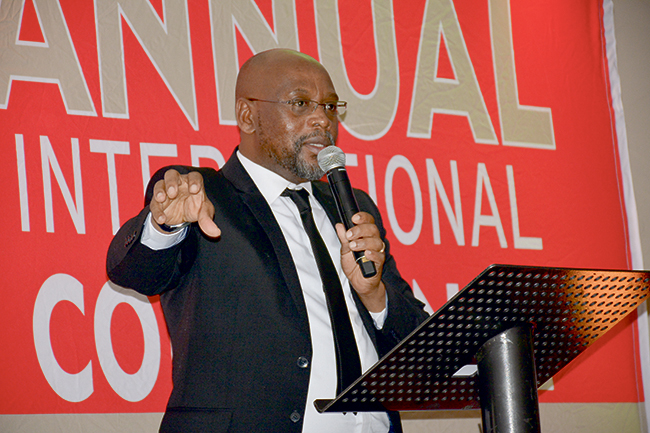
Deputy Minister of Agriculture, Land Reform and Rural Development, Sdumo Dlamini has called on academics to engage and recommend effective governance models to reverse the colonial socio-economic patterns of apartheid for a better South Africa.
Dlamini was delivering his first public speech since taking up his new office at the 4th International Conference during Public Administration and Development Alternatives (IPADA) conference hosted by the University of Limpopo (UL) from 3 to 5 July in Johannesburg.
In his address, Dlamini reportedly said: “Little has been done to reverse the injustices of the colonial apartheid systems towards the realisation of South Africa as a developmental state. He said 25 years into democracy, the South African economy was still in control of the hands of the few.”
He reportedly argued that mechanisms are needed to start rewriting the history. “It is time to question the status quo, it is time we disrupt and take bold steps so as this conference, to question how things are done. Our capacity to change has proved to be reliant on western countries while we have intellectual capacity to do things on our own.”
He highlighted corruption, illicit cash flow and maladministration to be at the core of cash strapped economies of African states. “For the past thirteen years, Africa has lost R1,4 trillion outflow to western countries we cannot continue like this.”
The former Cosatu president reportedly stated that South Africa has not made qualitative advances in developing the poor and the working class.
“We do not have a total ownership of the basic means of production, banks, mines and other key sectors of the economy.”
Story: Herbert Rachuene
>>herbert.observer@gmail.com