
President Ramaphosa meets with Limpopo’s leaders
The meeting was also attended by provincial heads of department and the purpose was to appease the president on challenges faced in the province.
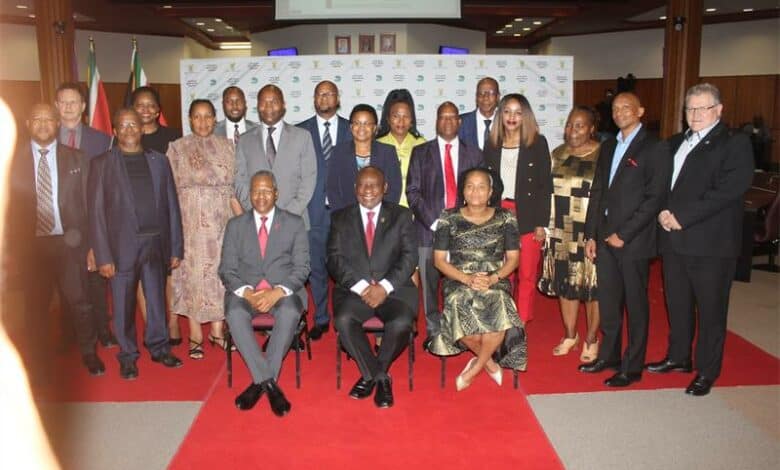
POLOKWANE – During a high-profile meeting on Friday, President Cyril Ramaphosa and a deputation consisting of members of the cabinet and some Deputy Ministers met with the Limpopo Executive Council in the city.
The meeting was also attended by provincial heads of department and the purpose was to appease the president on challenges faced in the province.
The Minister of Cooperative Governance and Traditional Affairs, Velenkosini Hlabisa chaired the meeting and allowed Premier Dr Phophi Ramathuba to render a word of welcome.
She emphasised that Limpopo remains one of the poorest and most rural provinces in the country, with a young population grappling with a stubbornly high unemployment rate.
“We are a province of a growing population of about 6.6 million people. Of these, the majority are youths. Youths who, persuaded by the call for higher education and jobs in other provinces, migrate in their numbers leaving us mostly with an elderly population,” she explained and added that, in line with the vision of the seventh administration, Provincial Government wants to foreground industrialisation as an enabler for job creation.
“Limpopo is rich in economic opportunities, particularly in several key sectors that are vital to our growth and development. Our mineral resources, including platinum, iron ore, and coal, support both precious and base mineral industries, positioning us as a significant player in the national economy,” the premier said.
Getting nearer to home, Ramathuba said water supply remains Limpopo’s biggest hurdle.
“The growing population requires access to water, of which levels have been dropping year in and year out. This is owing to a variety of factors, from source to reticulation to water services management at a local government level,” Ramathuba stressed.
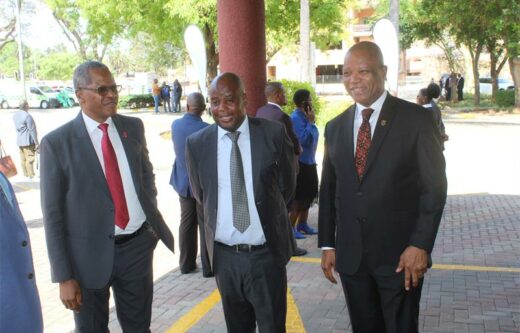
She also alluded to the road network that connects towns to economic hubs and roads that connect communities to each other. “There are 12 500 kilometres of these that are still gravel. This becomes a serious impediment to economic development and a constant source of community discontentment.”
She also mentioned that the wait for rain brought another disaster, as storms ravaged the length and width of the province in the past few days, leaving untold infrastructure damage and residents without permanent shelter.
“It is in these areas that we humbly request that an intervention be made to declare this phenomenon a disaster and allocate appropriate resources to bring relief,” the premier pleaded.
The media was not allowed to attend the deliberations that followed and the presidency issued a media statement after the meeting, saying that the president had concluded a productive session with the Provincial Government Executive Council and that he expressed confidence in the economic growth potential that lies within the province that can unlock more opportunities for the people of Limpopo.
“I am pleased to have the opportunity to reflect on the immediate actions that we can take together as national and provincial governments to bring significant changes to the province of Limpopo that will impact the lives of ordinary citizens. Limpopo remains a fertile ground upon which we can sow South Africa’s growth,” Ramaphosa is quoted to have said.
The president further said there are areas of infrastructure development that will continue to be at the centre of the agenda of his cabinet, like water provision and roads, until significant progress has been registered and the lives of people of Limpopo are changed for the better.
The meeting agreed on the urgent support from national departments in the areas of energy and electricity, land reform, water and sanitation, transport, cooperative governance and traditional affairs, and public works and infrastructure to assist the province accelerate catalytically projects that will deliver sustainable growth.
The inter-governmental framework will prioritise projects that require immediate action whilst allowing those that require long-term planning to be mapped accordingly.
“President Ramaphosa appreciated the understanding of the residents’ plight and the vision for the province reflected in the presentation delivered by the premier and the provincial executive,” the statement concluded.