Flood safety: What to do before, during and after a flood
A compiled guide on how to prepare for and react to flooding, given the severe rains and floods battering KZN this year.
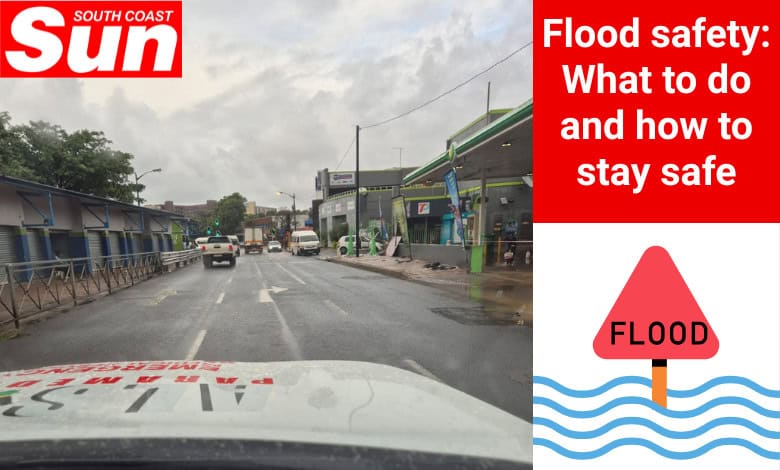
DURBAN has already exceeded its average annual rainfall of 1009mm midway through April, according to the South African Weather Service (Saws), and eThekwini Datafeeds rainfall data indicates that just this morning in Amanzimtoti, around 140mm of rain descended upon the area.
Also read: Motorists urged to exercise caution during heavy rains
Those living in low-lying areas and informal settlements bear the brunt of floods and heavy rains. According to the Department of Cooperative Governance and Traditional Affairs (Cogta), other possible causes of flooding include poor drainage, water rising and seeping through cracks, increasesin water levels in seas, rivers, canals and dams, and leaks in old or poorly built structures.
What can you do before a flood?
Cogta recommends the following:
- Keep a first aid kit handy with all the necessary medication and supplies.
Save emergency numbers. Those include:
-
- Emergency Response Services: 10177 or 112
- Netcare 911: 082 911
- Amanzimtoti police: 031 913 1300
- Amanzimtoti fire brigade: 031 903 9000
- Sea Rescue: 031 361 8567
- Kingsway Hospital: 031 904 7000
- Voluntary Emergency Medical Assistance: 083 630 0000
- Metro Police Amanzimtoti: 031 903 5311
- Metro Police Isipingo: 031 913 3417
- CCPO: 031 361 0000
- KZN Disaster Management Centre: 033 897 5688
- Contact your insurance company to ensure that natural disasters are covered.
- Teach your children to memorise your phone number.
- Keep all your personal documents in a waterproof bag.
- Pack dry clothing to keep warm.
- Have an emergency whistle to signal for help.
- Pack non-perishable foods, candles, water and matches.
- Safeguard your home by fixing cracks, pipes and clearing gutters. Seal your walls and open spaces.
- Raise your appliances off the ground where possible.
- Switch off all electrical appliances.
- Have a torch, battery-operated radio and spare batteries.
- Tie down all moveable objects outside your home.
- Keep animals indoors with you.
- Sandbags are a simple, effective way to prevent or reduce flood water damage.
What to do during a flood:
- Monitor the news on radio or social media.
- Avoid flooded roads, especially where water appears to be rushing or puddles are forming.
- Travel to high-lying areas, particularly those advised by emergency services.
- Trust emergency authorities and evacuate if instructed to do so.
- Take your pets with you.
- Leave your car if it cannot move.
- Stay off bridges. They can be washed away without warning.
- If your vehicle is trapped in fast-moving water, stay inside it. If it rises inside the vehicle, seek refuge on the roof.
- If trapped in a building, go to its highest level. Do not climb inside closed attics as you may become trapped by rising flood water. Go on the roof only if necessary and signal for help.
The aftermath: What to do post-flood:
- Call your insurance company to find out about claiming for damages.
- Do not use any electrical appliances until your home has been checked by an electrician.
- Avoid using water before contacting your local municipality to confirm water quality, as it may become contaminated. According to UNICEF, it is best to treat all water before drinking following a flood. Boil tap and tanker water for at least 3 minutes before use. Water collected from streams, rivers or pools on the ground must be filtered and then boiled for 5 minutes before drinking. Alternatively, add one teaspoon (5ml) of bleach into a big 20-25 litre of water and mix well, waiting for at least 30 minutes before drinking. Keep water covered at all times.

Do you have more information pertaining to this story? Feel free to let us know by commenting on our Facebook page or you can contact our newsroom on 031 903 2341 and speak to a journalist.