Dam maintenance to affect Durban South taps
Statistics show that one in 10 people lack access to safe water

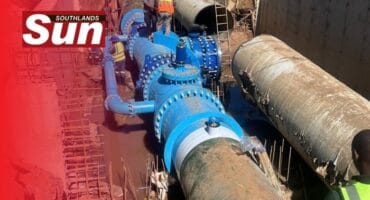
RESIDENTS living in areas serviced by water sourced from Midmar Dam will be affected by the planned shutdown on the dam’s treatment works on Thursday, 26 January from 8am to noon.
Affected areas include the outer west, inner west and South Durban suburbs.
Bluff ward 66 councillor JP Prinsloo, who is in correspondence with the water department confirmed the water will be shut off at night from 8pm to 4am. “Homes situated in the low-lying areas may not be affected by water cut-offs but houses on high-lying areas will. What determines if areas are low/high-lying? Reservoir positioning. An important thing to note is that our engineers take reservoir levels and pressure-reducing mechanisms into consideration before deciding whether a reservoir must be shut off at night,” he said.

Water supply is also affected by factors such as different reservoirs and water network systems resulting in some areas experiencing water restrictions, while others in the same suburb are not affected. This has been the case in suburbs such as Wentworth, Bluff and Umlazi.
“You may find that a reservoir supplying water to a particular suburb at night shows very little usage at night compared to other reservoirs where night-time consumption higher. Residents may receive water the one night and not the other night depending on the engineer’s assessment,” added Cllr Prinsloo.Ethekwini Municipality urged residents to not place additional demand on the system by stockpiling water reserves. Water will be available to residents from reservoirs.
The municipality warns people to refrain from using sprinklers, the hosepipes, filling in their swimming pools and washing their vehicles using hosepipes during this dire drought situation. The city will deal with illegal connections, high consumption and illegal car washes. Penalties will be imposed on those who do not adhere to the restrictions.
The question of rolling out restrictions evenly in the systems is not practical as one system may achieve savings while the other does not.

The department of water and sanitation is considering increasing the restrictions from 15%, which is not being achieved, to 20% as the dam levels are still low and the demand has not been reduced by consumers. This has necessitated the implementation of stage three restrictions.
Wessa senior education officer Dudu Vilane said South Africa and the rest of the world is experiencing a massive water shortage crisis, which has drastic effects on our livelihood.
“Water is life and nothing can survive without it. Statistics show that one in 10 people lack access to safe water,” she said. “I Think it’s time we start taking the water crisis quite seriously. Lets save water by having our own water reservoirs at home (Jojo drums) or big tank/ container. Let’s re-use our water and recycle grey water in our garden. Reduce, by installing water saving devices into your household such as water saving shower heads- low flush toilets, installing low flush onto your toilet cistern ).”
Click on this link to view a table explaining the different restrictions
The public is urged to report all leaks, illegal use of water and bursts on the following platforms.
- Customer care line: 080 13-13 013
- WhatsApp fault report line: 073-148-3477
- SMS: 43554
- Email: Eservices@durban.gov.za
Do you have more information pertaining to this story?
Feel free to let us know by commenting on our facebook page or you can contact our newsroom on 031 903 2341 and speak to a journalist.
DID YOU KNOW?
Click on the words highlighted in red to read more on this and related topics.
To receive news links via WhatsApp, send an invite to 061 876 3179
The Southlands Sun is also on Facebook, Twitter, Instagram and Pinterest – why not join us there?
(Comments posted on this issue may be used for publication in the Sun)