
Everything you need to know about the life cycle of Cicadas
There are more than 3 000 described species of cicada in the world, and there are about 150 species found in South Africa.
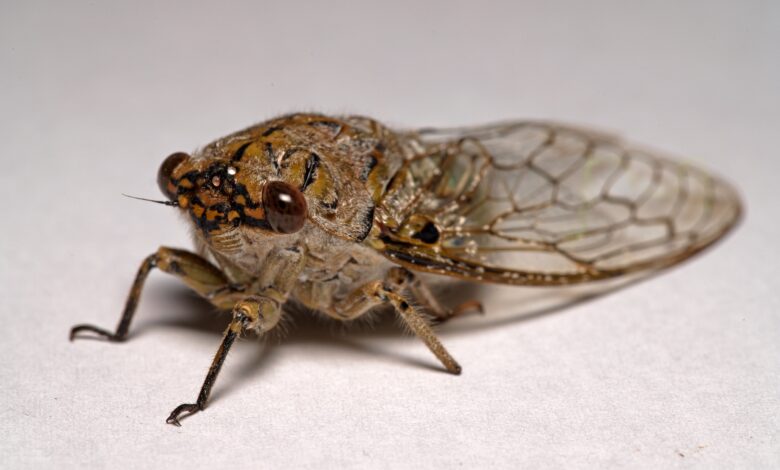
CICADAS, also known as Christmas beetles, are in the suborder Auchenorrhycha, which also include the smaller planthoppers and froghoppers, but by themselves, their scientific name is Cicadoidea.
Cicadas look a lot like planthoppers and froghoppers, only a lot bigger, growing to about five centimetres in size. However, unlike planthoppers and froghoppers, their wings are usually clear, with veins, somewhat like the wings of a dragonfly, but their wings are flat up against their bodies.
There are more than 3 000 described species of cicada in the world, most of which are cryptic in colour, mimicking the colour of tree bark. There are about 150 species found in South Africa.
ALSO READ: WATCH: Donate to Crow’s animals in celebration of World Wildlife Day
For the most part cicadas are heard before seen. The adults feed on tree sap and while feeding they make a loud deafening buzzing sound, produced by their tymbals. The tymbal is a corrugated section of exoskeleton of some insects, which is used to produce sounds, in male cicadas these two membranes are found side by side in the abdomen.
While only the males make their characteristic sound to attract a female, both sexes have tympana by which they detect sounds. It is equidistant to having ears.
“To me the most interesting part of the cicada is their unusual life cycle,” said Warren Dick.
The adult female lay her eggs in a crevasse of a tree branch. Shortly after hatching, the nymph falls to the ground then begins to burrow. Some burrow as deep as two-and-a-half metres underground where they feed on the sap from tree roots. Most species live underground for two to five years, but some for as long as 10 years or more. Once ready to transform into winged adults, they dig their way up to the surface, climbing about a metre up the host tree trunk or nearby grass where they shed their nymph exoskeleton and fly off in search of a mate. This usually occurs in late spring or early summer, hence the reason we hear the beetles around December or January.
While adults have mouth parts and can feed, their life as an adult is not long, lasting less than two months.
Contact Warren to have some of your interesting insects, snakes or spiders identified. Call or WhatsApp him on 072 211 0353. Visit his Facebook page, Warren’s Small World.
DID YOU KNOW?
Click on the words highlighted in red to read more on this and related topics. To receive news via our Telegram group, send a WhatsApp message to 084 418 2286.
For more Southlands Sun news, follow us on Facebook , Twitter and Instagram. You can also check out our videos on our YouTube channel or follow us on TikTok.