
The Bluff Whaling Station showcased in Durban Tourism tour [Video]
The old Whaling Station is being transformed by the Sodurba Community Tourism Organisation into a Heritage Site and Eco-Tourism Hub point, and was the first stop of the Know Your City South Region tour recently.
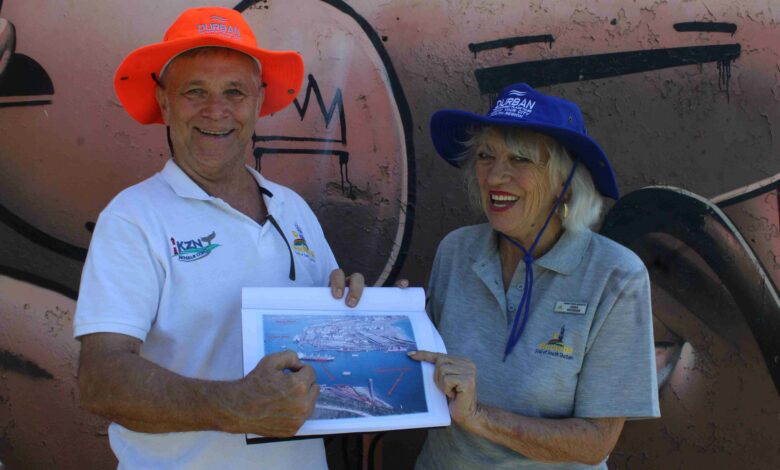
DURBAN Tourism hosted the Know Your City South Region tour and showcased many hidden treasures as part of the City’s efforts to promote activities and areas as tourist attractions.
The tour focused on showcasing attractions in the south of Durban and kickstarted at The Bluff Whaling Station. The Bluff is also home to the first Whale Heritage Site in Africa and is joint first in the world.
Also read: Visitors give city much-needed financial boost
The coastal suburb forms part of the port of Durban on the eastern seaboard of South Africa. It is an area of outstanding natural beauty, with stunning landscapes and an abundance of wildlife both on land and at sea.
The old Whaling Station is being transformed by the Sodurba Community Tourism Organisation into a Heritage Site and Eco-Tourism Hub point where they can share their great history with tourists and guests.
Their vision is to showcase how the local community has evolved to become protectors and admirers of their whales and to educate the public about wildlife and the importance of ocean conservation.
Sodurba has also registered this destination as the Kwa-Zulu Natal (KZN) Whale Coast, which will further strengthen and foster the community’s sense of pride and leave behind a legacy.
The tour continued at the Umlazi How Long Park, and proceeded to Amanzimtoti Main Beach, concluding at the Lazy Moose Restaurant and Lodge in Umkomaas.
The Know Your City South region activation forms part of Durban Tourism’s broader campaign which is Know Your City.
Did you know?
The old Whaling Station located in The Bluff used to be one of the largest whaling stations in the southern hemisphere. Whaling started in 1907 and continued through to 1975, using harpoon guns.
The whaling station then moved to the seaward side of The Bluff, due to the bad smell that saturated the area and also to protect bathers from sharks that were attracted by the blood during flensing.
In a way, whaling was a cultural practice for the people whose livelihoods depended on it. Emerging from this grim past, there is now a shift towards supporting conservation practices and celebrating whales and their recovery.
Watch the whales
The best time to go whale watching in The Bluff is from May to December when humpback whales make their migration along the east coast of South Africa.
There are estimated to be over 7 000 Humpbacks migrating through the waters of Durban now, compared to only 340 when the whaling station was closed in 1975. Similarly, the population of Southern Right Whales has increased to over 1 000 individuals off the coast of South Africa.
Other whales that can be seen include Sperm, Minke and Bryde’s, while Humpback dolphins and Long-beaked Common dolphins are also commonly sighted during the sardine run between May and July.
For more Southlands Sun news, follow us on Facebook or Twitter. You can also follow us on Instagram.