Clairwood Hospital’s health journey
Clairwood Hospital, in the south of Durban, was converted into a public health facility and officially opened on May 1, 1956.
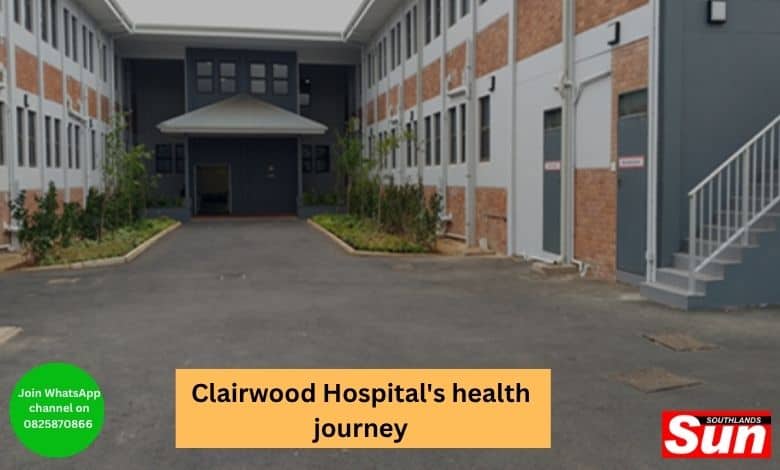
THE Clairwood Hospital was originally an army barracks before it was converted into a public health facility. The hospital was opened on May 1, 1956.
It is situated in Mobeni, a southern suburb of Durban.
The hospital serves the communities of the following areas:
- Lamontville
- Mobeni
- Merebank
- Woodlands
- Montclair
- Woodhaven
- Yellowwood Park
- Clairwood
The KZN Department of Health said in a statement the hospital services include a staff wellness clinic, ante natal clinic and school health services.
Also read: Education Department launches probe into Clairwood Secondary allegations
According to Duncan Du Bois, a historian, political commentator and analyst, since the 1880s, Clairwood when it came to be settled by former indentured Indian labourers, it ‘flourished as a microcosm of Indian culture, enterprise, industry, and education’.
The hospital was used as a quarantine site during the Covid-19 pandemic
It was designated as a quarantine and isolation site during the Covid-19 pandemic.
Establishment of Clairwood between 1870s to 1880s
The establishment of the village of Clairwood from 1875 to 1880 was in close proximity to the South Coast Junction in Rossburgh where the main railway routes met.
It was here that the trains from Durban diverted North-West to Pietermaritzburg, South to Isipingo, East to The Bluff or West to Mariannridge.
Also read: Two men held for kidnapping Clairwood businessman
The Durban Back of Port precinct is made up of residential suburbs such as:
- The Bluff
- Clairwood
- Wentworth
- Isipingo
- Umlazi
- Umbilo
- Congella
- Durban Harbour
- Jacobs and Prospecton
Over time, the Durban Back of the Port shifted from a largely residential neighbourhood to a mixed-use area after the decision taken in 1938 to encourage industrial development in the area.
According to the Durban University of Technology, the indentured workers were brought to Natal from India between 1860 and 1911 to develop the sugar industry in the province.
The new landowners had little means to build with and all they could afford were the “kit-houses” – timber inner frame, stud walls and corrugated steel sheeting.
According to eThekwini’s masterplan document, the building boom which hit Durban in the 1930s had an impact on Clairwood as better building materials became available.
Clairwood as noted was established around 1880 and was initially a residential suburb, predominantly occupied by the Indian community.
“Over a period of some 143 years, what started as an Indian residential suburb has changed and transitioned into an area riddled with unauthorised land uses, dilapidated, and decaying structures, mushrooming informal settlements and ageing and damaged infrastructure,” eThekwini said in a statement.
For more Southlands Sun news, follow us on Facebook, Twitter and Instagram. You can also check out our videos on our YouTube channel or follow us on TikTok.
Subscribe to our free weekly newsletter and get news delivered straight to your inbox.