eThekwini moves to curb water use with flow restrictors
The municipality aims to reduce water usage. However, residents are concerned that the installation of restrictors will have unintended consequences.
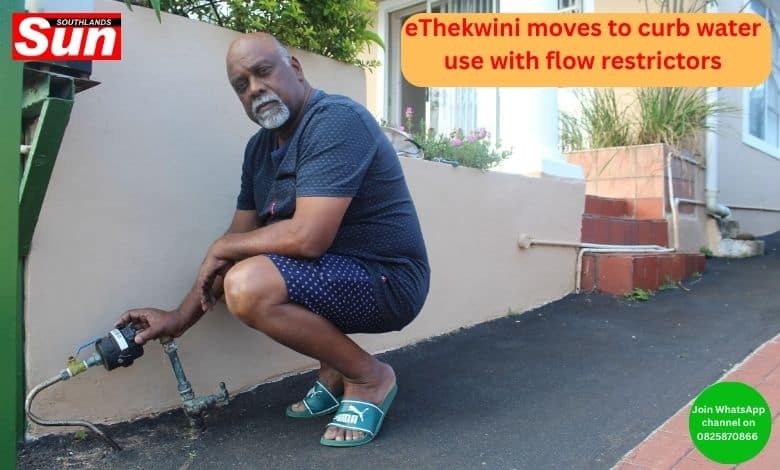
FRUSTRATION is mounting among Durban residents as eThekwini Municipality has begun installing water flow restrictors in a bid to reduce high usage of water.
The process is being implemented on The Bluff, Merebank, Wentworth and surrounding areas.
Also read: Ageing infrastructure linked to ongoing water pipe bursts
Although the municipality attempts to reduce high water usage, some residents are concerned about the initiative’s unintended consequences, such as the risk of burst geysers.
A Merebank resident, Victor Kupsamy, said houses above street level or on higher ground will often experience lower water pressure because water has to be pushed uphill. When a restrictor is added, it can make that pressure drop even more, especially during peak usage times.
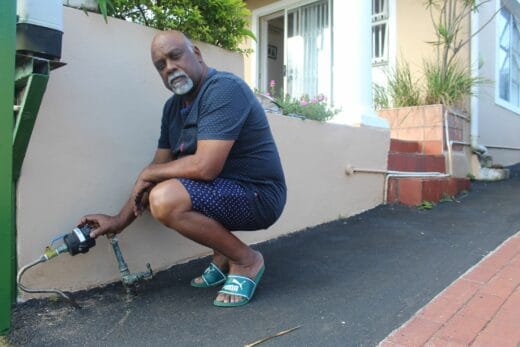
“The people in these houses will be battling with trickling taps or lower pressure,” said Kupsamy.
Wentworth resident, Andre de Bruin, is concerned about the long-term repercussions of the water restrictor installation process.
“The municipality is using over its normal supply and quota. Why must ratepayers pay for the municipality’s fault?” said De Bruin.
Also read: Water restrictors to reduce water loss in Durban
In August, uMngeni-uThukela Water issued a statement advising residents about planned water curtailments that were reintroduced from September 1.
Ward 68 councillor Aubrey Snyman said many residents are unhappy with the installation of water flow restrictors.
“The flow restrictors are being installed across the city because for a long time uMngeni Water was supplying eThekwini Municipality with more than the contracted volumes because of the demand from residents. Subsequent to that, the national Department of Water and Sanitation issued a directive to uMngeni-uThukela Water to reduce the volume they are sourcing.
“Many residents have not been properly informed and they have concerns that the restrictors may cause damage to their high pressure geysers. If that happens who will compensate them?”
According to the eThekwini Water Security Dashboard, the City has consistently used more than their licensed allocation by about 90 million litres per day (MLD), which equates to 193 MLD too much.
Also read: eThekwini Municipality ready to roll out new meters
The results also show that the Non-Revenue Water (NRW) and water losses have been unacceptably high since 2020, when compared to targets of 25% for NRW and 15% for real losses in South Africa.
According to the municipality, high NRW and losses are typically due to poor infrastructure maintenance resulting in:
- Increasing bursts and leaks,
- Reduced revenue due to meter management shortfalls.
The Department of Water and Sanitation first introduced the curtailments in 2024 as a means of reducing the amount of water abstracted by uMngeni-uThukela Water from dams to be in line with the permissible abstraction volumes.
eThekwini aims to respond to fixing water and sewer faults:
- 85% of the 8310 reported water leaks
- 98% of the 1098 burst pipes
- 90% of the 3121 sewer blockages
- 100% of the 9255 customer service connection leaks
For the 2025/26 financial year, eThekwini Water & Sanitation has prioritised the following to reduce NRW:
- Metering of tribal areas, unmetered areas, informal areas, tanker filling points, and community ablutions blocks
- Analysis of Revenue Management System billing pods with zero consumption meter readings
- Replacement of industrial, commercial, institutional and domestic meters
- Restrictor installation at domestic consumers
- Deployment of plumbers to wards for rapid leak repairs.
For more Southlands Sun news, follow us on Facebook, Twitter and Instagram. You can also check out our videos on our YouTube channel or follow us on TikTok.
Subscribe to our free weekly newsletter and get news delivered straight to your inbox.