
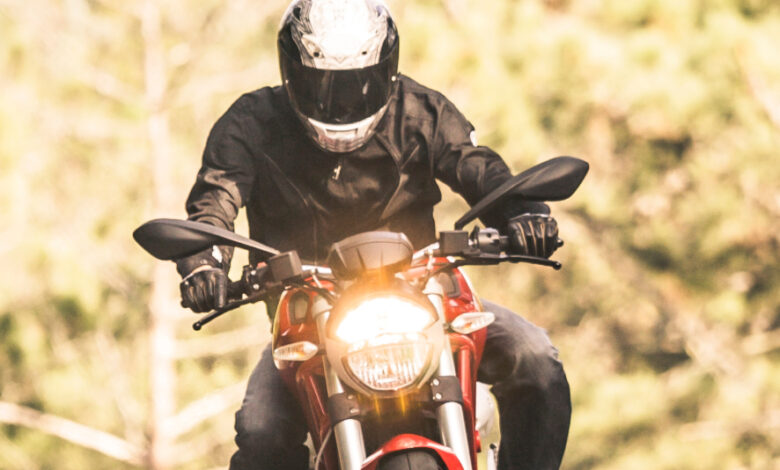
Motorbikes are a quick and economical way to get around for some people, and they even have some advantages over cars: ER24’s Russel Meiring, who used to be a motorcycle medic, says he was often able to respond to emergencies first because he could navigate traffic more quickly than ambulances.  This was especially useful in medical emergencies, where every second counts. But, he admits, riding a motorcycle had its challenges. “Safety is a big issue because riders have little protection aside from their protective gear. Weather also poses a problem: while rainy conditions pose a potential danger for any driver, the threat is even more keen for a motorcyclist.”
Accident alert Hein Jonker of the Motorcycle Safety Institute of South Africa (MSI) warns that while biking is exhilarating, it can be dangerous. MSI’s website, msi.org.za, warns that “…motorcyclists are more exposed to crash risk than other road users”. The reasons are that they’re sensitive to changes to the road surface and design, as well as the way their machines perform. Unfortunately, the latest available biker accident stats (2018) are grim: 183 riders lost their lives in that year, and 508 were injured. Those numbers are significant considering motorbikes account for only 2.1% of registered vehicles in SA. Jonker says the most common causes of accidents involving motorbikes include right-of-way violations, which often occur because motorists simply don’t see bikes; loss of control on a bend, corner, or curve, especially on rural roads; and errors in judgment, particularly at low speed.  Don’t become a statistic As a motorcyclist, you’re more at risk on the roads and must be extra vigilant when driving. Jonker advises paying special attention to how other road users are behaving: take note of their signals and brake lights but be aware they may make sudden moves without indicating first. Try to estimate the time you’ll need to cross an intersection, plan accordingly and project each car’s path of travel. Avoid tailgating or driving behind larger vehicles that are hard for other drivers to see around. Make a point of signalling your intentions early on, and steer clear of blind spots, such as truck no-zones. The basics also apply – service your bike regularly, observe the speed limit, and avoid rush hour as far as possible.
Wear the right gear Remember that what you’re wearing can have a big impact on the outcome if you’re struck by a car. Wearing a helmet is non-negotiable, but it’s also smart to invest in a sturdy, high-quality pair of motorcycle boots. Jonker also recommends protective armour: make sure yours has special padding around the elbows, shoulders, knees, and hips and fits properly without sliding. It’s important to incorporate retro-reflective material on your clothing – especially on your helmet, back, pants legs and sleeves. Finally, keep your visor clean, and replace it when it’s scratched.