
Benefits of storing patient information in an Electronic Medical Record (EMR)
An Electronic Medical Record (EMR) can tremendously improve how you manage a medical practice. How is this implemented?
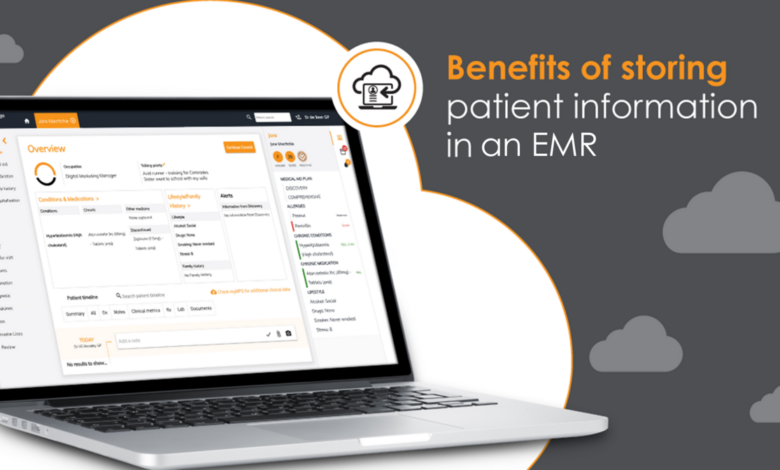
The electronic medical record (EMR) is an electronic version of a patient’s medical file. An EMR can be used to document & store a patient’s medical history, diagnoses, & treatments. As such, an EMR can help to improve the quality of patient care, reduce the cost of patient care & improve the efficiency of patient care. Here’s how:
EMRs offers safe and easy access
Fast & easy access to important medical information is vital to diagnosis, treatment & ongoing care. Uploading health records, patient history, test results, images & other diagnostic findings into an EMR means that you can always act on the latest information.
EMRs provide better control
EMRs make it easier to provide access to patient information to the right levels of user authority. For example, specific parts of a patient’s financial data, like their billing history, may not be available to frontline care providers. Likewise, details of medical conditions & treatment can be blocked from back-office staff who don’t need those details to do their work.
EMRs offer a single solution for your practice
EMRs make it easier to share information & therefore improves integration capabilities. For example, EMRs makes it possible for your patient data stored in your practice management solution to integrate with practice data stored in your EMR, ensuring you have the most uptodate patient information across your practice.
EMRs are reliable
EMRs make use of cloud technology which means that you don’t have to worry about backing up data & in the event of hardware failure/theft, power outages or data breaches, you can quickly & easily restore data from the cloud to your new device via your EMR with minimal disruption to patient care.
EMRs save on costs
Because EMRs use cloud-based technologies, the need to purchase new hardware, have a dedicated server room, or employ on-site skilled IT staff is no longer required. Software updates, backups, & other maintenance are deployed remotely at a lower cost than what could be done in-house.
EMRs offer safety & security features
Your EMR service provider is responsible for ensuring that all the latest data security protocols are in place. Ensure your EMR technology provider is POPI compliant & can safeguard against your sensitive patient & practice data from being accessed or shared without permission.
EMRs save space
Storing paper files isn’t only inefficient, it takes up physical space. Space that could be used to either reduce overheads or add to the health services available at your practice.
Healthbridge is committed to the success of your practice. This reputable service provider offers an extensive range of cloud-based EMRs & billing solutions to over 5,000 medical professionals nationwide. To find out how you can be assisted with your patient data requirements, click here.