
Sharing space with nature, not shooting at it
“You don’t move to the bush and complain about buck eating your flowers,” writes Dennis Ryder MP, urging residents to reject cruelty and embrace coexistence with vervet monkeys in Three Rivers. “The real problem isn’t the animals – it’s uncollected refuse and human apathy.”
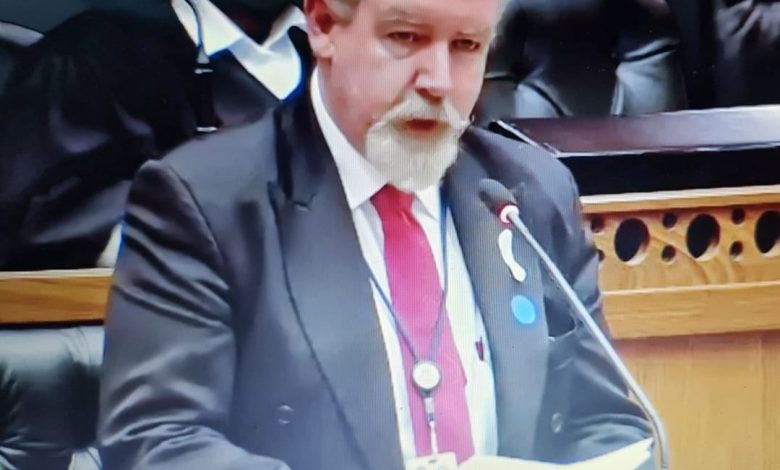
Dennis Ryder MP writes:
“It is said that the measure of a society can be seen in how it treats its most vulnerable – and that includes the animals who share our environment.
Yet, in Three Rivers, a quiet suburb nestled against the banks of the Vaal, this principle seems to be forgotten as vervet monkeys are increasingly becoming the targets of pellet guns, shot at by residents who seemingly believe cruelty is a solution.
Let’s not beat about the bush: this is not simply a matter of nuisance animals.
It is a matter of morality, legality, and shared responsibility.
The vervet monkeys were here long before suburban fences cut across their ancient pathways.
These animals have always roamed freely along the riverbanks, foraging, breeding, and playing in the trees we now claim as our own.
It is humans who have encroached on their habitat, not the other way around.
To now meet these creatures with violence is both heartless and wrong. Legally, shooting at monkeys with pellet guns is not a trivial action.
South African law, through both the Animal Protection Act and provincial conservation ordinances, makes it illegal to inflict harm on wild animals without the proper permits.
Beyond the risk of criminal charges, there is the stark ethical issue: what kind of society teaches its children that frustrated violence is acceptable simply because the target cannot speak for itself?
Of course, the frustrations that residents feel are not entirely without cause.
The monkeys raid dustbins, scatter refuse, and occasionally cause damage.
But the root cause of this problem lies not in the animals’ nature but in the failings of Emfuleni Municipality.
When refuse is left uncollected for weeks, it becomes an irresistible attraction for opportunistic animals.
Overflowing bins become feeding grounds, not just for monkeys, but for stray dogs and rats as well.
What could have been avoided through basic municipal service delivery becomes a point of conflict between human and animal. Residents, too, must acknowledge their role.
Choosing to live near the river is a lifestyle decision that comes with responsibilities. You do not move to the bush and complain about buck eating your flowers. You do not settle beside the sea and bemoan seagulls.
And you do not buy property alongside a river system and expect to be exempt from nature.
We need to secure our refuse, refrain from feeding wild animals, and recognise that living closer to nature demands more thought, not less.
The answer is not violence but coexistence.
Secure your bins. Educate your children. Learn to enjoy the privilege of watching vervet monkeys swing through your garden, rather than reaching for a weapon to maim them.
Call conservation authorities when necessary, not the pellet gun supplier.
This issue reflects something deeper about our society: our impatience, our lack of care for the world beyond ourselves, and our failure to solve problems without resorting to cruelty.
Emfuleni must step up to meet its obligations in keeping our suburbs clean and waste-free.
Residents must step up to meet their obligations as custodians of both property and planet. If we cannot find compassion for a vervet monkey seeking out a banana peel, how will we find compassion for one another when life’s greater challenges arise?
It’s time we stopped shooting at the symptoms and started addressing the causes. Responsibility lies with all of us, and our children are watching.”