National Senior Certificate maintains high academic standards, say education experts
The dean of matrics at Saheti School and the head of academics at St Benedict’s College expound on the National Senior Certificate academic standard measurements.
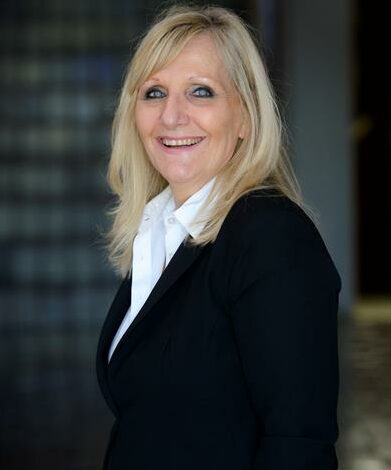
The National Senior Certificate (NSC) issued by the Independent Examinations Board (IEB) is widely regarded as a gold-standard school-leaving certificate.
This is because it maintains consistently high academic expectations, emphasises rigorous cognitive demand and is supported by strong external moderation and quality assurance processes, according to the dean of matrics at Saheti School, Dr Daniela Pitt.
ALSO READ: St Andrew’s teachers selected for key roles in matric final examinations
She adds that although it is formally the same qualification level as the NSC issued by the Department of Education, the IEB covers the full national curriculum and includes a 25% top-up in higher-order thinking.
“It also stands in an admirable position in quality question types and creative thinking, with top international qualifications. The framework ensures that content depth, complexity and skills application beyond the minimum requirements are assessed,” Pitt explains.
This enriched academic scope, she says, and the IEB’s emphasis on critical, higher-order thinking and assessment reliability, has earned it a reputation for excellence.
As a result, IEB students are regularly accepted into top international universities, including in the UK, US, Europe, Australia and Canada, often without the need for foundation programmes, reflecting the global confidence in the qualification’s rigour.
Pitt notes that the value and expertise of good teachers are essential to ensure that curricula and academic standards are met with efficacy and success.
ALSO READ: 2025 matric results to be released on January 12 despite exam paper leak – Gwarube
She says, “Teachers are in demand and, sadly, many do not see the profession as a valued first choice.”
IEB students sit at top universities locally and internationally, suggesting that what schools offer is high-demand education, Pitt notes.
Additionally, private schools explore market appeal and look to ensure that they offer what the educational market requires. It’s all about balance and market needs, while ensuring that top-quality education is not compromised.
Pitt says competency-based assessment shifts the centre of gravity from remembering content to applying knowledge, which fundamentally alters teaching, learning and the meaning of achievement. Instead of judging learners on how well they reproduce a curriculum, she says it evaluates the transferability, adaptability and demonstrated mastery of skills needed in university, employment and civic life.
“This change has a cascading effect throughout the system. But, having said that, I return to my first point regarding qualification and training teachers in these skills and competencies, something that remains a challenge in our country,” says Pitt.
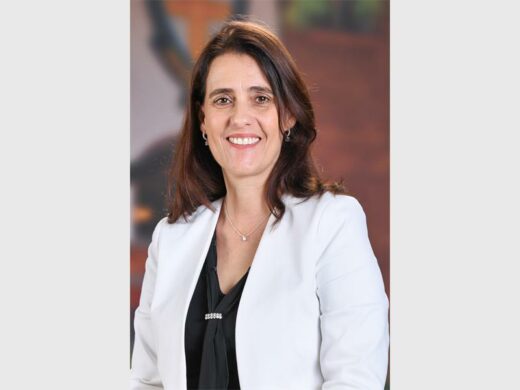
The NSC does not measure a learner’s full capabilities, strengths and potential. The head of academics at St Benedict’s College, Margarita Nichas, says it is proof that a learner completed Grade 12 and is eligible for tertiary studies. It opens doors to universities and colleges of choice and allows an individual to explore various paths of interest.
“It is a stepping stone to future achievement, rather than the measure of the end of achievement.
“It is acknowledged that the matriculation certificate is only a small measure of the abilities of a learner.
“A learner’s full capabilities, strengths and potential cannot only be measured by one high-stakes examination,” says Nichas.
ALSO READ: Edenglen High matriculant wins full bursary for entrepreneurial talent
“We all have stories of learners who, after achieving seven distinctions, did not succeed at university or in their careers. In contrast, we have also heard stories of the ones who ‘failed’, the ‘D’ candidates, who struggled to overcome various challenges, yet succeeded despite them. The matric certificate is neither a guarantee of success, nor does it mean that all is lost,” she adds.
Nichas says a matric exam cannot measure social and teamwork skills or emotional intelligence. She says these skills, along with creativity and collaboration, are a few of the most sought-after skills in any industry today. It is acknowledged that an exam would fall short of adequately measuring them.
Nichas adds that soft skills are more effectively developed in relationships built over time between the learner and the teacher, and are enhanced by dedicated coaches on a field or on a stage and are measured in scoreboards and trophies.
ALSO READ: Ekurhuleni wishes Class of 2025 success in matric finals
While many believe the matric exam is an exercise in rote-learning meaningless facts, Nichas begs to differ. In her observation, the material studied has to be interpreted, not just remembered. Learners have to use their knowledge to solve complex problems, argue a viewpoint and justify a response.
“These are all highly complex functions that cannot be perfected in an exam. These skills are honed over 12 years of education, little by little; day by day; year by year. These skills are developed through innovative approaches to teaching and learning.”
Arguably, independent schools are better equipped to address the needs of learners and develop more innovative strategies in the classroom, says Nichas.
Access to advanced technological equipment is readily available. She adds that innovation in the classroom requires an inspired teacher, willing to try something new, ask probing questions and enhance critical thinking.
Learners’ engagement in the classroom is dependent upon their curiosity and attitude to learning, as well as the teacher’s ability to differentiate the learning style, support the weaker learner and extend the more capable learner.
According to Nichas, the certificate issued at the end is an indication of the learning that transpired over 12 years.
ALSO READ: Gauteng ready for 2025 matric exams as over 190,000 candidates register
She says, “For some, this is just the start of their academic journey. For others, the certificate is filed and forgotten in search of a different experience.
Both scenarios are perfectly acceptable. The certificate is a benchmark, a measure of what has been achieved to date, not a measure of someone’s worth.”