Weed stores, formally known as cannabis dispensaries, are popping up like mushrooms in South Africa's big cities.
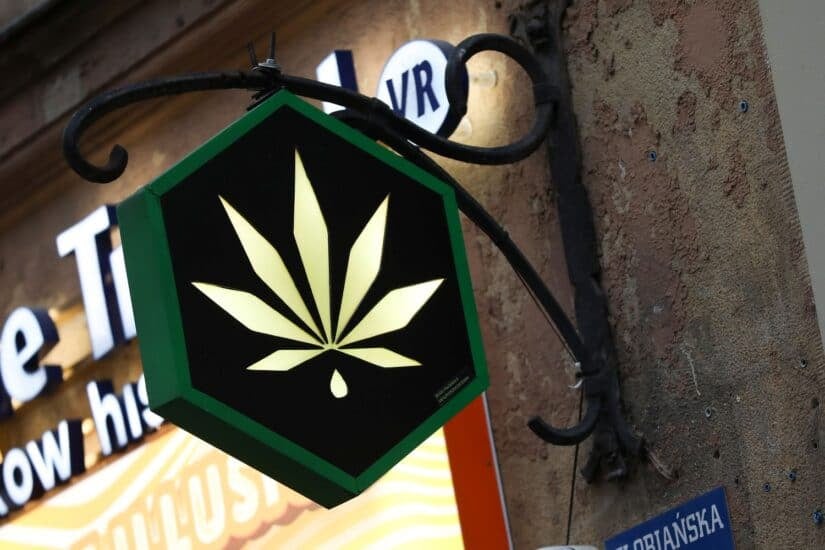
For illustrative purposes. Picture: Klaudia Radecka/NurPhoto via Getty Images.


Weed stores, formally known as cannabis dispensaries, are popping up like mushrooms in South Africa’s big cities following a court ruling and the gazette of an act that allows people to use the drug in private for personal use.
On The Citizen’s Craighall Park office street alone, there are three cannabis dispensaries, all within a 1km radius. This is no different at malls, particularly in Gauteng, where one can find at least three dispensaries in one mall or shopping centre.
These stores, together with the Cannabis for Private Purposes Act, have given many people confidence to walk into a dispensary and purchase any type of cannabis product, while some places are ‘member-only’, meaning they can only be accessed by those who have signed up.
Act for people to use cannabis
In 2018, the Constitutional Court ruled that it is unlawful to criminalise the private use, possession, and cultivation of cannabis by adults for their own personal consumption in private. The court found that such criminalisation infringed on the constitutional right to privacy.
The ruling ordered the government to amend the relevant laws within 24 months to align them with the Constitution. However, this deadline was missed.
Only in 2024 did the government gazette the Cannabis for Private Purposes Act, allowing adults to use, possess, and cultivate cannabis in private for personal consumption.
However, selling cannabis commercially is still illegal, and shops that openly sell recreational cannabis are operating outside the law.
Cannabis law clear on what is allowed
Following a News24 article, Paul-Michael Keichel, specialist cannabis and environmental lawyer at Cullinan & Associates, told 702 Drive that he does not know where the confusion comes from, as the Act and the 2018 judgment stipulate that commercial sales are illegal.
“It is both absolutely clear, but it seems to have confused everybody, largely because of the proliferation of these so-called cannabis dispensaries or just over-the-counter cannabis shops that don’t even bother to call themselves dispensaries,” he said.
“I think a lot of the confusion came into place with the 2018 judgment, and then a lot of people sort of started opening these shops, and then the Cannabis for Private Purposes Act, which was put onto our statute books in 2024, has not been operationalised.”
Trade of weed is illegal
Keichel stated that the trade of cannabis is dictated by the Drugs and Drug Trafficking Act, which says that any trade in cannabis is illegal and could land you in prison.
“The only exception to being deemed a drug dealer is if you hold a licence in terms of the Medicines Act, read together with the Pharmacy Act,” he said. This refers to registered medicinal cannabis products dispensed through the appropriate regulatory channels.
“What the Private Purposes Act says is that you are not a criminal if you hold a license or a permit in terms of any other Act of Parliament. So what that does is it doesn’t create a legal regime for the dealing of cannabis, but it actually foreshadows one.”
How selling could be legitimised
He explained that there are ways in which the government could legitimise selling cannabis.
“The government could put into place, for example, an amendment to the Business Act or a whole new cannabis for Commercial Purposes Act, for lack of a better term, that could then legitimise what is going on,” said Keichel.
He added that government’s inaction is also partly to blame for how the weed stores have been popping up like mushrooms in cities.
“I mean, I know that after 2018, parliament was given two years, and it took those more like five years to put the cannabis for Private Purposes Act into place and Cyril Ramaphosa, the last three or four states of the nation addresses (SONA) has promised us that he was going to fast track the liberalization of cannabis, and we’ve just not seen it happen.
“So I think that what you’re actually seeing is a whole lot of people who want to make money out of cannabis who are just done with waiting and are pushing ahead despite knowing that it’s illegal.”
Police have given up on
Keichel claimed that the average member of the South African Police Service (Saps) has given up on enforcing cannabis.
“You combine that with the fact that I think that’s the average member of the South African police service is completely over their head with other things now and have given up on enforcing cannabis,” he said.
“They actually don’t care anymore, either that or they are being bribed to turn a blind eye, depends on the jurisdiction and on a case-by-case basis.”