



Has cut its support for municipalities for a second consecutive year but insists it hasn't abandoned the local government sphere.
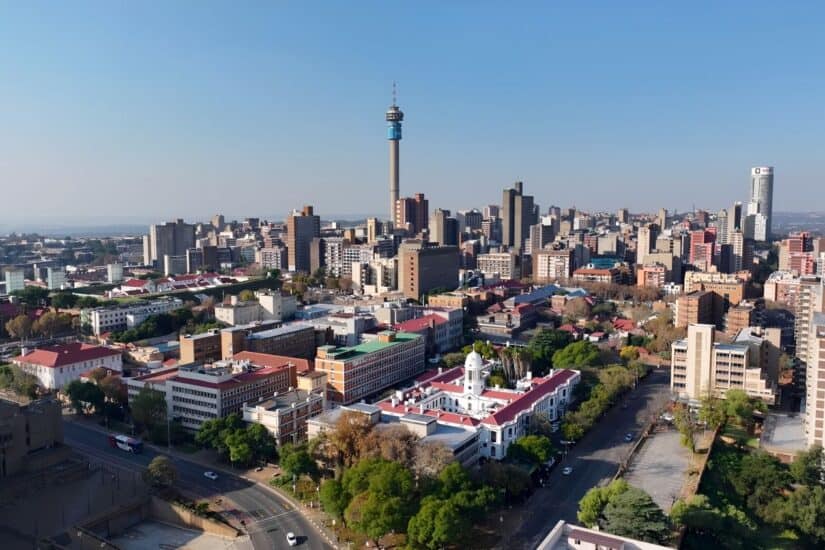
No more personality-based institutions –and ‘we need to build entities and decision-making structures that can survive the turbulence of coalitions’, says DBSA chair. Picture: iStock


Is the Development Bank of Southern Africa (DBSA) starting to draw a line in the sand by reducing its financial support to municipalities that are dysfunctional and at risk of loan defaults?
The publication of DBSA’s annual report for the year ending 31 March 2026 shows that the state-owned development financier has reduced the amount of money it lends municipalities for the second consecutive year.
Financial support offered to municipalities
According to the annual report, total disbursements to municipalities (financial support advanced):
- Reached R4.6 billion in 2024
- Fell to R3.9 billion in 2025, and
- Fell further to R1.3 billion in 2026.
It is unclear whether this disbursement decline is a deliberate strategic retreat by the DBSA from municipalities or simply a function of debt repayments exceeding new lending.
Moneyweb reached out to the DBSA for comment and sent questions. This article will be updated with the DBSA’s response when it becomes available.
Exposure to municipalities
As part of its developmental mandate, the DBSA lends money to municipalities so they can build and improve basic infrastructure including water, roads, and sanitation.
It makes money when municipalities repay the principal debt amount and associated interest.
The DBSA’s overall exposure to municipalities (through development loans, loans committed and bonds) has fluctuated over the past three years:
- Reaching R33.6 billion in 2024
- Rising modestly to R35.4 billion in 2025, and
- Declining to R31.2 billion in 2026.
The DBSA has flagged the “financial pressures” faced by municipalities as one of the several risks to its lending activity. It is arguably not hard to see why, considering that a lot of the money it lends municipalities is at risk of not being paid back.
Risky loans
Of the approximately R31.2 billion municipal exposure in 2026, R16.1 billion is classified as “high-risk stage 2”.
But that R16.1 billion relates to the R29.5 billion municipal development loan book, not the full municipal exposure.
It means municipalities are still paying, or not yet in default, but have shown a significant increase in credit risk or stress since receiving loans, so the DBSA is watching them closely and has raised provisions.
Remaining loans
The remaining roughly R15 billion is not all performing normally: it includes other Stage 2 loans and bonds.
The worry point is R153.8 million of credit-impaired municipal exposure – about 0.5% of the total.
This includes R51.8 million in Stage 3 (loans more than 90 days past due or otherwise officially in default/credit-impaired).
It also includes R102 million in ‘purchased or originated credit-impaired’ loans – loans already impaired when originated or restructured, which may later perform again. So not all of the R153.8 million is Stage 3 or still in default.
The DBSA does not disclose borrowings from specific municipalities, and doesn’t list which ones are in default.
AFD declines to help CoJ
In the private sector, other lenders have taken a tough approach to dysfunctional municipalities, especially in Johannesburg.
In April, French development agency Agence Française de Développement (AFD) declined to extend its R2.5 billion loan to the City of Johannesburg (CoJ).
According to Bloomberg, AFD cited governance concerns with the city, which allegedly failed to meet its obligations regarding an August 2024 loan.
DBSA chair on municipalities
While the DBSA’s overall exposure to municipalities has lowered, the development institution insists it hasn’t abandoned efforts to support local government structures.
Speaking to Moneyweb on the sidelines of the DBSA’s results presentation on Monday, DBSA board chair David Makhura said the unprecedented infrastructure crisis at municipalities and the subsequent impact on service delivery needs more than loans and bailouts.
He said it also needs an internal shift, including a professional and technical reset at the affected municipalities.
“Municipalities cannot be allowed to fail.”
Steps for CoJ recovery
Makhura, who was appointed DBSA chair nearly a year ago, served as Gauteng premier for two terms between 2014 and 2022.
While the deterioration of CoJ is the result of accumulated failures (not a single administration), Makhura would have been in provincial office for almost a decade during its slide.
The provincial premier exercises oversight over municipalities to ensure proper governance, compliance and service delivery.
Now, with the benefit of hindsight, he tells Moneyweb that three pieces need to be in place to achieve CoJ’s development agenda and its recovery.
1. Infrastructure
Infrastructure, especially related to addressing the lack of maintenance or replacement of water and electricity networks within older townships and suburbs, which Makhura says take a back seat to newer developments.
“The city will never have enough money to fix the infrastructure problem. It needs development partners: National Treasury, the DBSA and other development banks.”
2. Fixing the institutions
This would involve what Makhura describes as a move away from personality-based administrations and insulating service-delivery entities from political instability.
“It’s very tempting, in government, including municipalities, to build institutions that are personality-based for five years – but we need to build entities and decision-making structures that can survive the turbulence of coalitions.
“For example, if we have an infrastructure programme we need delivery institutions in the city to be aligned, and not about who is in government or who is the mayor.”
3. Strong leadership and accountability
Without a capable city manager and other technocrats running Joburg, the first two remedies are doomed.
“These city managers, municipal managers and municipal executives, who are paid so well, must do their jobs,” says Makhura.
“It’s very frustrating when you have to work with municipal officials who are appointed there for five years or longer but they are not doing their jobs because they claim there’s interference from coalitions.”
He said this applies to all municipalities, not just CoJ, with DBSA working closely with executives to get infrastructure plans going.
While he wouldn’t be drawn to the current politics of CoJ, Makhura called for sense to prevail within coalitions, even after the upcoming 4 November local government elections.
This article was republished from Moneyweb. Read the original here.



