


The funds have been released to avoid an adverse effect on the delivery of basic municipal services.
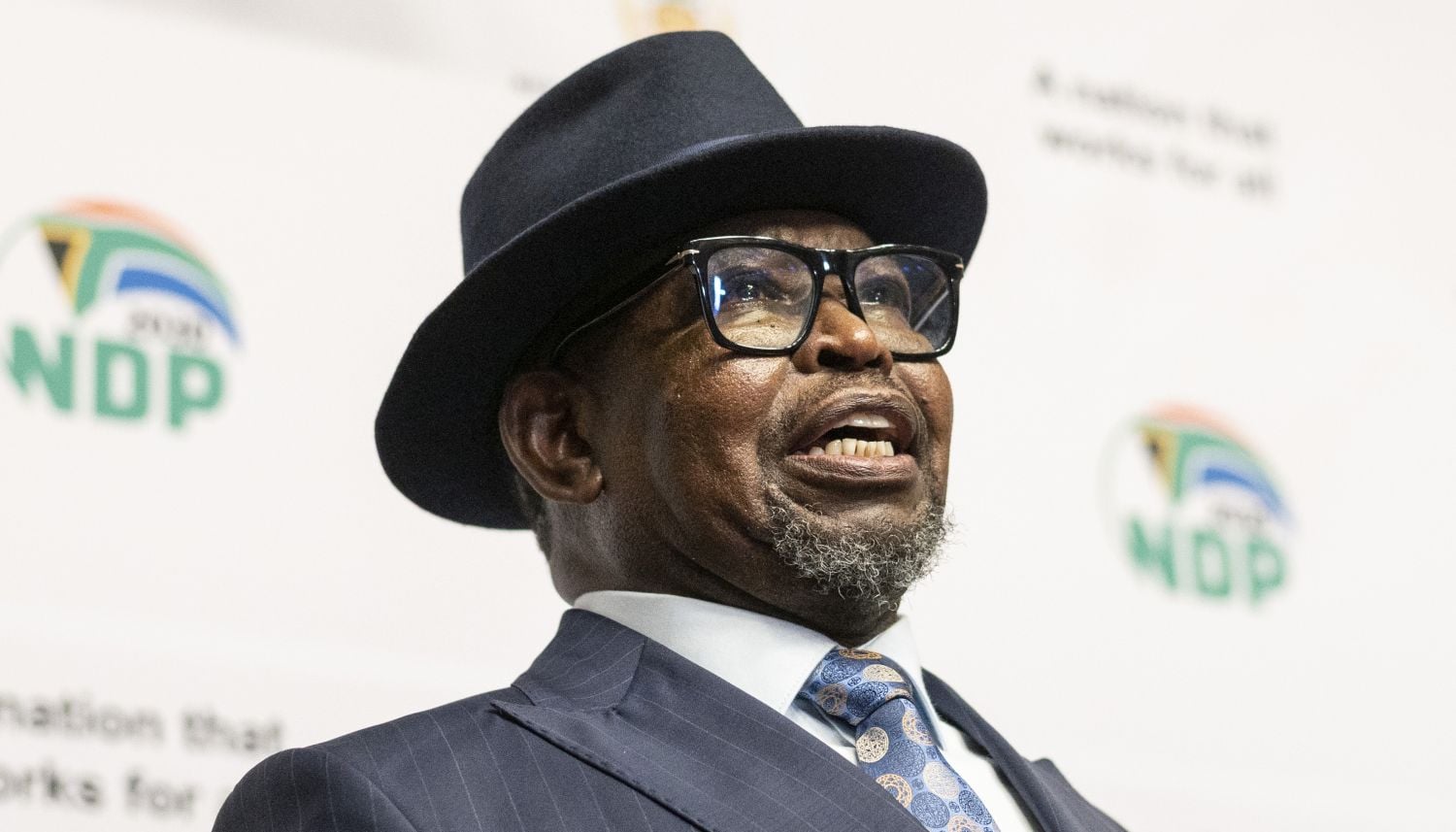
Finance Minister Enoch Godongwana. Picture: Gallo Images/Brenton Geach


National Treasury will release R7.1 billion in municipal equitable share transfers on Friday, 31 July 2026, despite municipalities failing to meet compliance requirements. Finance Minister Enoch Godongwana said the move is necessary to ensure basic services are not disrupted in struggling communities.
The funds had been withheld over governance and financial management failures, but Treasury said continuing to withhold them would risk further deterioration in service delivery.
Twenty municipalities have received their full equitable share to date. Forty-nine municipalities will receive their outstanding equitable share on Friday, of which 21 have already partially received.
The decision comes as the Free State remains one of South Africa’s worst-run provinces in local government, with municipalities crippled by financial mismanagement, mounting debt, crumbling infrastructure and an inability to provide even the most basic services.
Funds released not because of compliance
In a joint media briefing with National Cooperative Governance and Traditional Affairs (Cogta), Godongwana said the decision to release the funds is to avoid an adverse short- to medium-term effect on the delivery of basic municipal services.
This is after the funds have been held for almost a month. The minister further noted that the equitable share is an important source of funding for basic services, particularly services for poor households.
Municipal equitable share provides unconditional national revenue grants to help local governments fund basic services for poor households, subsidise core administrative costs and fulfil their constitutional delivery duties.
Funds released on conditional basis
Godongwana added that National Treasury must therefore balance its constitutional responsibility to enforce financial management requirements with the need to avoid communities carrying the immediate consequences of failures by municipal institutions and officials.
“The release must accordingly be understood as a conditional release, intended to protect basic service delivery while requiring affected municipalities to correct the serious weaknesses identified through the section 216(2) process,” he said.
Godongwana said the municipalities that have not complied with the necessary requirements are not off the hook and will be required to perform.
“Each municipality will receive a letter informing that municipality what the conditions are attached, what it is going to do between now and the next tranche.
“We will also send similar letters to the MECs of local government and finance in each province and the premier of that province to be able to work with us in assisting those municipalities so that come the next tranche, there will be no need to withdraw the equitable share.”
City of Joburg to receive R4m
Intergovernmental Relations Deputy Director-General, Ogalaletseng Gaarekwe, said the City of Johannesburg (CoJ) will receive R4.4 million on Friday, as the metro has received two tranches – the first R2.6 billion to pay Eskom and the second nearly R1 billion to pay Rand Water.
Some of the municipalities that will be receiving funds include Nelson Mandela Bay, Mangaung Metro Municipality, City of Matlosana, Sedibeng and Maluti-a-Phofong.
Godongwana said the municipalities that will receive the funds without compliance have until December to sort out the issues.
Salaries and pensions not paid
The minister also touched on the issue of municipalities not paying salaries, particularly in the Free State.
“You must understand that in some municipalities, even if we didn’t take this action, they would still have a challenge. Particularly in the Free State, you will recall one of the municipality’s accounts was confiscated by a pension [fund] because the pension went to court and won,” said Godongwana.
He also spoke about Masilonyana Municipality in the Free State. “As of Friday, all other municipalities had done agreements with the pension [funds] in order to have a payment agreement with the municipalities, [but] Masilonyana had not done that.”
Godongwana said R1.7 billion was owed to pension funds by the end of February, and R1 billion was owed by the Free State. “So we need to think carefully when we talk about Free State. Free State has got 21 municipalities. In the list, they had 16, which means only five municipalities were not as affected.”
Funds must be used prudently
Cogta minister Velenkosini Hlabisa said municipalities need to use the funds prudently.
“A simple message to all our municipalities would be [that] when communication letters are sent, municipalities must respond,” he said.
“And we are going to work together to ensure that we provide support where it is necessary, because the truth is, we are at the tail end of the term of these councils. And we shouldn’t allow a situation that will collapse them before the 4th of November.
“The new councils, when they take over after November, there will be little time before they receive the second equitable share, and the current council will need to take full responsibility in responding accordingly in every communication that will be directed to them, and we want to urge our municipalities.”
Unfunded budget
Hlabisa highlighted that unfunded budgets must come to an end.
“A municipality that adopts an unfunded budget is committing lies to the public because you say I’m going to spend the money I don’t have,” he said.
It raises speculation that some municipalities were not able to pay salaries because Treasury withheld their equitable shares. Hlabisa said this emanates from passing unfunded budgets.
He added that going forward they are going to ensure that “no municipality passes an unfunded budget. [Cogta and Treasury are going to] ensure that you spend and you plan according to the money you have; that would be number one.
“Number two, compliance. When money has been given to a municipality, the municipality must pay water boards, must pay Sars. Must pay Eskom, must pay everybody that a municipality owes so that they do not experience such a similar situation.
“The government departments and provincial government must pay municipalities. The whole value chain must be made to move so that we don’t experience this again.”
Businesses, households must do their part
Hlabise said that some of the municipal dysfunction comes from households and businesses not paying for services.
“You can’t expect municipalities to render services, yet we don’t pay,” he said. “All of us here. We are working, we are earning what we’re earning at the end of the month, but I doubt all of us will pay what is due to municipalities.
“That is where we need to start also in order to have everyone accountable, us, municipalities and everyone in the value chain; then we will be over in this scenario.”
Union welcomes decision
The South African Municipal Workers’ Union (Samwu) has welcomed the decision to release funds to the rest of the municipalities; however, it cited the decision to withhold the funds as “reckless”.
“We simply cannot move on as though nothing happened. The decision to withhold these allocations in the first place was reckless, ill-conceived and devoid of any appreciation of the realities confronting municipalities, workers and communities.”
This comes after the union warned Treasury that withholding the funds would have serious consequences; however, the department that holds the public’s purse assured this would not happen.
“We warned that workers would not be paid, third-party deductions would not be honoured and public services would be placed at risk,” said Samwu.
Other alternatives
The union said there were other measures Treasury should have applied instead of withholding equitable shares from municipalities.
“Treasury could and should have worked with Cogta, provincial governments and municipalities on targeted interventions, including the constitutional mechanisms available under section 139 of the constitution.”
Samwu has called on municipalities to pay all outstanding debts as soon as the funds are received.
“Municipalities receiving funds must, as an immediate priority, settle all outstanding workers’ salaries, implement the salary increases due to workers and pay all outstanding third-party contributions.”



