


A new funding model is considered - but Outa says this is not the solution.
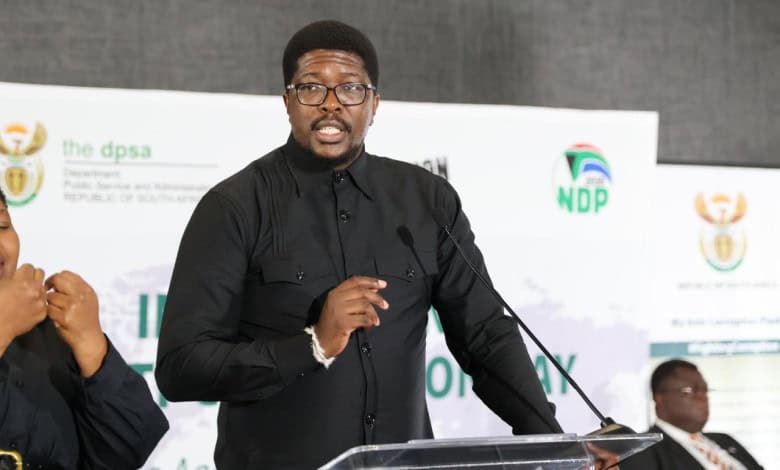
Deputy Transport Minister Mkhuleko Hlengwa. Picture: Supplied


The Road Accident Fund (RAF) fuel levy will be either reduced or scrapped in terms of a new funding model being considered for the financially-distressed fund.
Deputy Minister of Transport Mkhuleko Hlengwa told Moneyweb last week he is in favour of a hybrid model where the RAF levy is reduced but not scrapped completely.
“A hybrid model is a consideration so that we can alleviate each [revenue] stream from pressure and alleviate one stream being the sole stream of revenue,” he said.
“A hybrid, as far as I am concerned, should be the priority consideration.”
Hlengwa confirmed the government is looking at alternative funding sources for the RAF and to move away from having a single source of income to fund the RAF through the fuel levy.
“We need to carefully consider the new revenue generation streams that have to be applicable to RAF.
“We are collecting R2.27 [a litre] from the pump, which is adding to the cost of fuel, so we need to look at third-party insurance and private sector participation,” he said on the sidelines of the 2026 October Transport Month launch.
Hlengwa said measures that will be considered to fund the RAF in the future and reduce its costs include:
- The scrapping or reduction in the RAF levy in the fuel price;
- The introduction of third-party insurance for vehicles;
- Requiring foreigners visiting South Africa to have travel insurance; and
- Submitting to cabinet and parliament the Road Accident Benefit Scheme (Rabs) Bill, which will introduce a defined schedule of benefits for road accident victims.
Cost of fuel ‘a key consideration’
Hlengwa said a reduction in the cost of fuel is one of the key considerations of the government’s medium-term development plan, and one of the areas being looked at to achieve this is the RAF levy.
He said it is also evident that the Department of Transport (DoT) has to reconsider the fuel levy at the pump as the sole funding model because it is not a viable or sustainable source of funding for the RAF.
“There is a reduction in revenue generation for the RAF because of the prevalence of EVs [electric vehicles], which however are still able to claim from the RAF because it is still a road accident.”
Hlengwa said the DoT has commissioned a cost benefit analysis that will consider all the various options, which will be attached to the Rabs Bill when it is tabled.
“The key considerations it will make is to explore alternative means of funding.
“What will happen if you pull the levy? And the option now of introducing third-party insurance [and] the introduction of stringent visa conditions for insurance for foreign visitors to South Africa – who also claim – how [would] that also be part of the funding model? Because we are also paying a number of claims from foreign nationals.
“We are also looking at other possible means of funding,” he added.
“Once we have completed it [the cost benefit analysis]… we will be able to present the options available to us and the benefits, and calculate what that will mean.”
‘Not the solution’ – Outa
Organisation Undoing Tax Abuse (Outa) CEO Wayne Duvenage does not believe moving away from the levy in the fuel price to fund the RAF is the solution.
He said the RAF levy is efficient and there are no administration costs.
Duvenage pointed out that the levy is not where it should be and has increased massively – and well above the inflation rate – because of the mismanagement of the RAF.
He said the reintroduction of third-party vehicle insurance is “the most stupid idea” and the DoT must look back at why it failed and was changed.
He said third-party vehicle insurance did not work in the past because people were not buying the disc and instead taking a risk.
“That is exactly why government moved away from it and put it into a user-pays system so everyone who drives on the road must pay the levy.”
Duvenage estimates that third-party vehicle insurance will now cost about R1 500, which would have to be paid once a year when a vehicle owner renews their vehicle licence – and will be unaffordable to many.
He said by contrast the RAF levy is paid every time a motorist fills up and is much easier to collect and for motorists to pay.
“The problem is that they [DoT] want to throw the baby out with the bathwater.
“The issue is the mismanagement of the RAF.
“Fix the problem. Don’t knee-jerk react to find another solution which is not going to fix the problem because you appoint people like Collins Letsoalo [former RAF CEO] with no idea of this industry and take years to remove him when it’s so obvious what he was doing.
“That is a leadership issue, with [previous] ministers looking away from the problem and not wanting to hold cadres to account.
“Bring in industry specialists and run the RAF like an insurance company and see how you can halve the costs,” said Duvenage.
“Deal with the rogue law firms that are ripping the system off and giving false reports and so forth.
“Reform the management of the RAF and the whole claiming system and have some benefit caps and so forth, put in new rules and a good CEO and team.”
Duvenage said that in 2007 the RAF levy was bringing in R8 billion to R9 billion and the fund was “washing its own face” although there was a bit of debt that could have been resolved with above-inflation increases for a couple of years.
He said the current RAF levy would be R1 a litre lower if the DoT had fixed the mismanagement of the fund.
New RAF board ‘within months’
Hlengwa said the DoT is hoping to have a new permanent board for the RAF appointed by the end of this year.
He said the process had been delayed because the first round of advertisements resulted in nominations of former associates of the RAF, some of them questionable, and some who had not left the fund on good terms.
“That was a situation we were not prepared to accept and so we opened a second window to broaden the scope of the pool that was available to us.
“That has taken a bit of time and of course there are the public comments that we have to consider and then comply with the stringent conditions of the RAF Act in terms of the skill sets that are required.
“But we are at the tail end of the board process and I am quite confident we have engaged in a thorough process… so we can get people who are fit and proper.
“What I don’t want is a repeat of the board that I asked the minister to dissolve,” he said.
That is a reference to Minister of Transport Barbara Creecy dissolving the previous RAF board in July 2025, resulting in the appointment of an interim board in August 2025 for a period of six months, or until a new board is appointed, “whichever comes first”.
This article was republished from Moneyweb. Read the original here.



