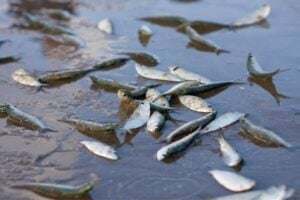
South Africa recently experienced a mass sardine die-off.

Picture: X/@LuckyStarSA


A frozen fish shortage is putting further pressure on South African households, with Lucky Star Foods struggling to meet demand for canned pilchards, a key source of affordable protein for families already battling the rising cost of living and struggling to make ends meet.
The shortage affects not only households but also Lucky Star Foods’ parent company, Oceana Group.
This comes as the Department of Forestry, Fisheries and the Environment (DFFE) issues precautionary fishing measures as sardine mortality subsides.
Fish shortage hurts company
Oceana Group said on Monday that Lucky Star Foods delivered mixed results for the 11 months ended 31 August 2026.
This followed a strong first half, followed by a subdued second half through to the end of August.
“Shortages of frozen fish raw material constrained canned pilchard availability and slowed sales momentum,” the note to shareholders read.
“Total sales volumes declined by 5%, driven by a 9% decrease in canned fish volumes, as limited inventory prevented the business from fully meeting demand. Strong canned meat sales partly offset this decline.”
Frozen fish delivers pressure
The group added that the frozen fish shortage also reduced local canning production volumes by 60%, putting upward pressure on per-unit production costs because fixed production costs were not fully absorbed.
Despite this pressure, the division’s operating margins benefited from higher net realised sales values, lower freight and inventory holding costs, a better sales mix, and increased volumes of locally caught pilchards.
“Inventory volumes closed significantly lower than the prior period, primarily as a result of the constrained fish supply environment.”
Sardine mortality subsides
The country recently experienced mass sardine die-off, prompting the department to implement precautionary fishing measures.
Lucky Star also provides sardines, which are smaller pilchards. The department said on Monday that until 2 October 2026, “each right holder may land no more than 25% of its outstanding 2026 directed sardine total allowable catch.”
The measure applies west and east of Cape Agulhas while monitoring and scientific work continue.
“The available evidence did not indicate that the mortality had reduced the sardine population sufficiently to warrant complete closure. The current measure in place is precautionary and time-limited, and can be reviewed sooner if conditions deteriorate.”
Fishing opportunities remain limited
The department added that it has been confirmed that fishing opportunities remain limited due to weather.
“Industry has confirmed that strong winds prevented recent fishing west of Cape Agulhas and that fishing opportunities in Algoa Bay were also limited by the weather. Only one catch of sardine, amounting to 26 tonnes, has been taken since the beginning of September.
“Pilchard herpesvirus remains the strongest identified biological factor associated with the event and has been confirmed in affected sardines from the Western Cape and Algoa Bay. Monitoring, sampling and laboratory investigations are continuing.”
Ocean group production volumes decline
Back to Ocean Group’s performance. The group’s Fishmeal and Fish Oil in Africa also declined during the period.
Production volumes declined by 73%, due to a combination of a decline in industrial fish landings and reduced pilchard trimmings following lower cannery production. The lower production base materially increased per-unit production costs for the period.
According to the group, sales volumes decreased by 72%, driven by lower production volumes and reduced product availability. This decline more than offset the benefit of higher pricing, with average fishmeal and fish oil prices increasing by 31% in rand terms.
“As a result, the segment’s operating loss increased from the level reported at the interim reporting period,” said the group.
Fishmeal and Fish oil in USA
The group said Daybrook delivered a stronger performance for the period, supported by higher sales volumes and improved US dollar pricing. The benefit of operational and pricing improvements was partly offset by translation effects from a stronger rand.
“Gulf Menhaden landings improved in recent weeks, lifting cumulative landings to week 21 to 7% above the same period in 2025 and 11% above the five-year average. Fish oil yields for the 11-month period were slightly lower at 10.7%, partially moderating the benefit of improved landings. The 28-week fishing season will close at the end of October 2026.
“Sales volumes increased by 16%, supported by stronger landings and higher opening inventory levels. In US dollar terms, average fishmeal prices were largely unchanged due to the timing of forward-contracted volumes. Average fish oil prices increased by 24% for the 11-month period, with higher global prices benefiting the second half through to the end of August.”