The focus of this year's indaba is on strengthening industrial growth, improving competitiveness and unlocking investment across the continent.
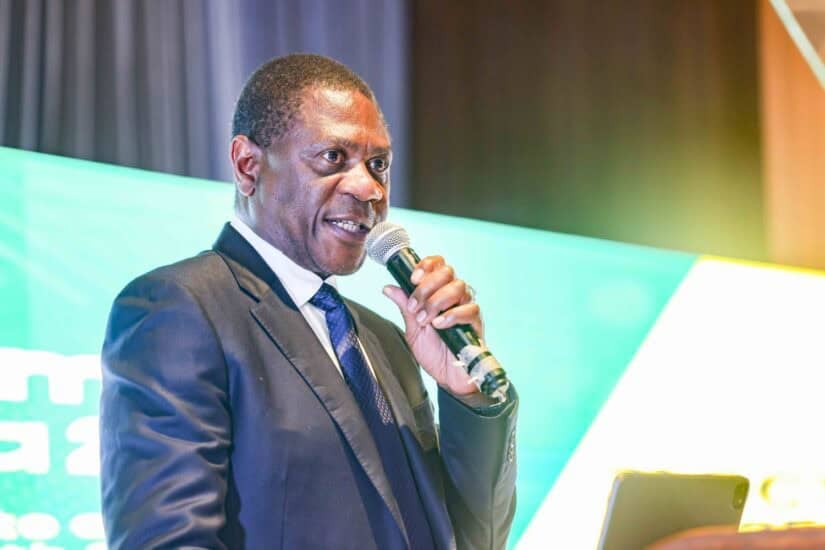
Deputy President Paul Mashatile. Picture: Gallo Images/OJ Koloti


South Africa’s manufacturing sector has the potential to be a major driver of economic growth, but structural challenges – from unreliable infrastructure to inefficient ports and logistics – continue to undermine its competitiveness, Deputy President Paul Mashatile said at the opening of the 13th Manufacturing Indaba.
Government and industry leaders from all over Africa gathered on Tuesday for the two-day 2026 Manufacturing Indaba under the theme “Made in Africa: Scaling Growth, Shaping Trade”.
The focus of this year’s indaba is on strengthening industrial growth, improving competitiveness and unlocking investment across the continent.
State of manufacturing in SA
The 13th edition of the conference comes at a time when the industry is struggling: factories are closing, retrenchments are taking place, and manufacturers are battling a host of operational challenges.
However, Mashatile and the deputy minister of trade, industry and competition, John Steenhuisen, reiterated that Africa cannot be left behind, noting that the continent exports raw materials to other continents, only for those continents to import the finished products at a higher value.
“Africa should increasingly trade in value-added products rather than just exporting raw materials and importing finished goods,” said Steenhuisen.
“Africa must transition from merely being the source of raw materials to becoming the manufacturing powerhouse.”
Future of manufacturing
Mashatile added it is time for Africa to make bold choices about its economic future.
“Africa possesses the talent, natural resources, and entrepreneurial energy required to become a global manufacturing force,” he said. “What has too often been missing is sufficient investment in value addition, technology, infrastructure and deep regional integration.
“For too long, [Africa] exported raw materials while importing finished products at a premium. That model cannot sustain the aspirations of the continent seeking inclusive growth and economic sovereignty.”
He reiterated that Africa’s future lies in “processing its own resources, manufacturing higher than expanding regional value chains. Building industries that create jobs, retain wealth and improve livelihoods across the continent.”
PPPs will shape the future
Mashatile said partnerships will shape the next chapter of Africa’s industrial development. He spoke of the need to continue mobilising private sector investment, improve access to industrial finance, and deepen partnerships between governments, development finance institutions and investors.
“Public-private partnerships remain fundamental to sustainable industrial development. Investment is not simply about financial returns. It is about building industries that create opportunities, strengthen communities and improve the quality of life for our people.”
Despite the industry’s performance in South Africa, the deputy president holds the view that “manufacturing remains the backbone of a resilient economy”.
“It transcends national self-reliance. Create quality employment, drive innovation and position to compete in an increasingly technology-driven global economy,” he said.
“It is also central to South Africa’s transition towards a greener, more sustainable economy through cleaner production methods, improved efficiency and greater industrialisation.”
Affordable energy key to manufacturing
Mashatile noted during his address that no industrialisation strategy can succeed without reliable and affordable energy.
His comment come as the Department of Electricity and Energy is set to launch Africa’s biggest hybrid renewable energy project on Thursday in De Aar, Northern Cape. Minister Kgosientsho Ramokgopa touched on this during his address.
“South Africa is undergoing significant reform in the energy sector as we diversify electricity generation, expand renewable energy capacity and enable greater private sector participation,” said Mashatile.
“Regulatory reforms have unblocked new investment opportunities. Many current generation projects are already operational, including those under the Renewable Energy Independent Power Producer Programme.
“The programme continues to attract sustainable investments in South Africa’s energy sector while supporting economic activity and employment during both construction and operational phases.
“These developments contribute not only to energy security but also to the competitiveness of our manufacturing sector.”
Ports need attention
Mashatile added that modern infrastructure and ensuring the ports are in good condition are equally important.
“They connect producers to markets, lower the cost of doing business and strengthen regional integration,” he said. “This infrastructure is also essential to unlocking the full potential of the African Continental Free Trade Area (AfCFTA).
“By improving connectivity and reducing transaction costs, African countries can expand intra-African trade, attract greater investment and accelerate the continent’s industrial transformation.
“As one of Africa’s most industrialised economies, South Africa has a responsibility to contribute meaningfully to this agenda.”
AfCFTA is a free trade pact established by the African Union that unites 55 member states to create a single market for goods and services across the continent.
Absa PMI
The indaba comes as the Absa Purchasing Managers’ Index (PMI) for June 2026 declined by 3.5 points to 47.3, returning below the neutral 50-point mark after remaining in expansionary territory during April and May. Absa PMI measures the health of South Africa’s manufacturing industry.
A PMI reading above 50 indicates that the manufacturing sector is expanding, while a reading below 50 signals contraction.
The decline reflects softer demand conditions across the manufacturing sector, although easing geopolitical tensions helped ease input cost pressures and improve manufacturers’ expectations for the months ahead.
Takatso Sello, senior manager for manufacturing at Nedbank Business and Commercial Banking, argued that the PMI dip reflects a deeper structural issue: financing is still arranged on a deal-by-deal basis rather than across the full value chain, which is exactly what this year’s indaba programme is built to address.