For to the time being, it seems that local assembly at the former Uitenhage plant in the Eastern Cape won't be impacted.
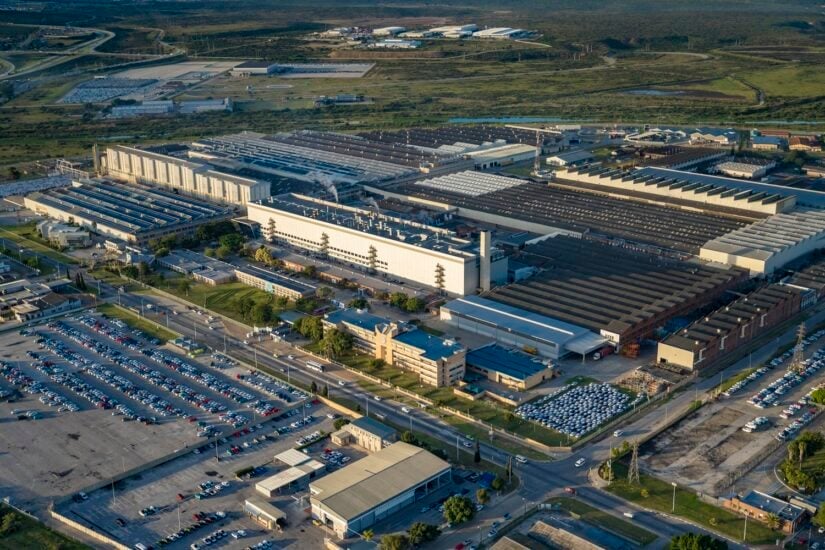
For the time being, no planned job cuts or the closure of Volkswagen’s only plant in South Africa is on the cards. Picture: Volkswagen


Volkswagen’s CEO told employees on Monday (13 July) that a further 50 000 jobs could go according to an internal memo seen by AFP, confirming reports the group is targeting 100 000 cuts worldwide.
The brand has come under intense pressure from US tariffs, slimmer profit margins from electric cars and intense competition in its key market China, whose carmakers are now also increasingly exporting to Europe.
Cost-cutting
Last week, management began what could be a long and tough process of thrashing out job cuts in talks with the supervisory board as workers protested at plants nationwide.
With pressure mounting for Europe’s biggest carmaker to publicly outline its cost-saving plans, CEO Oliver Blume told workers in the memo that the group must “act now” to safeguard its future.
“We need to become more efficient, more robust and simpler. We must reduce our costs,” he said.
Volkswagen’s costs are about 20% higher than competitors’, Blume said, adding that overheads need to be cut to a “competitive level”.
“As half of our overheads stem from staff costs, a theoretical calculation – assuming no change in labour costs – would result in the loss of around 50 000 jobs,” he said.
This comes on top of 50 000 jobs that the carmaker is already in the process of cutting in Germany, about 35 000 of which will go at its namesake brand, under a 2024 deal with unions.
If the group were to cut 100 000 positions, it would be the biggest restructuring in the history of the global auto industry, eclipsing the 50 000 job cuts General Motors made after it declared bankruptcy in 2009.
Blume also confirmed the future of four German factories was uncertain.
“The truth is also that, as things stand today, we cannot confirm that the Emden, Hanover, Zwickau and Neckarsulm plants will be able to operate competitively into the 2030s,” he said.
Tough overhaul
Any restructuring is likely to be hard fought.
Labour representatives and the German state of Lower Saxony, both of whom take a dim view of plant closures, together hold more than half the seats on the supervisory board.
Unions have strongly criticised Volkswagen and Blume for unsettling employees by allowing media reports of mass job cuts to circulate without comment, demanding the CEO take a public stand.
In the memo, Blume insisted leaks to the media had been unplanned and said that reports of looming cuts had “annoyed” him.
“The disclosure of such confidential, sensitive information not only unsettles our workforce; it is also damaging to the business,” he said.
Some industry analysts have suggested that Volkswagen had deliberately publicised the number of 100 000 as a negotiating tactic, and that the final figure of cuts is likely to be lower.
What about South Africa?
For the time being, it remains unknown as to whether the cuts will be expanded beyond German borders, and include other facilities, namely Volkswagen’s plant in the Eastern Cape in the town formerly known as Uitenhage.
Earlier this year, Volkswagen Group Africa boss Martina Biene, said 2026 rates as a “make or break” year for the local automotive industry.
This after several challenges ranging from failures to accommodate and support new energy vehicles, to the ongoing rise in cheaper imports from India and China.
“The current automotive policy is not working anymore. The industry is not growing,” Biene said during Volkswagen’s annual product indaba in February.
“This is a make-or-break year for the industry. I wrote a letter to the president prior to Christmas in which I urged government to make the crucial decisions that are needed for business. But the unfortunate thing is that he didn’t reply to me.”
Biene’s comments comes after Volkswagen Passenger Car brand head, Thomas Schäfer, said in 2022 that business in South Africa had become hard to justify despite the brand’s past successes.
Two-thousand and twenty-six marks Volkswagen’s 75th anniversary in South Africa, which it will conclude towards year-end with the expected onset of production of the Tengo.
“Each region must carry their weight and perform. And South Africa has always been a joy. But moving forward, what is the plan? There has to be one. Volkswagen South Africa has always been a cornerstone of Nelson Mandela Bay and that has to continue,” Schäfer said.
“There is no way back. It is a myth that [current matters] in South Africa will stay as is. Change will have to happen”.
In a subsequent interview with Reuters 12 months later, Schäfer said, “eventually you have to say, why are we building cars in a less competitive factory somewhere far away from the real market where the consumption is? I’m very worried about it. We’re not in the business of charity”.
Soon after Schäfer’s comments, Ford Motor Company Southern Africa boss Neale Hill warned that despite a series of investments into the Blue Oval’s Silverton plant outside Pretoria, the local automotive industry could go the same path as Australia due to government’s lack of support.
“It’s getting harder and harder to convince our principles that South Africa is a place worth doing business with,” Hill said.
“If you think about it, we have to use air freight to fly parts in because parts get stuck in the ports. You think about Transnet moving goods from the coast and back. You think about Eskom. You think about labour costs.”
“I’m not trying to be a scare monger or anything like that. I’m one of those tenaciously optimistic people that believe the message has to be heard.
“I’m just worried about those investment decisions that is going to start not going our way because we are a volatile, high-risk country where government is not enabling business. That is the reality of what we are dealing with and it is gravely, gravely concerning”.
Additional reporting by Charl Bosch