
International petroleum prices and the rand-dollar exchange rate contributed to the fuel price changes.
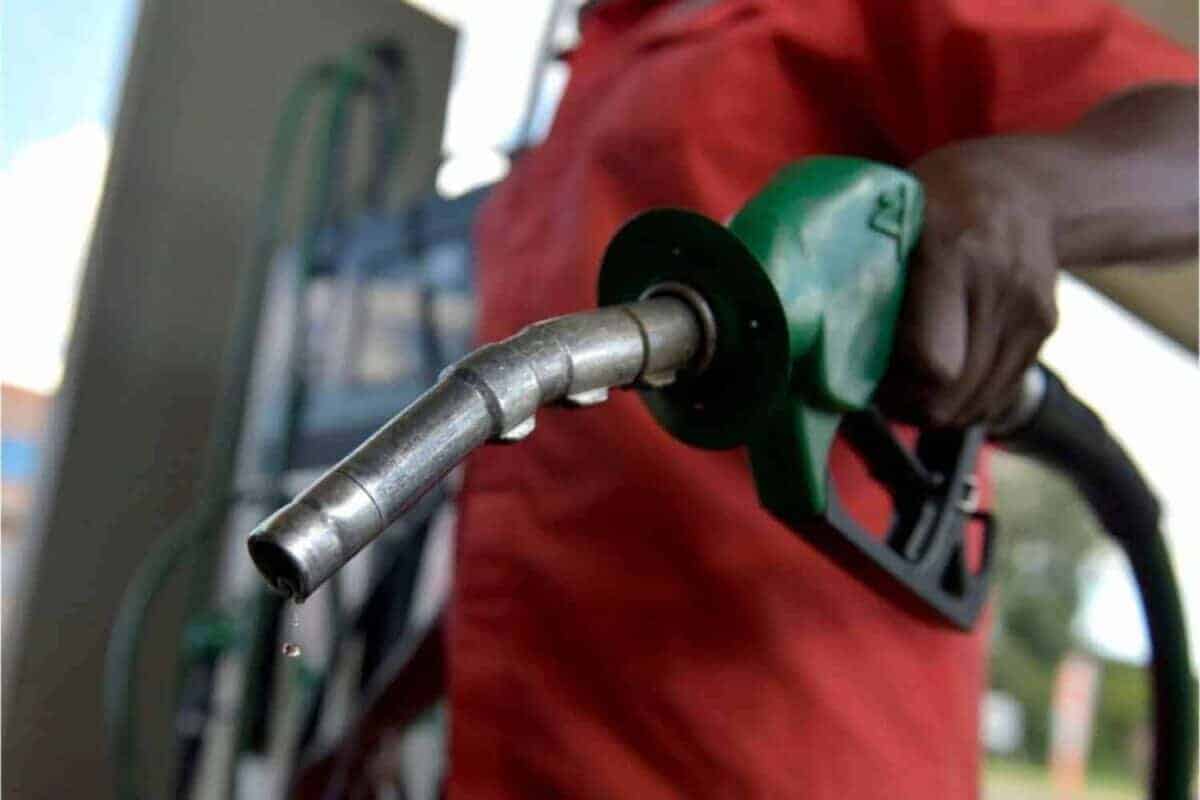
Picture: Neil McCartney


South African motorists may have to dig deep into their pockets at the fuel pumps from Wednesday, 5 August 2026.
The Department of Mineral Resources and Energy (DMRE) announced that the prices of both 93-octane and 95-octane petrol will decrease by 52 cents per litre.
However, the price of diesel with 0.05% (500ppm) sulphur will increase by R1.38 per litre, while 0.005% (50ppm) sulphur will go up by R1.23 per litre.
Meanwhile, illuminating paraffin will cost R1.52 more per litre, while the price of LP gas will decrease by R4.41 cents per kilogramme countrywide and by R5.03 per kg in the Western Cape.
How much will fuel cost you?
When the fuel price adjustment kicks in, a litre of 93 unleaded petrol will cost R25.42 per litre, while 95 unleaded petrol will be R25.58 per litre.
The wholesale price of 0.05% (500ppm) diesel will increase to R26.16 per litre, and 0.005% (50ppm) will cost R26.40 per litre.
Reasons for the adjustments
DMRE spokesperson Robert Maake stated that several factors, including international petroleum product prices and the rand-dollar (United States dollar) exchange rate, contributed to the decrease in petrol and diesel prices.
Brent crude oil price
Maake said the average Brent crude oil price decreased from $86.53 to $82.37 during the period under review.
“The impact of renewed US-Iran tensions, which caused the price to increase up to a $100 mark, was offset by the fact that the prices had already decreased significantly the previous month and in the first half of this month due to the ceasefire MoU[ memorandum of understanding] between the US and Iran, as well as lower global demand for crude oil.”
International petroleum prices
Maake said the average international product prices of petrol decreased during the period under review, while the prices of diesel and illuminating paraffin increased due to supply shortages caused by the Russia-Ukraine conflict, which resulted in diesel export restrictions by Russia.
“The situation was compounded by the Middle East refineries that were operating below capacity. These factors led to lower contributions to the Basic Fuel Price (BFP) of petrol by 6.08 cents per litre (c/l), and higher contributions to the BFP of diesel and illuminating paraffin by 182.62 cents per litre (c/l) and 143.32 c/l, respectively. The prices of propane and butane decreased during the period under review.”
Rand/US dollar exchange rate
Maake said the rand depreciated slightly on average against the US dollar during the period under review, compared with the previous one.
This led to higher contributions to the Basic Fuel Price of petrol, diesel and illuminating paraffin by 6.37 c/l, 8.14 c/l and 7.89 c/l respectively.
Slate levy
Maake said the cumulative slate reflected a negative balance of R7.418 billion for petrol and diesel at the end of June 2026.
“In line with the provisions of the Self-Adjusting Slate Levy Mechanism, the slate levy of 61.38 c/l will be implemented in the price structures of petrol and diesel with effect from 5 August 2026. The slate levy has decreased by 52.56 c/l, from 113.94 c/l to 61.38 c/l.”
The fuel prices schedule for the different Magisterial District Zones (MDZ) will be published on Tuesday, 30 June 2026.