The department of agriculture has been asked to provide evidence that supports the revised requirements for meat imports
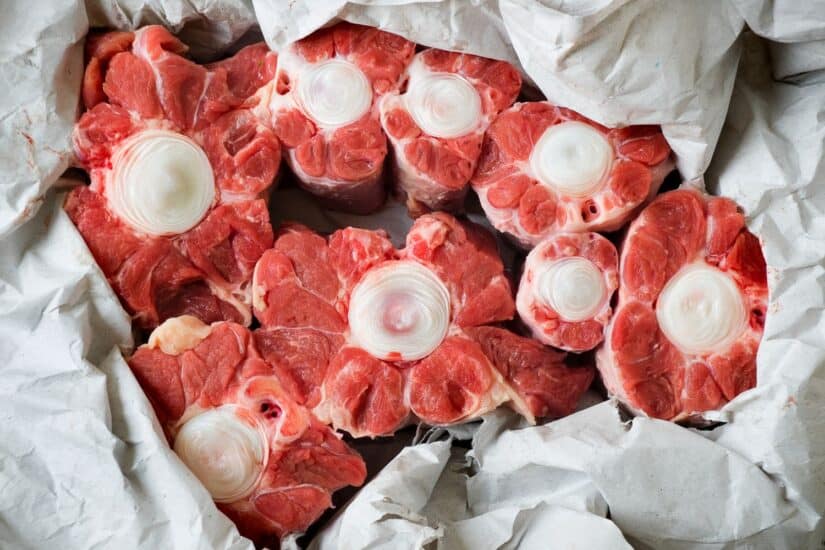
Oxtail prices have doubled compared to the first half of the year. Picture: iStock


A warning of higher oxtail prices has become a reality.
The Association of Meat Importers and Exporters (AMIE) previously warned that oxtail prices could increase significantly if import restrictions from Argentina were not resolved.
The organisation said on Wednesday that the price of the protein source has doubled compared to the first half of the year. South Africa imports approximately 70% of its oxtail from Argentina.
South Africa’s imports of Argentinian oxtail were blocked because the words ‘ovine scrapie’, included on an official import certificate did not comply with regulations, triggering a bureaucratic dispute that halted the trade.
The department of Agriculture previously said the “technical error” in the reference to ovine scrapie had been removed, and negotiations around sanitary certificates with Argentina are ongoing. However, now it seems there might be health concerns surrounding oxtail.
Oxtail prices now
AMIE is an industry body that represents and advocates for businesses involved in importing, exporting, and producing meat and poultry.
According to the organisation, oxtail, which typically retailed at around R79-R99/kg between January and May this year, has doubled to approximately R169-R199/kg.
AMIE CEO Paul Matthew said South Africa cannot produce enough oxtail to meet domestic demand and therefore relies heavily on imports to cover the shortfall. But now South Africans will be paying the cost of an administrative issue.
“Our concern is for South African consumers. When a major source of imported supply is effectively removed from the market, the result is scarcity and higher prices.”
Another animal disease?
The issue with oxtail imports stems from a scrapie outbreak in Argentina. Scrapie is a fatal disease that affects sheep and goats, but not cattle.
It is understood that instead of South Africa’s department of agriculture simply removing the incorrect sheep disease reference, it introduced a new, highly complex certificate. The updated certificate added extensive foot and mouth disease (FMD) requirements for bone-in beef products. These rules are extremely difficult for Argentine exporters to meet for oxtail.
The practical effect is that Argentine establishments currently approved to export to South Africa, which are situated in an FMD-free zone where vaccination is practised, are unable to supply oxtail and certain other bone-in beef products under the revised requirements.
Matthew said if there are food safety risks associated with the imports, it will throw its full weight behind supporting the blockage of oxtail, however, the department must provide the science proving the risks.
“If there is a legitimate food safety or animal-health risk associated with Argentine oxtail, we support the department taking appropriate measures. But we need to understand what that risk is and the science behind it.”
AMIE asks for evidence
AMIE has formally written to the department of agriculture requesting the scientific evidence and risk assessments underpinning the revised requirements and asking for them to be urgently reconsidered.
The organisation of a view that the updated certificate that added FMD requirements appear to go beyond international animal-health guidelines.
“World Organisation for Animal Health (WOAH) standards allow trade in meat from recognised FMD-free zones where vaccination is practised, subject to appropriate safeguards,” noted the organisation.
“Argentina’s last FMD outbreaks occurred in February 2006, with no outbreaks reported since, and the country has FMD-free zones recognised by WOAH, including zones where vaccination is practised.”
Simple correction stops trade
AMIE is asking the department to explain why these internationally recognised safeguards are considered insufficient for Argentine oxtail and to provide the scientific basis for the additional FMD, BSE and vesicular stomatitis requirements.
“What began as a relatively simple correction to a certificate has resulted in a much broader set of restrictions that continue to prevent trade, with a significant impact on cash-strapped South African consumers,” said Matthew.
“We are asking the department to explain the scientific basis for those additional requirements and, specifically, what risk properly inspected Argentine oxtail poses.”
The organisation noted that South Africa has procured FMD vaccines from Argentina and the two countries have entered into a technical cooperation programme on animal health.
“This makes it even more important that there is a clear and consistent explanation for why Argentina’s recognised animal-health status and international standards are considered insufficient for oxtail imports,” said AMIE.
Consumers should be protected
Matthew said the organisation is just asking for clarity around the issue as already-burdened South Africans can’t be punished for matter that is not clearly explained.
“We are not asking for South Africa’s biosecurity standards to be weakened. We are asking for measures to be transparent, proportionate to the actual risk and supported by recognised science.”
The organisation has also asked the department to urgently reconsider the revised certification requirements and, while the broader technical issues are reviewed, to consider an interim arrangement based on the previously accepted certificate with the inapplicable scrapie declaration removed.
“Consumers should not be paying significantly higher prices because of restrictions that have not been clearly explained. If there is a sound scientific basis for them, industry needs to understand it. If there is not, we should find a practical way to restore safe trade and ease the pressure on supply.”
The Citizen has reached out to the department for a comment. It will be added once received.