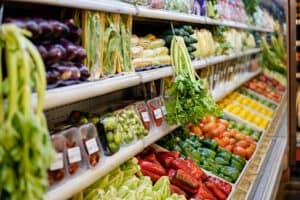
Competition Commission's Cost of Living Report confirms that consumers face escalating costs - with water and electricity rising way above inflation.
Picture: iStock


Essentials that consumers spend their money on, including water, electricity and government school fees, have all increased above headline inflation in the past six years, with transport costs spiking this year, according to the Competition Commission’s third Cost of Living Report.
The report shows that headline inflation has been moderate (36% over six years), but that electricity and water prices continue to rise above headline inflation, putting significant pressure on household budgets, schools and businesses.
Headline inflation measures the total increase in prices for all goods and services in an economy, including volatile categories like food and energy, which fluctuate significantly month to month.
Key increases across essential categories include:
- From January 2020 to July 2026, electricity increased by an estimated 100.5% “highlighting the disproportionate contribution of electricity costs to household expenditure”;
- In the same period, water costs reached approximately 85% cumulative inflation, even as the report noted that lower-income households spend as little as 0.9 % of their budget on this;
- The cumulative inflation for public primary school fees in fee-paying government schools over the six-year period increased to 46%, with fees at public high schools up 51% – this was attributed, in part, to rising municipal bill pressures on schools;
- Prices of visits to GPs rose at a level close to inflation over the six-year period;
- In 2026, bond repayment inflation saw a substantial increase of 9.6% from January to July, higher than CPI (which was at 3.8% during the same period) – the report says this highlights the impact of higher interest costs on household disposable income and the overall affordability of credit;
- Petrol prices increased by 26% between January and July 2026, driven largely by the Middle East conflict; and
- Minibus taxi fares increased by 13% over first half of 2026, raising concerns that commuters may continue to face higher costs even if petrol prices decline, as taxi fares generally do not adjust downwards.
Food prices
The report raised concerns that food prices do not fall quickly enough at the till once raw material or producer price costs decline.
However, the CompCom noted that even as maize producer prices were rising, retail prices were lower.
This suggests that retailers were absorbing the costs of what is staple food for millions of households.
It said in several food markets – including brown bread, maize meal and sunflower oil – producer prices remain elevated despite significant decreases in the input costs price of grains and oilseeds.
In other food markets such as individually quick frozen chicken and canned pilchards, retail prices remain elevated despite stable or declining producer prices.
Food pricing dynamics
Small Talk Daily analyst Anthony Clark, who tracks prices of soft commodities such as grains and oils, explains the pricing dynamic: because most food companies procure their input costs three to six months in advance, they have to work their way through inventory before new cheaper inventory starts coming into the system.
“There’s normally a much faster increase in prices because there’s an immediate hit to food companies, and a slightly longer delay in bringing company prices down,” he says.
Clark predicts higher food prices in 2027.
He says that underlying soft commodity prices, such as wheat, corn and soybean, have surged alongside rising fuel prices, which also increases costs of plastic packaging.
Food companies face substantial increases in input costs and cannot absorb a near 30-40% rise in soft commodity prices or the 70% surge in fuel costs.
These expenses will ultimately be passed on to consumers, he says.
The CompCom report concluded: “South African households continue to face significant and persistent cost-of-living pressures, with the cumulative increase in the prices of essential goods and services continuing to erode household purchasing power.”
This article was republished from Moneyweb. Read the original here.