Scopa will recommend criminal charges and financial recoveries against those involved, and says a full rethink of the fund is needed
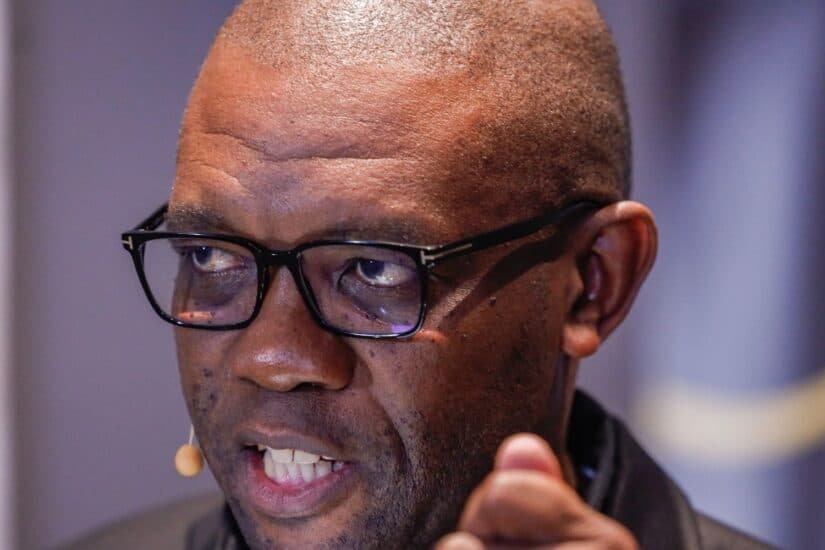
Chairperson of the Standing Committee on Public Accounts (Scopa) Songezo Zibi. Picture: Gallo Images / Sharon Seretlo


Parliament’s Standing Committee on Public Accounts (Scopa) has serious concerns about corruption at the Road Accident Fund (RAF), and will recommend criminal charges and financial recoveries where needed, says Scopa chair Songezo Zibi.
The unprecedented decision by Scopa in June this year to lay a criminal charge against former RAF CEO Collins Letsoalo is also “in motion”, Zibi told Moneyweb in an interview on Friday after his engagement with attorneys, medico-legal practitioners and other professional service providers to the RAF.
Zibi said he and Scopa’s legal team have met with the South African Police Service (Saps), which has specified the documents it needs from Scopa.
The legal team is providing the requested documents, and the Saps will take the matter forward.
Zibi said the Saps indicated that this is “not a complicated case, so they should be able to complete their investigation without undue delay”.
Scopa asked the Secretary to Parliament to lay a criminal charge against Letsoalo for failing to appear before the committee in response to a summons issued during its November 2025 inquiry into the RAF.
In his address at the inquiry, Zibi mentioned several decisions that had a significant impact on the RAF’s operations – including the new RAF1 claims form, changes to the fund’s accounting policy, and the closure of regional and satellite offices.
He said disciplinary action against those responsible for these decisions is however moot because they are no longer working at the RAF.
Instead, Scopa will closely examine cases where there was gross financial mismanagement and is likely to recommend the recovery of funds from those responsible, while also considering whether financial misconduct charges should be brought against them.
“We are taking legal advice on those instances,” he said.
Incompetence costing billions
Although Zibi acknowledged serious concerns about corruption at the RAF, he said Scopa’s inquiry found these concerns “are dwarfed by incompetence”, which leads to inefficient expenditure that is costing the RAF billions a year.
He cited the RAF’s failure to invest in technology and an effective information management system for handling claims and court cases as a prime example.
“That for me is just incompetence. In my estimation, if it was to be run properly like an insurance company, it would be easy to save more than R5 billion that currently goes to legal costs and all such things per year – and that is a conservative estimate.”
Zibi did not want to speculate on whether a case could be made for the RAF to be privatised or operate similar to the South African Special Risk Insurance Association (Sasria).
Saria was established in the wake of the 1976 Soweto uprising to cover special risks, including politically motivated malicious acts, riots, strikes, terrorism and public disorder.
Zibi stressed that regardless of who runs the RAF, the fund needs:
- Greater clarity on its mandate and whether it should operate as an insurer or another form of social benefit scheme, which then partly resolves some of the funding issues;
- Stronger protection from political interference, which must be in the legislation; and
- Legislation that further prescribes some standards for those appointed to run the RAF, together with a system of independent oversight.
Zibi noted that the insurance industry is regulated by the Financial Sector Conduct Authority and the Prudential Authority, providing an important layer of external oversight.
“The RAF is a quasi-insurance [operation] that just does its own thing with a massive exposure to the fiscus. That cannot work,” he said.
“There are some things that legislation needs to be responsive to, including the problems that the RAF has had in the past and currently has, but also to our fiscal realities otherwise we are also going to bankrupt the country if we are not careful.”
Fixing the RAF
Zibi said Scopa is processing its inquiry report in phases.
Once completed in the next few weeks, it will be sent to all affected parties, who will have an opportunity to make further representations before the report is finalised and tabled in the National Assembly for a vote.
He said the report will recommend measures that are designed to save public funds, ensure that funds reach claimants, streamline the claims process so that claims are finalised as quickly as possible and at minimal cost to both claimants and the RAF, and propose legislative changes covering the fund’s financing, governance and overall mandate.
Zibi said Scopa’s report will include recommendations on the RAF’s funding model, noting that the fund has insurance-like obligations without being capitalised as an insurance entity.
However, he said the RAF is chronically underfunded and, even if its governance and operational shortcomings are addressed, there will not be enough money to meet all its claim obligations.
Before finalising its recommendations, Scopa will consider further submissions from experts, including proposals such as Transport Minister Barbara Creecy’s suggestion that motorists in future possibly pay a separate amount to fund the RAF when they first buy and annually renew their vehicle licence disc.
Zibi said Scopa will look for innovative ways to fund the RAF that would not place a burden on consumers and motorists, but at the same time have a careful balance between the RAF’s core function and reasonable funding.
He said one possible recommendation is to cap damages or future loss of income claims to reduce the fund’s financial liabilities, as the minister of finance will at no stage in the next 50 years have R50 billion available.
“It’s just not going to happen and people need to accept that,” he said.
“The question then becomes how do we nonetheless have a RAF that fulfils its function, is still fair and just, and provides some kind of decent compensation for people but does not bankrupt itself.”
Boardroom shake-up
Scopa will also recommend changes on how board members and senior management are appointed, including the criteria for these appointments and guidance for the Ministry of Transport on the skills required on the RAF board.
Zibi said the board, for example, urgently needs an IT specialist since “at the heart of the RAF’s success or failure is how well it manages its information system”.
Zibi said another example is that senior executives in acting positions at the RAF are appointed without the consent of the board, which means the RAF CEO can appoint an entire executive committee in an acting capacity and claim, as has happened, that they simply cannot find suitable people.
“You cannot have an organisation where board members have no say in the appointment of a chief financial officer.
“It was so bad that in one of the [Scopa] hearings, board members could not remember at all the CFO we were referring to – and that is a person who initiated the change in accounting policy and the litigation against the AG [Auditor-General].”
This article was republished from Moneyweb. Read the original here.