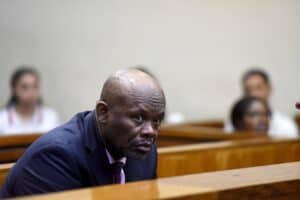
Admits that in a perfectly functioning market, the city would already have been switched off.
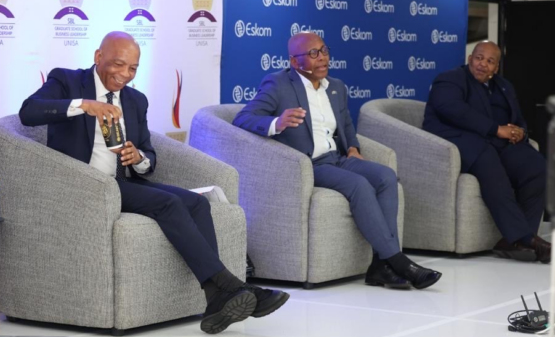
It is unclear how Electricity Minister Kgosientsho Ramokgopa (left), seen with Eskom chair Mteto Nyati and Eskom CEO Dan Marokane, plans to ‘fix the problem’. Picture: Supplied


Minister of Electricity and Energy Kgosientsho Ramokgopa says negotiations with Eskom are continuing in a longstanding bid to avert a blackout in the City of Johannesburg (CoJ).
The country’s most critical metro owes the power utility R7 billion (combining its historical debt with its current account), a debt that city officials have struggled to rein in for years.
Ramokgopa confirmed the figure on Thursday during a roundtable discussion with Eskom’s board chair Mteto Nyati and CEO Dan Marokane in Midrand.
“Joburg owes you R7 billion but don’t switch them off,” he pleaded.
“I’m going to fix the problem.
“But in a perfectly functioning market, they would switch them off because they are not paying,” he added, almost playing devil’s advocate.
Ramokgopa’s interventions in the tensions between Eskom, CoJ and City Power over the sizeable debt saw him broker a deal that stopped the power utility from disconnecting, interrupting or reducing supply to Johannesburg earlier this year.
But the city failed to meet its debt obligations, again setting off Eskom’s Promotion of Administrative Justice Act (Paja) process.
The Paja notice, first issued in May, opened the process to public consultation before Eskom can proceed with potential power interruptions or disconnections across the metro.
The process was extended to 22 August to allow Eskom to assess the representations received and to monitor CoJ’s compliance with its electricity account obligations as well as the payments it has made towards it historical debt of around R5 billion by 21 August.
It is unclear at this stage what else Ramokgopa plans to do to keep Eskom at bay, aside from attempting to ensure that the city pays its dues.
Loosening the PFMA belt
Meanwhile, plans to split Eskom into separate generation, transmission, and distribution entities is again the subject of public scrutiny.
The process aims to maximise efficiency by partnering with a broad range of stakeholders, including independent technology sources, expertise and capital.
Eskom’s chair denies being at odds with government over the future ownership of the country’s electricity grid.
However, he has repeatedly warned that plans to transfer the power company’s transmission assets to an independent operator may trigger change-of-control provisions in lending agreements, create accounting complications and like to unsettle bondholders.
President Cyril Ramaphosa this week again endorsed the planned unbundling of Eskom, reiterating that it is not about privatising the power utility, but about creating greater competition in the electricity sector.
Ramokgopa echoed the president’s sentiments on Thursday, adding that part of liberalising Eskom requires levelling the playing field.
“What needs to happen now is that it must compete in a competitive market, so we are going to remove the structures – because Eskom cannot be subjected to the PFMA [Public Finance Management Act] and then compete with people who don’t have those structures.”
Ramokgopa said he will approach Finance Minister Enoch Godongwana to exempt Eskom from the prescripts of the PFMA, before making a submission to cabinet.
“We have liberalised Eskom, and we have codified that in the act; therefore, it must be freed from that [PFMA],” he said.
“I don’t control the speed, I can make the case – and I think the case is compelling.”
An attempt to exempt Eskom from the PFMA was previously made in 2023.
The move would have discharged Eskom from its responsibility to disclose irregular and fruitless expenditure in its annual financial statements.
National Treasury was pushed to walk back the decision following a public outcry.
This article was republished from Moneyweb. Read the original here.